Beyond Left and Right: Narinder Kaur and Peter McCormack on the Forces Dividing Britain

In an extensive and wide-ranging conversation, broadcaster and commentator Narinder Kaur joined host Peter McCormack for a deep dive into the state of contemporary British society, politics, and culture. Spanning nearly two hours, the discussion tackled some of the most contentious and polarized topics defining modern Britain, including racism, immigration, feminism, motherhood, the cost-of-living crisis, and the influence of political fringe movements.
While Kaur and McCormack found themselves disagreeing on a multitude of subjects throughout the interview, the dialogue ultimately culminated in a surprising and reflective consensus: the traditional political binary of left versus right may no longer be the primary driver of societal friction. Instead, both figures explored the growing suspicion that ordinary citizens are being systematically manipulated by broader economic and technological structures designed to keep the public divided.
The Anatomy of Modern Division
The conversation opened by examining the state of public discourse in the United Kingdom, questioning whether the country is being intentionally fractured by politicians, traditional media outlets, and digital algorithms. Reflecting on the evolution of online arguments and social interactions, the pair considered how political conversations have shifted in tone over recent years.
A central theme of this segment was the impact of major political watersheds, particularly Brexit, which both speakers acknowledged as a catalyst that fundamentally altered how Britons talk to one another. According to the discussion, politics has increasingly become a problem not merely because of policy disagreements, but because the modern digital ecosystem actively incentivizes rage and extreme viewpoints. Algorithms deployed by major social media platforms reward outrage and polarization, pulling users toward ideological echo chambers and raising questions about whether prominent commentary platforms and podcasts are inadvertently complicit in widening these societal chasms.
Moving from digital culture to personal experience, Kaur shared her candid perspectives on racism in Britain, offering a firsthand account of the realities faced by minorities navigating a shifting sociopolitical landscape. This personal reflection bled into broader generational concerns, touching on the struggles of young men, the influence of the "manosphere," and how shifting dating norms, financial pressures, and modern expectations are reshaping relationships and social cohesion.
Family, Economics, and the Cost of Living
As the dialogue shifted toward domestic life, the conversation explored the evolving roles of motherhood, family dynamics, and the cultural pressures surrounding stay-at-home parenting. This naturally led to a broader debate on demographic trends, specifically querying why birth rates are declining across Western societies and whether young people are simply being priced out of traditional milestones like family planning and homeownership.
Economic pressures formed a substantial portion of the interview, with McCormack and Kaur dissecting why life has become so financially prohibitive for the younger generation. The discussion ventured into sophisticated economic territory, touching upon the Cantillon Effect—how money creation and inflation disproportionately benefit those closest to the source of new money—and arguing that persistent inflation serves as a powerful wealth generator for the already affluent, while punishing wage earners.
The debate then turned to potential solutions, critically evaluating whether simply taxing the wealthy offers a viable remedy or if deeper structural issues are at play. Expanding on economic realities, the conversation addressed the delicate balance between minimum wage mandates and the survival of small businesses. As they wrestled with the complexities of taxation, labor, and economic policy, Kaur humorously confronted the possibility of her own ideological shifts, remarking at one point, "Maybe I am conservative," as they debated the practicalities of modern capitalism versus state intervention.
Immigration, Culture, and the Search for Common Ground
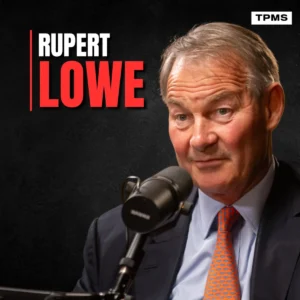
Unsurprisingly, immigration emerged as one of the most significant and heavily debated segments of the conversation. Touching on figures and movements associated with the political right, including Reform UK, Tommy Robinson, and Rupert Lowe, the discussion probed the limits of British culture, national identity, and what constitutes integration.
The speakers debated the profound dependency of the UK economy on immigrant labor, questioning whether the nation could realistically function or avoid structural collapse without the contributions of overseas workers. At the same time, they wrestled with the contentious question of where the public line on immigration should be drawn, alongside related concerns regarding public safety, women’s security, and social cohesion.
Toward the latter half of the discussion, the dialogue returned to the overarching question of governance: whether the British government and institutional apparatus have a vested interest in keeping the populace fractured along cultural and political lines. Pondering whether a genuine public revolution is possible under such conditions, Kaur and McCormack ultimately brought the conversation full circle.
Despite sharp disagreements on immigration, feminism, and economic theory, the interview closed on a note of cautious optimism. By the final moments, both speakers agreed on the necessity of preserving the ability to disagree civilly, suggesting that finding common ground between ordinary people remains the single most effective countermeasure against the systems that profit from division.

Related News