Bank of Japan Expected to Keep Rates at 1.25% in ‘Hawkish Pause,’ Setting Stage for Winter Hike
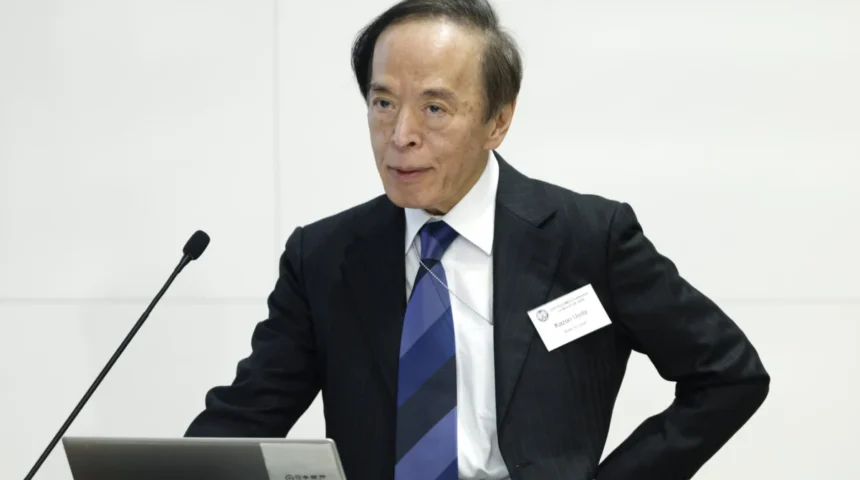
TOKYO — The Bank of Japan is widely expected to maintain its benchmark policy rate at 1.25% at the conclusion of its two-day monetary policy meeting on Friday, opting for what analysts term a "hawkish pause" following last month’s historic hike to a 31-year high. While policymakers are anticipated to stand pat this week, financial markets and economists agree that the door remains wide open for further monetary tightening in the coming months as domestic inflation and wage growth continue to gain traction across the world’s fourth-largest economy.
According to a comprehensive CNBC survey of 16 economists and financial market analysts conducted between October 14 and 26, every single respondent expects the central bank to hold rates steady at this week’s meeting. However, unanimity prevails regarding the future trajectory of Japan’s monetary policy: all 16 respondents anticipate that the central bank will use this week’s communication to lay the groundwork for a subsequent rate hike, likely materializing in December of this year or January of next year.
The anticipated policy stance reflects a delicate balancing act for BOJ Governor Kazuo Ueda and the central bank’s policy board. On one hand, macroeconomic indicators increasingly support continued normalization. Domestic inflation has consistently hovered above the central bank’s target, and sustained wage increases are altering consumer behavior and corporate pricing strategies in a manner not seen in decades. On the other hand, policymakers must navigate lingering structural fragilities within domestic financial markets.
Homin Lee, senior macro strategist at Lombard Odier, noted that while broader macroeconomic fundamentals fully support additional policy tightening, internal caution may persist. "There may not be sufficient consensus in the policy board for successive rate hikes given the fragility in the domestic bond market," Lee explained.
Adding to the chorus of measured caution, Sosuke Nakamura, an economist at Citi Research, pointed out that the pace of economic data does not point to runaway inflation. Nakamura observed that he sees no clear signs of consumer price acceleration to a degree that would immediately justify consecutive, back-to-back rate hikes without risking broader economic momentum.
Recent economic data underscores the complex inflationary environment confronting Japanese authorities. Japan’s core consumer price index, which strips out volatile fresh food items, rose 2.1% in September compared to the same period a year earlier. This marked the highest reading for core inflation this year, propelled upward by a persistently weak Japanese yen that continues to inflate import costs for raw materials and energy. Elevated energy expenses are steadily passing through to retail and corporate end-prices, persisting even as government-backed subsidies absorb a portion of the rising utility costs for everyday consumers.
Simultaneously, labor market data points to a structural shift in how Japanese workers are compensated. Japan’s inflation-adjusted real wages rose for the eighth consecutive month in August, climbing 1.5% from a year earlier, according to the most recent figures released by the government. This consistent upward trend in real earnings signals the strengthening potential of a wage-growth-driven inflation cycle, a phenomenon the central bank has long identified as a necessary prerequisite for sustainable monetary normalization.
Political leadership has also acknowledged this macroeconomic pivot. Finance Minister Satsuki Katayama reportedly informed lawmakers last week that Japan is currently "on the cusp of shifting to a period of sustained inflation driven by rising wages," while candidly acknowledging that higher import costs stemming from currency dynamics were concurrently pushing up overall price levels.
Reflecting this evolving economic reality, reports from Reuters and The Japan Times indicate that the central bank is widely expected to officially declare that its "underlying inflation" target of 2% has been successfully met during this week’s policy deliberations.
Yen and yields
The subtle shift in the central bank’s characterization of inflation will be a focal point for institutional investors tracking the nuance of Governor Ueda’s post-meeting press conference. Ryutaro Kimura, senior fixed income strategist at BNP Paribas Asset Management, noted that he is closely monitoring whether the BOJ modifies its official monetary policy statement this week. Specifically, markets are watching to see if the phrasing shifts from noting that "underlying CPI inflation has been approaching 2 percent" to declaring that it "has reached 2 percent."
Currency markets remain hyper-sensitive to these policy signals, particularly regarding the valuation of the Japanese yen. Among the survey respondents, nine expect the yen to trade in a relatively tight range between 157 and 158 against the U.S. dollar over the course of the next month. However, longer-term projections for the three-month yen target showed significantly wider dispersion among analysts, with forecasts stretching broadly from 150 to 160 against the greenback.
Masahiko Loo, senior fixed income strategist at State Street Investment Management, offered a measured outlook on currency flows and rate differentials. "BOJ normalization, higher domestic yields and shifting institutional flows should gradually narrow the rate differential and pull capital back toward Japan," Loo said. At the same time, he cautioned that "elevated U.S. yields should prevent a straight-line yen rally."
The broader foreign exchange and fixed-income landscapes experienced notable volatility over the preceding weeks. The yen strengthened against the dollar while Japanese government bond yields declined late last month, driven largely by a surge in safe-haven demand amid a broader global sell-off in artificial intelligence-related equities. This dynamic marked a notable reversal from earlier in October, when expansionary spending plans introduced by Prime Minister Sanae Takaichi, combined with a wider global bond sell-off, placed intense upward pressure on domestic yields and downward pressure on the currency.
Looking toward the fixed-income horizon, nine respondents in the CNBC survey indicated they expect the yield on the benchmark 10-year Japanese Government Bond to settle between 3% and 3.1% by the end of the year, up from its current level of approximately 2.809%. Furthermore, seven respondents anticipate that the yield on the 30-year JGB will climb to a range of 4% to 4.1%, rising from 3.829%.
These upward yield trajectories are directly tied to the consensus expectation that the BOJ will swiftly resume its monetary tightening campaign following the anticipated pause in October. Takuji Aida, chief Japan economist at Credit Agricole, suggested that the timing of the next rate increase will likely align with the release of the central bank’s quarterly outlook report in January. That comprehensive report will provide policymakers with updated assessments regarding domestic economic activity, corporate sentiment, and price trends.
Looking further ahead into the medium term, 13 survey respondents project a terminal rate—the ultimate level at which the BOJ is expected to conclude its current tightening cycle—of between 1.75% and 2% by approximately mid-2027.
Current macroeconomic data indicates that the policy rate is drawing increasingly closer to the estimated neutral level of 2%, which aligns directly with the BOJ’s official inflation target. However, Masato Koike, senior economist at SOMPO Institute Plus, emphasized that policymakers will likely proceed with caution. "Given the state of the Japanese economy and the need to avoid excessive downward pressure on growth, I expect the BOJ to stop raising rates at around 1.75%," Koike noted.

Related News