Attackers Scan the Internet for Vulnerable Systems Following Critical Oracle EBS Flaw Disclosure

Cybersecurity researchers have detected active scanning activity across the internet targeting unpatched systems following the disclosure of a critical vulnerability affecting the Oracle E-Business Suite (EBS). The flaw, tracked as CVE-2026-101767, resides within a core component of the enterprise software’s Application Object Library and presents a severe risk to organizations that have yet to apply available security updates.
According to technical details surrounding the issue, the vulnerability involves an unauthenticated SQL injection vector located within the EBS Thin Client Framework servlet. When exploited, this security gap can be chained to achieve remote code execution. This capability allows unauthenticated threat actors who possess standard HTTP network access to completely take over vulnerable systems in low-complexity attacks. Because the exploit path requires no prior credentials or privileged access, organizations running unexposed or poorly segmented instances face an immediate threat profile.
Oracle formally addressed the vulnerability on October 20, 2026, when the technology giant released its October 2026 Critical Security Patch Update. Alongside the release, the company issued a direct and urgent advisory urging all customers to apply the necessary patches immediately to prevent potential compromise.
In its advisory statement, Oracle emphasized the urgency of maintaining hygiene across corporate infrastructures. The company noted that in some instances, threat actors had achieved successful breaches specifically because targeted customers failed to apply available Oracle patches in a timely manner. Consequently, Oracle strongly recommended that all users remain on actively supported versions of the software and deploy security patches without delay.

While Oracle has not yet formally classified CVE-2026-101767 as actively exploited in the wild at the time of the advisory, independent threat intelligence organizations have already observed hostile reconnaissance. On Tuesday, threat intelligence firm Defused reported that its monitoring systems had captured suspicious activity tied to the vulnerability.
The firm stated that its Oracle E-Business Suite decoys recorded exploratory exploits targeting CVE-2026-101767 during the morning hours. These early probes confirm that automated scanners and malicious actors are actively sweeping the digital landscape to identify vulnerable endpoints capable of being leveraged for remote code execution.
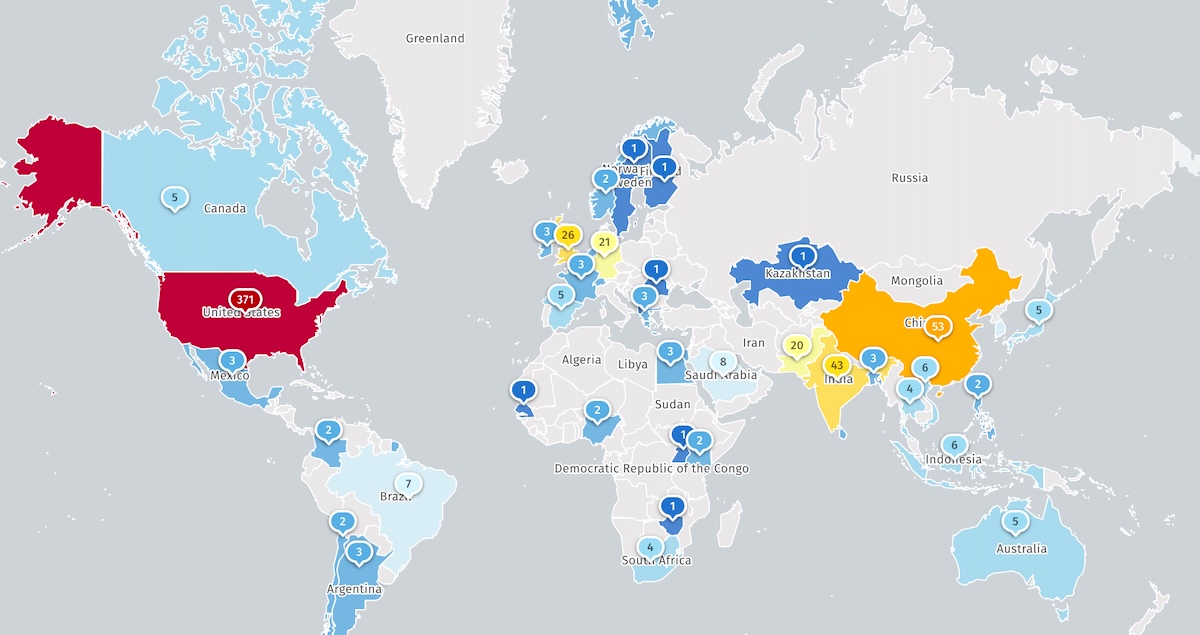
Concurrently, internet threat watchdog Shadowserver has stepped up monitoring efforts and is currently tracking more than 670 internet-exposed Oracle EBS instances worldwide. Telemetry data indicates that the vast majority of these vulnerable or exposed IP addresses originate from the United States. However, security analysts note that Shadowserver’s raw counts do not differentiate between operational honeypots, decommissioned test environments, or production servers that may have already implemented patches or alternative mitigations against the CVE-2026-101767 flaw.
Enterprise environments frequently find themselves targeted by groups looking for flaws in Oracle products because these platforms sit at the very center of corporate infrastructure. Compromising an enterprise resource planning system often grants attackers deep visibility and operational control across the networks of Fortune 100 corporations, government agencies, and major healthcare networks around the world.
The historical precedent for attacks against Oracle products highlights the severe fallout associated with delayed patching cycles. For instance, beginning in August 2025, the Clop extortion gang launched a widespread campaign exploiting a different Oracle EBS vulnerability, tracked as CVE-2025-61882. That zero-day flaw was weaponized in high-profile data theft attacks impacting numerous prominent corporate and academic entities, including Logitech, GlobalLogic, the Washington Post, Harvard University, the University of Pennsylvania, Dartmouth College, and the University of Phoenix.
Similarly, in June of the same year, Oracle was forced to issue emergency mitigations for a critical PeopleSoft Suite zero-day vulnerability designated as CVE-2026-35273. That flaw was aggressively exploited by the ShinyHunters extortion gang in a wave of targeted data theft operations conducted between late May and early June. By abusing that specific security gap to achieve unauthenticated remote code execution, the threat actors successfully exfiltrated sensitive data from multiple global organizations, such as Nottingham University, Nissan, and the National Association of Insurance Commissioners.
The frequency with which enterprise software vulnerabilities are weaponized has drawn sustained attention from federal cybersecurity authorities. Since November 2021, the Cybersecurity and Infrastructure Security Agency has added 46 distinct Oracle security bugs to its catalog of known exploited vulnerabilities. Out of that total, 13 specific flaws have been directly tied to disruptive ransomware deployments and corporate extortion schemes. As internet scanning operations for CVE-2026-101767 continue to escalate, security professionals emphasize that immediate application of the October 2026 patch update remains the primary defense against potential system takeover.

Related News