Cisco Issues Emergency Security Updates to Patch Actively Exploited ASA and FTD Zero-Day Flaw

Cisco has released urgent security updates to address a high-severity denial-of-service zero-day vulnerability affecting its Adaptive Security Appliance (ASA) and Threat Defense (FTD) software. According to the company’s security advisories, malicious actors are actively exploiting this vulnerability in the wild to remotely crash vulnerable enterprise firewall devices, forcing unexpected reboots and disrupting network operations.
Tracked under the identifier CVE-2026-76418, the vulnerability specifically targets network infrastructure running ASA and FTD software configured with the ‘webvpn’ keyword while having SSL VPN enabled on at least one interface. When these conditions are met, unauthenticated remote attackers can trigger a denial-of-service condition simply by sending a specifically crafted request to the system during the establishment of an SSL remote access VPN connection.
The Cisco Product Security Incident Response Team (PSIRT) discovered clear evidence that the flaw is being actively exploited in real-world attacks earlier this month. Prompted by these findings, Cisco has strongly urged all affected customers to apply the newly released software updates immediately to remediate the risk. However, during the initial disclosure, the company did not release specific indicators of compromise, nor did it share additional operational details regarding the identity of the threat actors or the specific organizations targeted in the campaign.
Explaining the underlying mechanism of the security defect, Cisco noted that the vulnerability stems from fundamental logic errors occurring when secondary authentication is configured on a tunnel group. An attacker can manipulate this flaw by transmitting a crafted request while attempting to connect to the SSL remote access VPN. A successful exploit forces the affected hardware device to reload unexpectedly, plunging the network into a complete denial-of-service state.

Because active exploitation has been confirmed, Cisco’s security advisory emphasizes that organizations should bypass standard testing schedules if necessary and upgrade immediately to a fixed software release. For network administrators who are unable to deploy the official software patches right away, Cisco has provided a temporary mitigation strategy. Admins can safeguard their systems against CVE-2026-76418 by disabling secondary authentication on either the default DefaultWEBVPNGroup tunnel group or on any custom user-configured tunnel group lists active on the network.
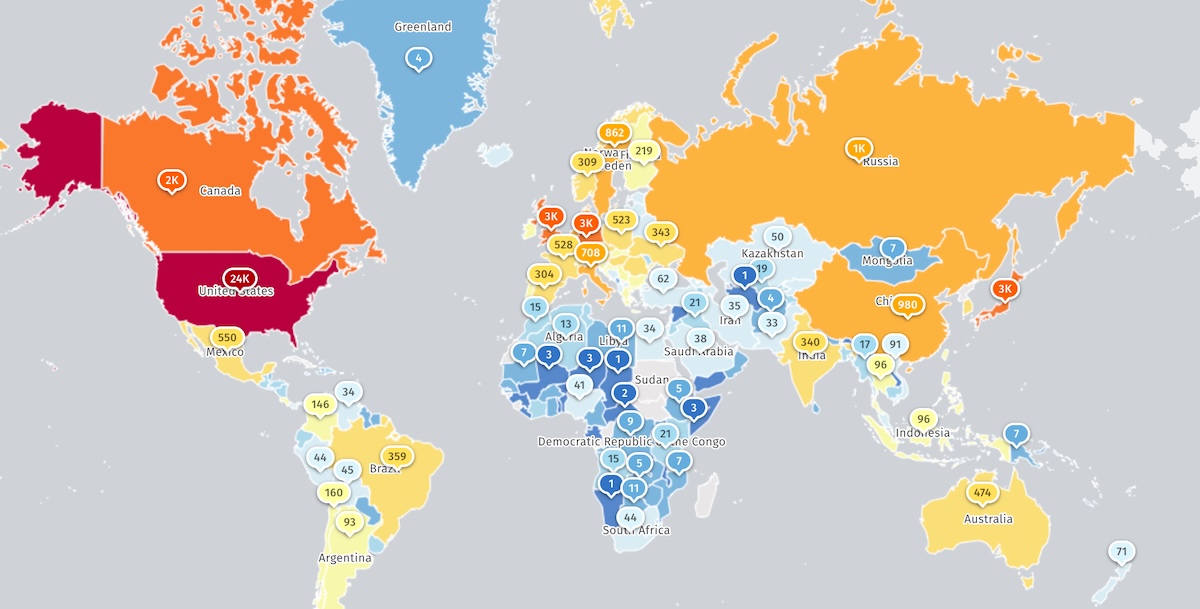
The scale of potential exposure remains a significant concern for cybersecurity professionals and enterprise IT teams. Internet monitoring and threat intelligence platform Shadowserver currently tracks more than 51,000 individual Cisco ASA SSL VPN devices exposed directly to the public internet. While this metric highlights the vast footprint of potentially vulnerable appliances worldwide, telemetry from monitoring platforms does not clearly distinguish between production units that remain fully exposed, devices that have already been secured with patches or mitigations, or specialized honeypots deployed by researchers to track threat actor activity.
This latest discovery fits into a broader, troubling pattern of targeted attacks against Cisco firewall infrastructure over recent years. Last year, Cisco issued urgent warnings and patches for two separate high-profile vulnerabilities, tracked as CVE-2025-20362 and CVE-2025-20333, which affected ASA and FTD firewall devices. Those flaws were actively exploited in zero-day attacks specifically targeting 5500-X Series hardware units equipped with enabled VPN web services.
The fallout from those historical incidents prompted immediate government intervention. On the same day those vulnerabilities were disclosed, the United States Cybersecurity and Infrastructure Security Agency issued Emergency Directive 25-03, legally compelling federal civilian agencies to secure their vulnerable Cisco firewall devices within a strict 24-hour window. Cisco subsequently linked those attacks to the sophisticated ArcaneDoor threat campaign, which had utilized an entirely separate pair of zero-day exploits, designated as CVE-2024-20353 and CVE-2024-20359, to quietly breach government and corporate networks since November 2023.
The frequency of ASA and FTD zero-day disclosures has remained high throughout the current year. In August, Cisco was forced to address another critical denial-of-service zero-day vulnerability, tracked as CVE-2026-20349, which threat actors were actively leveraging to crash ASA and FTD firewall appliances that maintained SSL listen sockets enabled.
In addition to network perimeter hardware, Cisco’s broader product portfolio has also faced intense scrutiny from malicious actors. Earlier this month, the tech giant issued warnings urging customers to quickly patch an actively exploited zero-day flaw, identified as CVE-2026-76519, residing within its Secure Email Gateway security solution. That particular vulnerability grants unauthenticated attackers the ability to execute arbitrary commands remotely with full root privileges, representing a severe risk to corporate communications infrastructure.
Historical tracking data compiled by CISA underscores the persistent targeting of Cisco infrastructure by advanced cybercriminals and state-sponsored syndicates alike. Since November 2021, CISA has formally flagged 101 distinct Cisco security flaws within its Known Exploited Vulnerabilities catalog. Among that substantial total, at least seven specific vulnerabilities have been actively abused by organized ransomware gangs to gain initial footholds or lateral movement within corporate networks.
As enterprises race to apply the latest patches for CVE-2026-76418, security analysts continue to monitor internet-exposed perimeters for signs of scanning and exploitation. With tens of thousands of ASA SSL VPN devices visible online, the window for administrative action remains critical to preventing widespread operational disruptions.

Related News