At Least 68 Killed in Central Spain High-Speed Train Crash After Control Centre Blunder
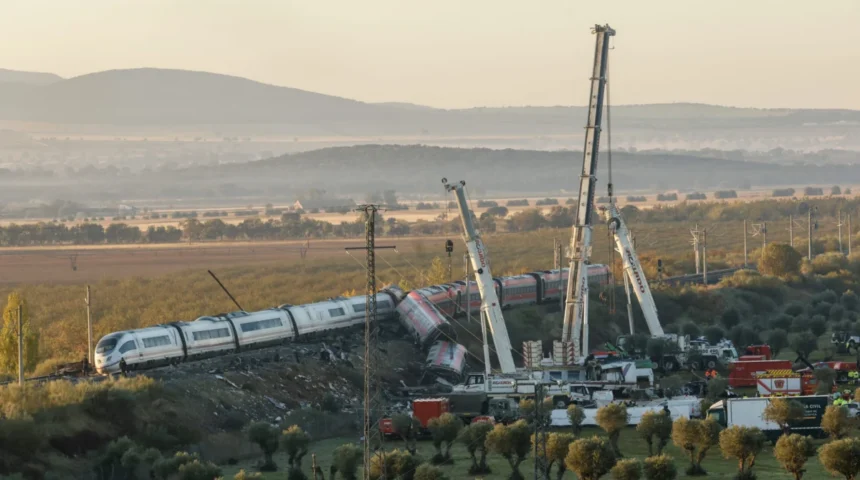
At least 68 people lost their lives and approximately 80 others sustained injuries when a high-speed passenger train violently plowed into the rear of a stationary train in central Spain. The devastating collision occurred just before 9:00 am local time near Urda, a municipality situated south of Madrid. This tragedy marks Spain’s second deadly high-speed rail disaster in less than a year and comes at a highly sensitive political juncture, unfolding just weeks before scheduled national elections.
Government authorities and transport officials have squarely blamed an "inexplicable" directive issued by a rail control center. This flawed instruction permitted one of the high-speed trains to resume normal operating speeds shortly after a technical signalling failure had brought traffic along the line to an abrupt halt.
What Happened and Where?
The moving service involved in the collision was operated by Renfe, Spain’s state-owned rail company. It struck the rear of a stalled train operated by Iryo, a private competitor that entered the nation’s burgeoning high-speed railway service market in 2022.
At the time of the incident, both trains were journeying along the critical corridor from Madrid to Seville. According to the government of Castilla-La Mancha, the central region where the crash took place, the Renfe train was carrying 397 passengers, while the Iryo train accommodated 147 people.
The catastrophic impact occurred on an elevated section of the railway track situated between Urda and the neighboring town of Los Yebenes, not far from the ancient historic city of Toledo. According to regional officials and emergency sources cited by the prominent Spanish newspaper El Pais, the sheer force of the collision caused two of the Iryo train’s carriages to completely derail and plunge down the side of the railway embankment.

This tragic death toll represents the highest loss of life in a European rail accident since a devastating 2013 derailment in the northwestern Spanish city of Santiago de Compostela claimed 80 lives.
Prime Minister Pedro Sanchez traveled directly to the accident site to survey the wreckage and assess the ongoing emergency response. In the wake of the disaster, he declared three days of national mourning, which are set to begin on Thursday. Pledging a thorough and uncompromising inquiry, Sanchez vowed to get to the bottom of the crash, stating that any human negligence would be brought to light and any systemic failures would be met with a strong and decisive response from the state.
What Do We Know About the Dead and Injured?
The human toll of the disaster has overwhelmed local medical infrastructure. Emiliano Garcia-Page, president of the Castilla-La Mancha regional government, confirmed that at least 68 people were killed and roughly 80 others injured. Among the injured, approximately 50 individuals sustained serious wounds, while 15 remain in critical condition.
The most severely injured victims were swiftly transported by emergency fleets to specialized hospitals across the region as well as the capital, Madrid. Other passengers with less acute injuries were assessed at a nearby sports hall converted into a makeshift triage center. There, emergency response teams sorted survivors by the severity of their trauma before clearing them to return home or transferring them to area hospitals.
Survivors treated near the scene presented with head trauma, facial swelling, and bloodied clothing, many of them appearing visibly dazed from the sudden impact, according to local media reports.
Juan Quesada, a 65-year-old passenger traveling on the Renfe train to Seville for work, recounted the terrifying moments leading up to the crash after suffering a head injury. Describing the ordeal to El Pais, he noted the immense psychological and physical shock of the event, recalling a tremendous impact accompanied by deafening noise as passengers were thrown violently about. A local resident who assisted in supplying the makeshift medical center described the immediate aftermath as resembling a horror movie.

Emergency crews have continued working around the clock to clear the tangled wreckage of the two trains and search for any victims who may remain trapped beneath the heavy debris. Authorities confirmed that 52 bodies had been successfully recovered from the site in the immediate hours following the collision. Meanwhile, Spain’s Civil Guard deployed a specialized disaster investigation team to the location to gather physical evidence and document the scene.
What Caused the Collision Between the Trains?
According to Transport Minister Oscar Puente, the sequence of events began at approximately 8:30 am when a sudden computer failure knocked out LZB, the primary signalling system responsible for automatically maintaining safe distances between trains along the line.
As a direct result of this technological failure, roughly six trains traveling along a 63-kilometer (39-mile) stretch came to an automatic stop. Among them were the Iryo and Renfe trains. At the time of the stoppage, the Renfe train had been running roughly 25 kilometers (15.5 miles) behind the Iryo train on the exact same track.
Control of the stalled trains was subsequently transferred to a central facility in Madrid operated by Adif, the state-owned enterprise responsible for managing Spain’s extensive rail infrastructure. Controllers at this facility were tasked with determining when and at what velocity each train could safely resume its journey.
A preliminary investigation by El Pais, which reviewed train telemetry data and recordings of radio communications with controllers, indicates that at 8:36 am, controllers cleared the Renfe train to resume operation at normal speed. The Iryo train was issued a similar directive at 8:41 am, but its operators were unable to get the heavy carriages moving. By 8:48 am, the driver of the Iryo train informed controllers via radio that the vehicle remained completely stalled on the tracks.
By that point, however, the Renfe train had already accelerated to a velocity exceeding 200 kilometers per hour (124 miles per hour). At 8:53 am, traveling at high speed, it slammed directly into the rear of the stationary Iryo train.

Was Human Error or a Signalling Failure Responsible?
Transport Minister Puente has publicly asserted that the crash was triggered by an "inexplicable" instruction issued by the control center after the automated safety mechanisms failed. He explicitly stated that the train drivers and onboard engineers bore no responsibility for the disaster.
In Puente’s assessment, the Renfe train should never have been permitted to proceed while a stop signal remained active, or at the very least, should have been instructed to proceed with extreme caution at a reduced velocity.
This protocol aligns with standard Spanish railway regulations. When the automated LZB safety system experiences an outage, standard operating rules dictate that trains may only resume movement at a maximum speed of 40 kilometers per hour (25 miles per hour)—a slow enough pace to allow a driver to visually spot an obstruction ahead and apply the brakes in time.
Although a backup safety system exists, it operates differently by detecting signals only at predetermined, fixed points along the track to estimate train locations, rather than providing the continuous real-time monitoring offered by the primary system.
Rail engineer Jose Luis Gonzalez Vallve told the Spanish news agency EFE that if the primary signalling system had been operational, its ability to detect a stationary train ahead and automatically trigger emergency brakes would have successfully prevented the collision. Furthermore, according to El Pais, there was no physical signal post positioned alongside the track between the two trains that could have independently stopped the Renfe train, leaving the verbal instructions issued by the controllers as the sole safeguard.
The corporate entities involved have each provided their perspectives on the protocol followed. Renfe maintained that its train operated strictly in accordance with instructions received from the control center. Meanwhile, sources close to Iryo told EFE that their train had come to a complete halt at a signal and that the crew had contacted controllers as required by safety regulations. Adif officials stated that the company has not yet pinpointed the exact point of failure within its control center operations.

How Have Train Services Been Affected?
In the immediate aftermath of the disaster, Adif suspended all high-speed rail services operating between Madrid and the southern region of Andalusia. While some regional lines remain operational—including connections between Madrid and nearby Toledo, as well as between the southern urban centers of Malaga and Seville—the main corridor has suffered severe disruption.
Renfe announced the complete suspension of ticket sales along the Madrid-Andalusia high-speed corridor through December 13. To mitigate the travel disruption, authorities implemented an alternative transportation service connecting Madrid and Andalusia starting Friday.
Why Has Spain Suffered Two Deadly High-Speed Crashes This Year?
The Urda disaster follows a previous high-speed catastrophe earlier in the year. On January 18, a high-speed train derailed near the southern town of Adamuz in Cordoba province and collided with an oncoming train, resulting in the deaths of 46 people. Notably, that incident also involved Renfe and Iryo trains operating on the same rail corridor.
Prime Minister Sanchez noted that while the initial findings suggest the causes of the two separate crashes are unrelated, suffering two high-speed rail accidents within a single year is fundamentally "unacceptable for a country like Spain."
The Madrid-Seville line remains Spain’s only high-speed route still reliant on the older LZB signalling technology, which dates back to the route’s original inauguration in 1992. The Spanish government has been actively working to modernize the infrastructure; Adif was awarded a 52-month contract back in 2021 to replace the legacy system with the European Union’s standardized signalling architecture, though that modernization work is still ongoing. Alongside these major incidents, Spain has also recorded two lower-speed train crashes this year, each resulting in a single fatality and multiple injuries.
What About the Political Fallout?
With national elections looming just around the corner, the railway tragedy has swiftly assumed a profound political dimension across the country.

On Wednesday evening, approximately 1,500 demonstrators gathered outside the Ministry of Transport in Madrid for a protest organized by right-wing youth groups. Chanting slogans calling for the resignation of Transport Minister Puente, some demonstrators clashed directly with law enforcement officers securing the area.
In response to the crisis, Prime Minister Sanchez cancelled his upcoming political campaign rallies to focus fully on managing the governmental response and overseeing the investigation.
Meanwhile, Alberto Nunez Feijoo, leader of the main opposition People’s Party (PP)—which currently holds a slight lead over the ruling Spanish Socialist Workers’ Party in national polls—suspended his campaign events for the duration of the official mourning period. Feijoo called for a comprehensive and transparent investigation into the disaster, emphasizing that the focus must remain on respecting the victims, the injured, and their grieving families.
By contrast, Santiago Abascal, leader of the far-right opposition party Vox, chose not to suspend his campaign activities. Instead, Abascal adopted sharply combative rhetoric, publicly labeling the government a "criminal organization" and vowing to take legal action against state authorities in relation to the crash.

Related News