The MAGA Reckoning: How Midterms and Policy Shifts Test Trump’s Grip on the Republican Party
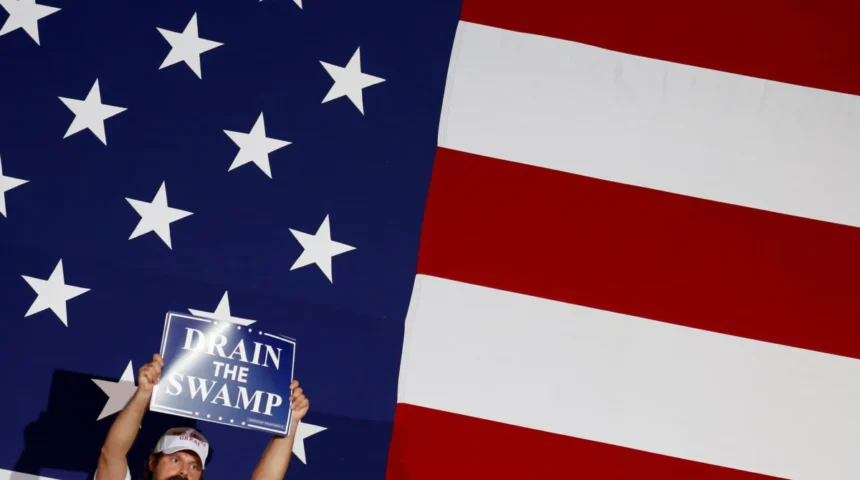
United States President Donald Trump has long touted himself as a political outsider, a leader determined to expose the political elites’ abuse of power and fundamentally shift the government’s focus away from far-off foreign conflicts and toward pressing domestic problems. Throughout his political career, powerful rallying cries like “drain the swamp” and “America first” have resonated deeply across the American electorate, successfully sparking a massive and loyal cadre of “Make America Great Again” (MAGA) Republicans who expected a radical departure from traditional political norms.
Yet, halfway through his final term as president, Trump has backpedalled significantly on many of those core ideas, cozying up to the ultra-wealthy, sidelining federal investigations into the network of convicted sex trafficker Jeffrey Epstein, and launching an ongoing, open-ended military conflict with Iran. This stark about-face is no longer just a subject of political commentary; it is having a tangible, disruptive impact on Republican candidates running across the country in the high-stakes US midterm elections, according to Rina Shah, a geopolitical adviser, strategist, and former senior GOP congressional aide.
In competitive races across the nation, some Republican candidates are quietly distancing themselves from the administration’s national controversies, choosing instead to focus heavily on pocketbook issues. They are talking about gas prices, local concerns, and repeating mantras like “I’m focused on my district” because the fallout from the Iran war and the lingering controversy over the Epstein files are already showing up aggressively in political attack ads and soft polling data.
This growing political friction raises critical questions about whether the broader Republican Party has softened its ideological stance on these foundational issues, and how the grassroots base is responding to perceived betrayals by leadership.

Which Republicans have broken with Trump over the Epstein files?
During his 2024 presidential campaign, Trump made headlines by promising that he would declassify and release troves of sensitive files kept by the Federal Bureau of Investigation regarding Jeffrey Epstein and his extensive global network of influential contacts. Future cabinet members were equally enthusiastic about transparency at the time, with figures like Kash Patel, now head of the FBI, publicly declaring that it was time to “put on your big boy pants and let us know who the pedophiles are.”
Yet, only a few months after taking office, Trump began dragging his feet on the promised releases, instantly sparking a sharp backlash from influential MAGA figures and transparency advocates. The president began pivoting his rhetoric, dismissing the entire controversy as a political “hoax” and claiming that Republicans were being easily duped by Democrats into calling for investigations into Epstein’s sprawling network.
Despite the administration’s resistance, Congress eventually forced the full release of the files, aided by a small but determined group of Republican lawmakers who broke ranks with the president. While the Trump administration has since released several batches of the heavily redacted documents, it has continued to withhold key portions. Meanwhile, the Republican lawmakers who voted to mandate the transparency measures have faced severe political retribution for their insubordination, with three notably losing their offices in subsequent primary challenges.
US Representative Marjorie Taylor Greene abruptly left her Georgia congressional seat in January 2026 after publicly clashing with Trump over the Epstein cover-up. Similarly, Nancy Mace, a Republican from South Carolina, lost her bid to secure the party’s nomination in her home state after Trump pointedly refused to offer his endorsement. In Colorado, Lauren Boebert barely scraped by with a victory in her primary contest after angering Trump by supporting transparency calls alongside Thomas Massie, another Republican fiercely dedicated to exposing what the documents contained. Massie, a representative from Kentucky, also drew intense presidential ire, which ultimately cost him his primary seat.

No more foreign wars?
Foreign policy has presented another profound ideological test for the administration. Trump had long promised to drastically reduce US military involvement overseas, breaking sharply with the traditional interventionism of past Republican presidents. However, he and his party now face intense public scrutiny over the US-Israel military campaign against Iran. Influential figures within the broader MAGA movement, such as political commentator Tucker Carlson, have openly criticized the conflict as a major strategic mistake, arguing publicly that the engagement serves foreign interests rather than domestic American security.
Among disgruntled MAGA supporters, a widespread narrative has taken root that Trump utilized the war partly to distract public attention from the mounting controversy surrounding the Epstein files. Former Congressman Massie encapsulated this widespread sentiment by bluntly stating that bombing a country on the other side of the globe would not make the Epstein files go away.
While Trump has repeatedly attempted to downplay the war’s negative political impact, everyday voters—including a significant portion of the Republican base—feel he broke a sacred campaign promise. This disillusionment has driven the ratings-obsessed president’s overall approval ratings down to historic lows. Seven months into an open-ended military campaign characterized by shifting and ambiguous goals, that foundational promise of non-intervention looks entirely different to a large segment of his base.
Despite this palpable public shift, very few congressional Republicans have reflected that sentiment with their votes in Washington. Democrats have tried repeatedly to curtail Trump’s war on Iran by introducing legislative resolutions pointing out that the administration failed to secure formal congressional approval. In September, just seven Republican House members joined Democrats to pass an anti-war bill, while similar efforts in the Senate drew support from only a handful of lawmakers.

Furious at the dissent, Trump publicly denounced the Republican lawmakers who supported the anti-war measures, calling them unpatriotic and declaring that they should be ashamed of themselves. True to form, the administration quickly took punitive action, backing political primary rivals against dissenting incumbents like Senator Bill Cassidy of Louisiana, who ultimately lost his seat after voting in favor of the war powers resolution.
What happened to Trump’s promise to ‘drain the swamp’?
One of Trump’s most politically potent and appealing promises was his pledge to purge the federal government of a deeply entrenched establishment that he argued ran the country without true public accountability across social, fiscal, and foreign policies.
In certain respects, the administration delivered on that promise through radical restructuring. A newly created federal body, the Department of Government Efficiency (DOGE), forced tens of thousands of federal civil servants out of their jobs while dismantling major federal institutions, such as the US Agency for International Development. Simultaneously, the military moved aggressively to discard traditional diversity, equity, and inclusion programs, while cultural institutions ranging from prominent universities to the Smithsonian Institution were subjected to a sweeping campaign against an alleged elitist class.
However, critics and strategists note that the administration’s broader populist posture stands in sharp contrast to its treatment of corporate and political elites. Lobbying groups, including powerful organizations supporting foreign governments, have continued to operate with minimal friction, while internal ethics rules and federal watchdogs designed to combat political corruption have been noticeably weakened. At his presidential inauguration, Trump prominently surrounded himself with some of the wealthiest individuals in the world, several of whom have since assumed direct advisory or administrative roles within the government, raising ongoing questions about the true implementation of the “America First” agenda.

Related News