Beyond the Glitz and the Goals: What Harry Kane’s Historic Win Reveals About the Flaws of the Ballon d’Or
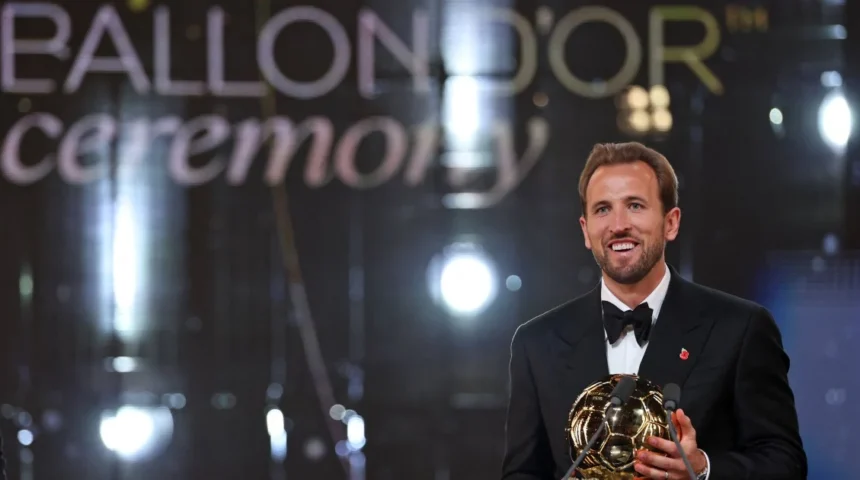
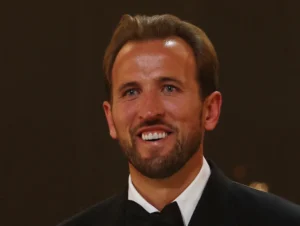
The Ballon d’Or has long stood as football’s most prestigious individual accolade, a shimmering testament to personal brilliance in a game driven by collective effort. Monday brought a historic milestone for English football when Bayern Munich striker Harry Kane captured the coveted prize, becoming the first Englishman to claim the honour since Michael Owen in 2001. Yet, beneath the glittering celebrations and the immediate flurry of headlines celebrating Kane’s remarkable achievement, his victory inevitably resurrects a fundamental, perennial question that has haunted the sport for decades: How can individual excellence be fairly and objectively assessed in a fundamentally team-oriented sport?
For much of the past two decades, that deep philosophical question was largely overshadowed, if not entirely buried, by the extraordinary, era-defining rivalry between Lionel Messi and Cristiano Ronaldo. From 2008 to 2017, one or the other of these two global icons claimed the Ballon d’Or every single year, transforming what was once a varied annual award into an exclusive, binary contest between two transcendent superstars. Messi ultimately accumulated a record-shattering eight trophies, while Ronaldo secured five, with the pair together accounting for an astonishing 13 of the 17 awards presented between 2008 and 2025.
Their unprecedented duel generated massive global excitement around an award that was first presented back in 1956, when England’s legendary "wizard of the dribble," Sir Stanley Matthews, became its inaugural recipient. But that captivating duopoly also pushed several critical, systemic questions far into the background of football discourse. Observers and purists alike are increasingly forced to confront uncomfortable truths: Has the growing commercialisation of the Ballon d’Or fundamentally distracted from its original purpose? Why does the voting body overwhelmingly reward attacking players above all others? And why does a supposedly global award remain so heavily and stubbornly focused on European football?
The relentless commercialisation of the Ballon d’Or reflects the broader transformation of football itself into a multi-billion-dollar global entertainment industry, in which individual players have evolved into lucrative corporate brands in their own right. Today’s top footballers do not merely represent their clubs or countries; they command vast digital empires, shaping public personas and consumer markets independently.
“The whole dynamic of the Ballon d’Or has changed because the dynamic of the sports and entertainment industry has changed with the way individual athletes are marketed,” Steve Martin, founding partner of MSQ Sport + Entertainment and formerly of M&C Saatchi, told The Athletic. “They’ve found a way as an individual athlete or player to build their own profile and their own fanbase, as opposed to relying on their clubs. They control their own destiny, and they market themselves.”
Former Switzerland defender Ramon Vega has been far more critical of this modern trajectory. “The commercialisation and monetisation of this award is not taking it in the right direction,” he told the writer.
While the Ballon d’Or has undoubtedly expanded into a much larger, flashier media spectacle, the intense glamour surrounding the red carpet and global broadcasts should not obscure the core inquiry of what genuinely constitutes individual excellence on the pitch. Furthermore, commercialisation is far from the award’s only structural flaw. For generations, the accolade has heavily favoured players in attacking positions, routinely sidelining the defensive architects of the game.
A goalkeeper’s or a defender’s performance on the pitch is every bit as vital as that of midfielders and strikers, especially in a sport where a team is theoretically only as great as the sum of its parts. Yet, Russia’s Lev Yashin remains the sole goalkeeper to have ever won the award, achieving the feat back in 1963. Meanwhile, Italy’s Fabio Cannavaro stands as the last defender to lift the trophy, doing so in 2006 after captaining his nation to World Cup glory. Germany’s Franz Beckenbauer and Matthias Sammer remain among the very few other defensive players to have ever received the honour.
“Goalkeepers and defenders are also part of the spectacle. Attackers don’t just play amongst themselves,” Cannavaro reflected to France Football after winning the award in 2006. “If a goalkeeper has saved 15 or so matches in a year, it’s only fair to highlight him.”
Despite the Italian’s astute observations, little has changed regarding the pervasive bias of voters. Strikers and playmaking midfielders starring for elite European clubs and major national teams continue to serve as the default yardstick for measuring global footballing excellence.
That narrow focus on European football highlights another longstanding weakness of the Ballon d’Or: its historical and ongoing failure to adequately recognise outstanding players from elsewhere in the world. For nearly four decades after the award was established, eligibility was strictly restricted to European players. This policy represented a glaring injustice to exceptional footballers originating from other continents, even those who dominated Europe’s leading domestic leagues. The late, legendary Diego Maradona stands out as perhaps the most notable victim of this restrictive exclusion.
The rigid nationality restriction was finally lifted in 1995, allowing players of any nationality playing at European clubs to compete for the prize. Yet it took another 12 years, until 2007, for the award to finally open its doors to players competing anywhere in the world.
Defenders of the early system might argue that when the award first began, club and national team football outside of Europe existed beyond the close observation and expert knowledge of the traditional Ballon d’Or selectors. However, that argument no longer holds water in the modern era. Knowledge and coverage of the global game have grown exponentially, yet recognition of excellence originating beyond Europe’s elite competitions remains stubbornly limited.
When Liberia’s George Weah became the first non-European player to win the Ballon d’Or in 1995, following a series of dazzling performances for Paris Saint-Germain and AC Milan, his historic victory was widely expected to open the floodgates for exceptional players from regions of the footballing world long denied recognition.
Yet, more than three decades later, the former president of Liberia remains the sole person from outside Europe and South America to have ever won the trophy.
“When I started playing football, I never thought I would ever win the Ballon d’Or and emerge as the best player in the world. I just had a passion for the game and I worked hard. Every day. I would rather train than eat or sleep,” Weah told the writer in Monrovia. “I am surprised that no other African player has won the award since I did so. I think there have been others that deserve to win. But it is down to those who select the winners.”
Cameroon’s Samuel Eto’o, the former Barcelona and Inter Milan striker who now serves as the president of his country’s football federation, is a prime example of a player who has every right to feel aggrieved about missing out before his retirement in 2019.
“It’s difficult to understand how Samuel Eto’o never won the Ballon d’Or with the impressive career he had,” Jose Mourinho, who managed Eto’o at Inter Milan, remarked in a 2019 interview with Cameroon Radio. “He played in three Champions League finals, winning two with Barcelona and scoring in both finals. He also won one Champions League at Inter and won many league titles. He was the best striker in the world for several years, and I think he deserved a Ballon d’Or, but these are things out of our control.”
Eto’o’s omission, much like Weah’s continued status as the lone African winner, raises persistent questions about how the award’s voters evaluate the monumental achievements of players hailing from outside football’s traditional European and South American powerhouses.
The Ballon d’Or does feature an international voting panel, relying on journalists from 100 different countries to select the winner from a carefully curated shortlist of 30 players. However, geographical representation among the voting press does not automatically translate into a genuine, unbiased recognition of global footballing talent.
France Football, the organisers of the award, must ensure that the comprehensive process of selecting nominees and ultimate winners draws upon a truly global understanding of the sport. The institution needs to give due, equitable recognition to exceptional players, regardless of their nationality or the specific continent where they ply their trade.
At the same time, the award must earnestly address its other glaring shortcomings. Football remains inherently a team sport in which goalkeepers, defenders, midfielders, and strikers all contribute uniquely to collective success, and individual accolades should reflect that balanced reality. Furthermore, the surging commercial appeal of the Ballon d’Or must not be allowed to overshadow or distract from the pure footballing achievements it was originally created to honour.
Ultimately, the Ballon d’Or should stand as a true celebration of individual excellence across every position and every continent, rather than remaining an accolade routinely dominated by the sport’s biggest commercial stars and Europe’s wealthiest competitions. Only when these systemic imbalances are addressed can the award genuinely claim to recognize the absolute best footballer in the world.
The views expressed in this article are the author’s own and do not necessarily reflect Al Jazeera’s editorial stance.

Related News