The Lone American Lawyer Standing Between US Free Speech and the UK’s Online Safety Act
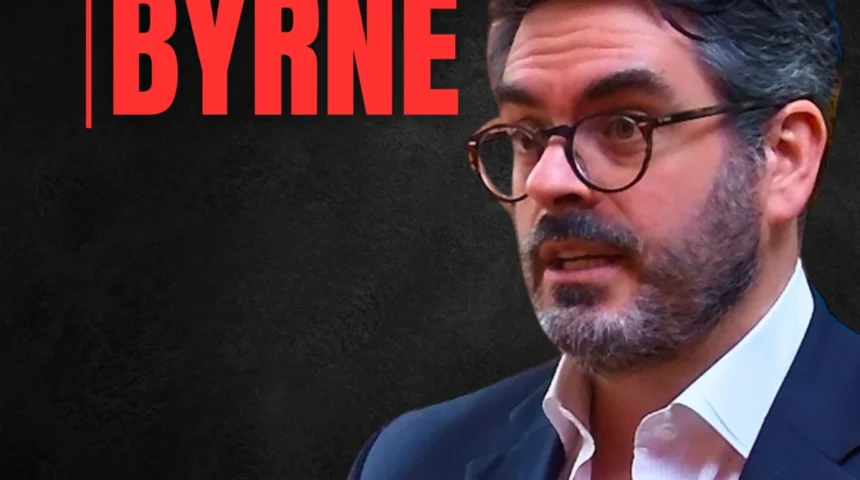
In an era of increasingly globalized internet regulation, a lone American attorney has emerged as the primary legal bulwark against what he describes as an aggressive British encroachment on American constitutional rights. Preston Byrne stands as the only American lawyer actively fighting the United Kingdom’s attempt to enforce its domestic censorship laws on US companies through the controversial Online Safety Act. Working entirely pro bono because no other traditional law firm would touch the cases, Byrne is representing a diverse roster of platforms—including 4chan, Kiwi Farms, Gab, and Sanctioned Suicide—to hold the legal perimeter for roughly 30 million users.
In a comprehensive interview with broadcaster Pete McCormack, Byrne breaks down the escalating international battle over digital free expression. He details why he believes Great Britain can no longer be considered a free country, what the UK media regulator Ofcom actually claims the power to do to American websites, and the mechanics behind London’s efforts to project British censorship laws directly onto American soil. The discussion explores the long trajectory of Byrne’s legal career, tracing his path from a traditional banking lawyer to a frontline defender of digital liberties, while examining the profound career costs, personal threats, and systemic implications of standing virtually alone on the legal battlefield.
From Corporate Law to the Frontlines of Free Speech
Byrne’s path to becoming the sole American attorney taking on Ofcom’s extraterritorial reach was not a conventional one. Reflecting on his transition from a standard corporate and banking practice to high-stakes constitutional litigation, Byrne notes a gradual realization about the fragility of modern liberties. It was an ethos encapsulated by the sentiment that many people do not truly understand how important a right is until it is actively stripped away from them.
The ideological groundwork for his current stance was laid decades ago, sparked by an early, formative incident that highlighted the expanding scope of police powers and state overreach in the UK. Byrne points to a moment involving a 16-year-old who was handed a criminal summons by the City of London Police simply for holding a sign. Looking back from the vantage point of the present, Byrne observes that it has taken nearly two decades for the rest of the public to finally catch up to the chilling reality of state control that he witnessed firsthand back then. What once seemed like isolated incidents of bureaucratic authoritarianism have steadily metastasized into sweeping legislative frameworks designed to police expression well beyond national borders.
The Reach of Ofcom and the Threat to American Websites
At the heart of Byrne’s legal challenge is the immense and largely unchecked regulatory apparatus of Ofcom, the UK’s communications regulator, under the provisions of the Online Safety Act. According to Byrne, the regulatory framework operated by Ofcom assumes extraordinary and unprecedented powers to dictate how American websites operate, what content they are allowed to host, and how they must police their global user bases. By issuing formal notices to companies headquartered in the United States—with records showing nearly 200 such notices already transmitted across the Atlantic—the British government is attempting to enforce compliance with UK legal standards outside British jurisdiction.
This assertion of extraterritorial authority creates a profound constitutional clash, directly challenging the robust protections enshrined in the First Amendment of the United States Constitution. Byrne argues that the system is inherently designed to produce violations, placing foreign corporations in an impossible bind where they must either submit to foreign censorship mandates or risk aggressive enforcement actions that leverage international financial systems. Central to this strategy is the chilling effect of sweeping compliance demands, which often push platforms toward heavy-handed content moderation and invasive age-verification measures that undermine user privacy and operational viability.
Despite the gravity of these regulatory actions, Byrne points out that the political landscape in the UK has largely failed to grapple with the fundamental erosion of civil liberties. Major political factions, from traditional reform movements to green parties, frequently miss the mark by either endorsing the underlying security narratives or proposing superficial adjustments that leave the core administrative apparatus intact. To truly address the crisis, Byrne argues that society needs a fundamental reckoning with the loss of fundamental freedoms, noting that when asked directly whether Britain remains a free country, his answer is a categorical no.
The Personal and Professional Cost of Standing Alone
Taking on cases that major corporate law firms refuse to touch carries a heavy toll. Byrne’s representation of controversial platforms like 4chan, Kiwi Farms, Gab, and Sanctioned Suicide is conducted on a pro bono basis, driven by the conviction that someone must hold the line against authoritarian overreach. This uncompromising stance has come with significant personal costs, including navigating targeted harassment, professional isolation, and even receiving explicit death threats originating from UK Internet Protocol addresses. In response to the hostile climate and the risks associated with jurisdictional overreach, Byrne has adopted strict personal precautions, stating that he refuses to set foot in the UK while these legal battles are ongoing.
The reluctance of mainstream legal institutions to engage in this fight reflects a broader systemic fear of challenging international administrative bodies and the associated economic pressures. Big law firms often shy away from defending unpopular clients or taking on controversial geopolitical cases that could disrupt their corporate relationships. Yet, Byrne maintains that the libertarian case for using the courts remains vital. By pushing back through formal legal mechanisms, challenging Ofcom’s statutory overreach, and exploring legislative pushbacks such as the proposed GRANITE Act—which seeks to leverage foreign assets held at institutions like the Federal Reserve—litigators can create tangible friction against creeping global censorship.
As the legal battles continue to unfold across multiple fronts, ranging from state-level challenges in Wyoming and Delaware to potential federal interventions, Byrne remains the solitary American lawyer actively holding the perimeter. For observers, listeners, and British citizens concerned about the future of global digital rights, the ongoing proceedings represent a critical test case for whether the long arm of foreign regulation can successfully subjugate American free speech protections, or whether the courts will draw a definitive line in the sand.

Related News