The Indispensable Role of Fossil Fuels: Why Total Elimination is a Misguided Mirage
By Max Gagliardi
We will never fully eliminate the use of fossil fuels. While this declaration may appear contentious—especially given the prevailing political narratives and media drumbeats urging a swift, absolute transition away from carbon-based energy—it is rooted in physical reality rather than ideology. Not only is the total elimination of fossil fuels practically impossible, but pursuing such a radical goal would ultimately prove detrimental to human progress, economic development, and global stability.
To understand why fossil fuels remain permanently woven into the fabric of modern civilization, one must look beyond the electricity grid and examine the foundational materials that sustain human life on Earth.

The Four Pillars of Modern Society
Consider what industry experts refer to as the four pillars of modern society: cement, steel, ammonia, and plastic. These four fundamental products are the absolute bedrock of contemporary infrastructure, shelter, agriculture, and healthcare. Yet, each of them depends entirely on large-scale inputs of fossil fuels, functioning both as high-heat sources for industrial processing and as chemical feedstocks.
According to projections from the International Energy Agency (IEA), the global consumption of all four of these vital products is expected to rise by a staggering 50% by the year 2050. As developing nations strive to lift millions out of poverty and match the infrastructural standards of the developed world, the demand for these carbon-reliant materials will only intensify.
Electricity is frequently touted as a universal panacea and a direct substitute for fossil fuels across all economic sectors. However, electricity is simply not economically feasible for many heavy industrial processes. The cost of electricity per unit of usable energy is significantly higher than that of natural gas—frequently by a factor of three to five. Furthermore, because coal still constitutes a substantial portion of the global power generation mix, blindly forcing industrial electrification could paradoxically lead to a net increase in global emissions rather than a reduction.

Cement and Steel
Cement and steel play an irreplaceable role in creating the physical structures that protect human populations from severe climatic elements and facilitate the construction of modern transportation networks, commercial hubs, and residential housing.
Emerging economies will need vast, unprecedented amounts of both cement and steel to match the infrastructural development historically enjoyed by the Western world. Countries like China and India, which currently rank as the largest consumers of these foundational materials, are driving global demand. Rather than attempting to halt production or penalize their use, the international community must recognize that these materials are prerequisites for human welfare and safety.
Without steel and cement, urbanization grinds to a halt, and societies lose their ability to withstand natural disasters, build resilient transportation corridors, and expand access to stable housing. The sheer scale of energy required to forge steel and cure cement means that fossil fuels will remain indispensable to heavy industry for generations to come.

Ammonia
Beyond heavy industry and construction, fossil fuels quietly sustain the global food supply. Ammonia is instrumental in creating the synthetic fertilizers that power modern, high-yield agriculture.
The industrial production of ammonia relies heavily on the Haber-Bosch process, a thermochemical reaction that requires massive inputs of natural gas, primarily methane, to capture and fix atmospheric nitrogen. Without the deployment of fossil fuel-based fertilizers, modern agriculture could not achieve the yields necessary to sustain the current global population.
Demographic experts and agricultural scientists note that without synthetic fertilizers, the Earth would only be capable of feeding a fraction of its inhabitants—meaning less than half of the world’s population could survive. Currently, despite decades of research and significant funding, there is no commercially viable alternative to the natural gas-dependent production of ammonia. Proposing the elimination of fossil fuels without a miraculous, scalable replacement for ammonia is tantamount to accepting a global food crisis of unimaginable proportions.

Plastics
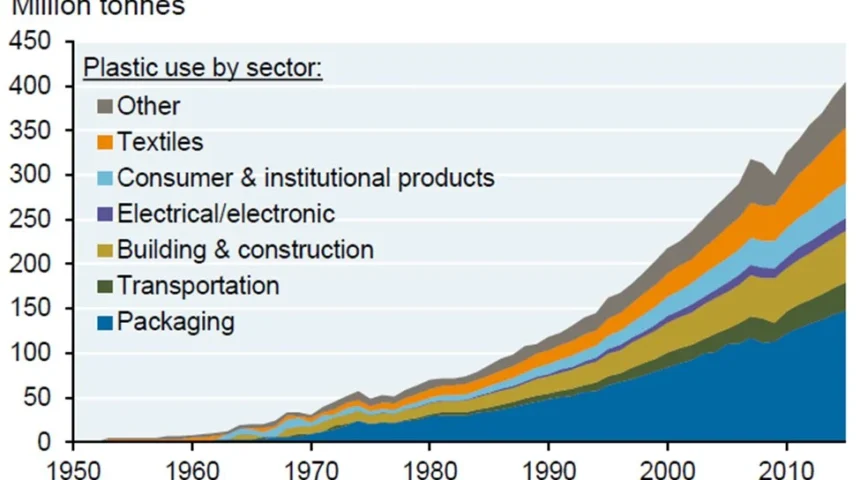
Perhaps nowhere is the vital, life-saving utility of fossil fuels more misunderstood than in the realm of plastics. Plastics are direct derivatives of petroleum and natural gas, representing a rapidly growing family of materials that continually propel modern civilization forward. According to the IEA, the global use of plastics is projected to surge by 150% by 2050.
Without plastics, contemporary life would look dramatically different—and infinitely more fragile. An undeniable, real-world example of the crucial, irreplaceable role of plastics can be seen in the global battle against the COVID-19 pandemic. Without advanced polymers and synthetic materials, the pandemic would undoubtedly have claimed millions of additional lives.
The mass production of sterile personal protective equipment (PPE), medical tubing, ventilators, single-use syringes, vaccine vials, and even the digital infrastructure enabling remote work all depended entirely on plastics. During one of the greatest public health crises in human history, fossil fuels quietly served as the unsung heroes, providing the material foundation for medical intervention and global connectivity.

Fueling Growth and Human Flourishing
The persistent notion that humanity can completely eradicate fossil fuels from daily life is fundamentally unrealistic. Even the most aggressive, optimistic transition scenarios focused on shifting electricity generation sources to renewables, or converting light-duty transportation fleets to electric vehicles, would not substantially reduce the overwhelming, structural demand for fossil fuels anticipated in the decades ahead. This reality is governed by the laws of physics, thermodynamics, and chemistry, not partisan politics.
Over the last century, fossil fuels have functioned as the primary driver of increased human life expectancy, poverty reduction, and widespread societal flourishing. The remarkable success and expansion of human life on Earth over the past hundred years are intrinsically tied to the harnessing of hydrocarbon energy.
As policymakers and industry leaders debate the future of global energy, it is vital to ground discussions in objective reality. The next time you hear a public figure suggest that society is on the cusp of eliminating fossil fuels entirely, it is worth remembering the foundational, life-sustaining role these resources play across every tier of human civilization.

Max Gagliardi is Managing Partner & Co-Founder of Ancova Energy.

Related News