El Salvador and Peru Forge Historic Strategic Partnership as President Nayib Bukele Hosts Peruvian President Keiko Fujimori
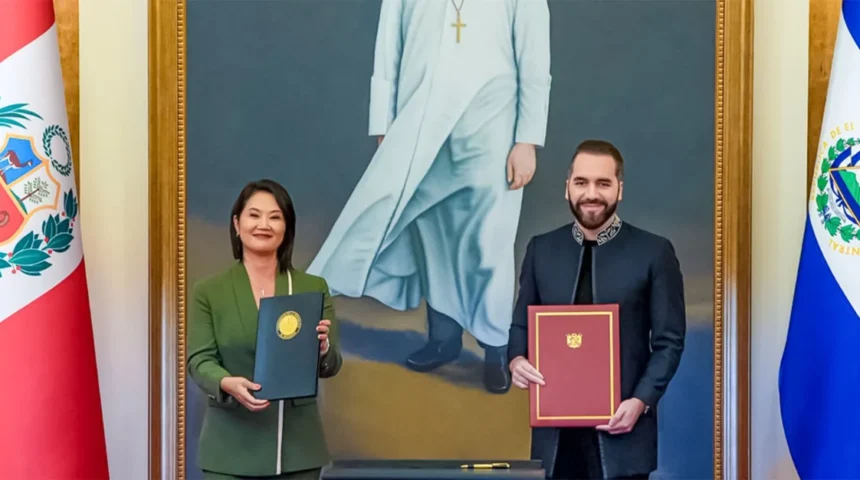
SAN SALVADOR — In a major diplomatic development aimed at reshaping regional integration and cross-border cooperation, Salvadoran President Nayib Bukele welcomed Peruvian President Keiko Fujimori to the Casa Presidencial for a high-profile, four-day official state visit. The summit marked a pivotal milestone in bilateral relations between the two Latin American nations, culminating in the signing of four comprehensive cooperation agreements designed to target critical governance sectors, including citizen security, public healthcare, tourism promotion, and judicial capacity building.
Against the backdrop of a changing geopolitical landscape in the region, the historic meeting laid the foundational groundwork for an expanded strategic partnership. Beyond the immediate bilateral accords, the high-level delegations engaged in substantive preliminary discussions regarding a potential Free Trade Agreement (FTA) intended to streamline trade barriers, stimulate regional commerce, and open new economic corridors between Central America and South America.
The arrival of the Peruvian delegation in San Salvador underscores a growing regional interest in the administrative and institutional transformations that have taken place in El Salvador over recent years. President Fujimori arrived at the head of a robust, high-level diplomatic and technical delegation, emphasizing that the primary objective of the mission was to study successful public policy models and evaluate how they might be adapted to address similar systemic challenges within Peru’s distinct national context.
"We wanted to come with a very high-level delegation because I believe that successful experiences must be analyzed and adapted, even though we are different countries," President Fujimori remarked during the official proceedings, pointing to the value of pragmatic international cooperation and the cross-border sharing of effective governance frameworks.
Central to the bilateral agenda and the discussions between the two heads of state was El Salvador’s widely publicized and transformative security model. In recent years, aggressive state-led anti-gang operations and sweeping judicial reforms have drastically altered the domestic landscape, propelling El Salvador from a position of profound insecurity to its current status as the safest nation in the Western Hemisphere. The turnaround has captured the attention of policymakers, criminologists, and international leaders across the globe who are eager to understand the mechanics of the strategy.
Prior to her formal meetings at the presidential palace, President Fujimori undertook a heavily publicized tour of the Center for the Confinement of Terrorism (CECOT), the maximum-security mega-prison constructed by the Bukele administration to house high-risk gang members. During the tour, the Peruvian leader examined the facility’s operational layout, security protocols, and penal management systems. Following her firsthand observation, Fujimori expressed strong interest in analyzing key components of El Salvador’s specialized penal management and modern crime-fighting strategies for potential application in Peru, which has similarly grappled with rising organized crime and prison administration hurdles.
President Bukele reiterated El Salvador’s ongoing commitment to sharing its operational expertise with international partners, emphasizing that the nation’s security methodology offers versatile, universal tools that friendly nations can tailor to their unique legal, cultural, and institutional realities. Reflecting on the monumental shift in national safety, President Bukele addressed the scope of the transformation during the meetings.
"We went from that to making El Salvador the safest country in the continent," President Bukele stated. "And it is no longer just the safest because there are no homicides; all crimes have dropped to the minimum in the region."
The agreements signed during the four-day visit extend far beyond penal reform and law enforcement, branching into vital areas of social development and human capital. The bilateral accords establish a direct institutional framework for technical cooperation between the health ministries of both countries. This cooperative channel is designed to facilitate the exchange of medical best practices, epidemiological data, and healthcare delivery strategies, ensuring that both nations can leverage shared insights to improve public well-being.
In tandem with the health agreements, the delegations laid out comprehensive plans to boost two-way tourism, a critical economic driver for both economies. This tourism initiative was finalized alongside Salvadoran Tourism Minister Morena Valdez, whose ministry has spearheaded recent international campaigns highlighting El Salvador’s surging hospitality sector, pristine Pacific coastline, and cultural heritage. To provide a firsthand look at these advancements, the presidential itinerary included guided visits to El Salvador’s innovative DoctorSV telemedicine facilities as well as the newly modernized Rosales National Hospital. These stops allowed the Peruvian delegation to inspect the country’s recent technological integrations and infrastructural investments in public health, which have modernized medical access for thousands of citizens.
The visit also yielded a signed joint declaration in which both governments formalized their shared commitments to ongoing cooperation in education, health, security, and institutional strengthening. The document serves as the formal diplomatic blueprint for the newly elevated partnership, signaling to regional observers that El Salvador and Peru intend to maintain a close, communicative, and mutually beneficial diplomatic channel moving forward.
Throughout the summit, President Fujimori expressed profound admiration for the direction of the Central American nation under its current leadership, describing El Salvador as a vital "beacon of hope for Latin America." She commended the administration for its decisive action in restoring peace, everyday safety, and fundamental freedoms to its citizenry, noting that the visible revitalization of public spaces and civic trust stands as a testament to effective political will.
President Bukele warmly welcomed the delegation, expressing strong confidence that the newly minted frameworks and institutional ties will foster long-term economic prosperity and robust social collaboration between the two nations for years to come. Solidifying the diplomatic momentum generated during the four days of talks, President Fujimori formally extended an official state invitation to President Bukele to visit Peru at a future date, marking the next anticipated chapter in the deepening relations between San Salvador and Lima.

Related News