The Paks II Dilemma: Can Hungary’s Troubled Nuclear Expansion Ever Be Completed—And at What Cost?
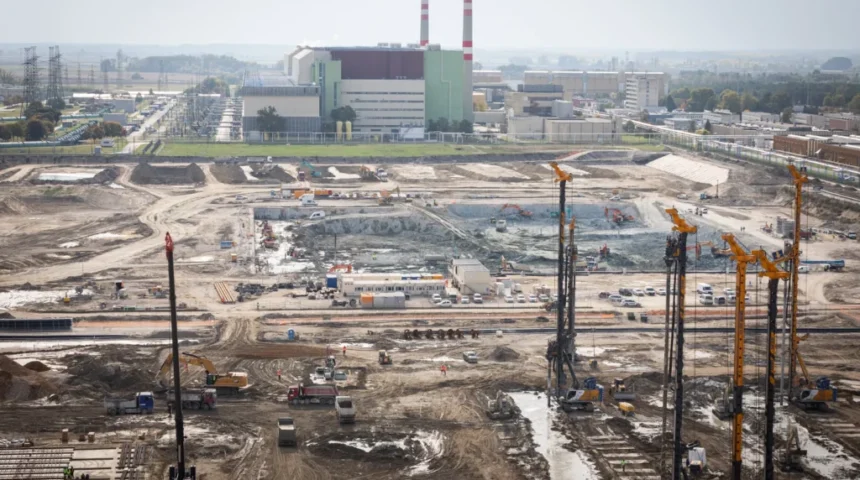
More than a decade after its initial conception, Hungary’s flagship Paks II nuclear expansion project remains trapped in an early, highly uncertain stage of development, despite the formal commencement of physical construction. Originally initiated in 2014 as a top-down political decision with questionable economic justifications, the investment has now accumulated a staggering decade-long delay compared to original timelines. While the “first concrete” milestone achieved in early 2026 marked a symbolic change in project status, energy analysts point out that it represents little in the way of genuine, operational progress. Costs have escalated dramatically, the ultimate financial burden on taxpayers remains shrouded in mystery, and the entire economic and strategic rationale of the project continues to unravel.
Authored by analyst András Perger, the current assessment of the Paks II project underscores that significant structural obstacles continue to impede implementation, leaving the future of the multi-billion-euro investment as an open question. Affected by compounding geopolitical risks, legal roadblocks, and shifting energy markets, the completion timeline, total cost, and fundamental economic viability of the project remain deeply uncertain.
With a major political transition unfolding following Hungary’s government change in May 2026, policymakers face an urgent opportunity—and a heavy burden—to evaluate the situation objectively. While continuing the project in its current form appears increasingly unviable, the incoming government confronts a difficult array of suboptimal options, each carrying substantial risks, financial liabilities, and complex geopolitical entanglements. Experts suggest that construction activities should be frozen during a thorough governmental review, accompanied by full transparency regarding previously concealed project data so that clear, rational decisions can be communicated to the public.
Background: A Politically Driven Genesis
Preparatory planning for the expansion of the Paks nuclear power plant began as early as 2008, with the Hungarian Parliament granting initial approval for the project in 2009. Although successive governments promised an open, international competitive tender in the following years, the trajectory of the project shifted dramatically in 2014. Without any open competitive tendering procedure, the massive nuclear contract was awarded directly to Rosatom, the Russian state atomic energy corporation.
The formal legal framework was established swiftly at the beginning of 2014, when an intergovernmental agreement between Hungary and Russia was finalized alongside a massive financing pact. This was followed by the signing of an Engineering, Procurement, and Construction (EPC) contract—commonly referred to as a turnkey contract—before the end of the year. The agreements outlined the construction of two new VVER-1200 reactor units, each with a capacity of 1,200 megawatts, with Rosatom acting as the principal contractor. The initial price tag was pegged at EUR 12.5 billion, with 80 percent of the venture financed through a substantial state loan provided by the Russian Federation.
From the outset, the project drew sharp criticism from independent energy analysts, economists, and civil society organizations like Energiaklub. Critics pointed out that the initiative lacked a comprehensive, transparent economic and feasibility assessment, arguing that the selection of the Russian partner was driven by political alignment rather than market logic. Furthermore, experts warned that the venture carried profound technological, financial, and geopolitical risks that the domestic project management apparatus was ill-equipped to handle. These structural concerns, including heavily asymmetrical contractual obligations and the inherent financial volatility of large-scale nuclear investments, have only intensified over time.
Delays in Implementation and Escalating Costs
Over the past decade, the Paks II project has been plagued by continuous setbacks. Under original projections, the new reactor units were scheduled to achieve commercial operation no later than 2026. However, as the project enters the latter half of the decade, it has effectively accumulated a ten-year delay. To date, no detailed, credible official schedule has been made public, with project proponents relying on vague and likely unrealistic estimates pointing toward the early to mid-2030s for completion.
These delays have not surprised industry observers, as chronic schedule overruns are a systemic characteristic of contemporary nuclear construction projects globally. In the specific case of Paks II, the delays have been compounded by a multitude of compounding factors. Regulatory hurdles involving European Union procedures have triggered repeated stoppages, while the stringent nuclear licensing requirements enforced within the EU framework—differing significantly from Russian domestic regulatory practices—found Rosatom unprepared. Furthermore, shortcomings in project management, the volatile geopolitical environment resulting from the war in Ukraine, and late engineering modifications, such as the requirement to construct a massive concrete protection wall around the excavation pit to safeguard the operating Paks I reactors, have added to the timeline stretching.
Financial expenditures have similarly skyrocketed. The original baseline budget of EUR 12.5 billion is no longer viewed as realistic by independent market analysts. Unofficial estimates suggest that total costs could ultimately reach up to EUR 25 billion, particularly when accounting for related infrastructure expenses and auxiliary investments that have been deliberately excluded from the official financial totals.
At the same time, the broader economic rationale for the plant has deteriorated. Beyond the massive cost inflation, the rapid technological advancement, falling costs, and widespread deployment of renewable energy generation and advanced energy storage systems have radically transformed the European electricity market, calling into question whether a baseload nuclear plant of this scale will even be economically competitive upon completion.
Status of the Project: The "First Concrete" Milestone
On February 5, 2026, project operators marked the symbolic pouring of the "first concrete" for the first new reactor unit, designated as Paks-5. According to criteria established by the International Atomic Energy Agency, this ritualistic milestone formally transitions a project into the "under construction" phase.
Nevertheless, energy watchdogs emphasize that this regulatory milestone does not signify that the physical plant is meaningfully closer to completion. The project has witnessed several similar foundational starting points over the years, including extensive site preparation and the ordering of long-lead major equipment, none of which succeeded in accelerating the actual pace of construction. As it stands, only a single unit holds the official status of being under construction, while the timeline for initiating work on the second unit, Paks-6, remains entirely unknown, casting further doubt over the eventual commercial startup date. Meanwhile, the overarching venture continues to navigate a sea of unresolved technical, legal, and financial risks.
Key Risks and Legal Turmoil
Beyond the standard economic and financial hazards associated with constructing complex nuclear infrastructure, the Paks II project is burdened by unique, acute vulnerabilities. Foremost among these are the geopolitical risks stemming from the choice of a Russian state-owned contractor, particularly in light of ongoing international sanctions against Moscow. While these risks have thus far been navigated through ad hoc exemptions granted by Western authorities, there are no long-term guarantees that these regulatory carve-outs will persist indefinitely.
A critical technological vulnerability emerged with the loss of the plant’s original instrumentation and control (I&C) system supplier, Siemens. The I&C system functions as the digital nervous system of a nuclear facility, governing its safe operation. To date, no viable replacement solution has been identified that fully satisfies stringent European Union safety and regulatory standards.
Adding to the instability, the project suffered a severe legal blow in September 2025 when the European Court of Justice annulled the European Commission’s 2017 approval of state aid for the venture. The legal challenge, brought forward by Austria, successfully argued that the European Commission acted unlawfully by approving the state aid without conducting a proper, thorough investigation into public procurement compliance. Specifically, the court highlighted that Hungary had awarded the multi-billion-euro project directly to a Russian main contractor without holding an open, competitive European tender.
It remains unclear how the European Commission will ultimately respond to the ruling. However, legal analysts suggest that the state aid question may be subjected to an entirely new, comprehensive review process, which could trigger another multi-year standstill. The persistence of Hungarian decision-makers in pushing the project toward its February 2026 concrete-pouring milestone, despite these glaring legal and regulatory uncertainties, has fueled concerns that the asymmetrical, pro-Russian structure of the underlying contracts leaves little room for domestic policymakers to alter course. Throughout the project’s lifespan, previous delays have consistently resulted in contract modifications that favored the Russian contractor over Hungarian national interests.
The Mandate for a Comprehensive Review
The political transition following the Hungarian government change in May 2026 presents a crucial window of opportunity to reassess the entire undertaking. The necessity of a thorough review was explicitly pledged during the electoral cycle, and initial administrative groundwork via governmental decree has already been initiated.
Energy experts and independent specialists argue that all physical construction activities must be immediately suspended while this comprehensive review is underway. To restore public trust and ensure economic prudence, independent nuclear and financial experts must be brought in to examine every conceivable scenario. Furthermore, absolute transparency must be maintained, ensuring that all findings, risks, and financial consequences are communicated clearly and honestly to the public.
Evaluating Future Scenarios
In its present form, the Paks II project is widely viewed as untenable, necessitating a fundamental strategic reassessment. The incoming administration inherits an extraordinarily difficult position, as every available path forward is laden with severe risks, financial liabilities, and high expected costs.
Opting for the complete cancellation of the project would inevitably trigger substantial legal and financial ramifications, particularly concerning compensation claims from contractors for work already performed and equipment already ordered. While international sanctions and force majeure legal arguments could potentially mitigate some of these liabilities, managing the fallout of an abandoned nuclear site and partially completed infrastructure would present a formidable administrative challenge.
Alternatively, replacing the main contractor would effectively require abandoning the current design and introducing a completely new reactor technology, amounting to a total restart of the project. Such a drastic step would mandate entirely new licensing procedures, fresh European Union investigations, and a delay of several additional years. Moreover, much of the civil engineering work already completed would be rendered obsolete, generating massive sunk costs and further financial burdens.
Finally, attempting to continue the partnership with Rosatom under heavily revised terms appears increasingly unfeasible given the accumulated historical delays, quality control concerns, compounding sanctions risks, and the permanent loss of essential Western supply chain partners. As policymakers begin the difficult task of untangling a decade of political maneuvering and technical setbacks, the future of Hungary’s nuclear ambitions remains one of the most contentious and unresolved questions in the region’s energy landscape.

Related News