Europe’s Inflation Crisis Highlights Urgent Need to Accelerate Renewable Energy Transition, Financial Analysis Shows
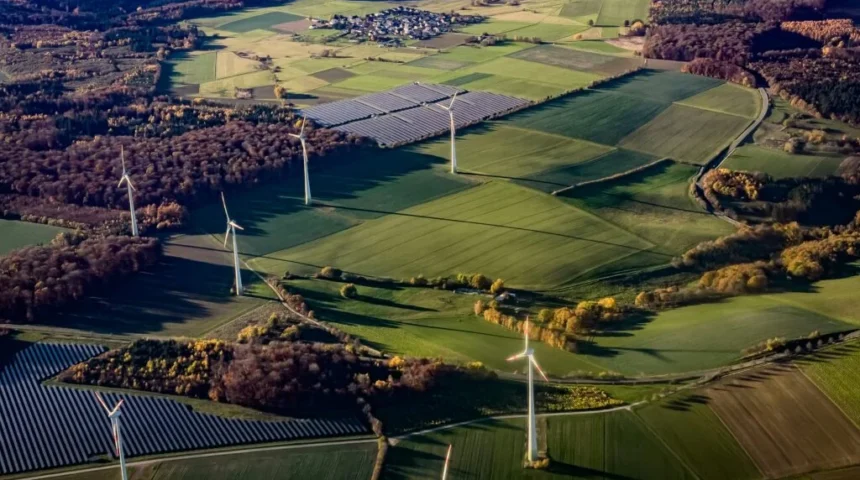
As the intense summer heatwaves across Europe gradually fade from memory, the economic pressure of soaring energy bills shows no signs of cooling down for European Union households and businesses alike. Recent global geopolitical disruptions, most notably the ongoing conflict in the Middle East involving the United States and Iran alongside the critical closure of the Strait of Hormuz, have once again laid bare a vulnerable reality for the European continent. Fossil fuel dependency remains an acute, persistent threat not only to the EU’s climate objectives but to the stability of its broader economy.
This structural vulnerability is fueling a phenomenon economists and analysts increasingly refer to as "fossilflation." Driven by climbing global oil and gas prices, headline inflation across the EU has been pushed toward the 3% threshold as of July 2026. However, experts emphasize that Europe’s chronic energy affordability crisis cannot be dismissed merely as the byproduct of temporary geopolitical shocks. Rather, it is the direct consequence of a deeply ingrained, structural reliance on volatile fossil fuel markets.
A compelling financial analysis recently published by Veronica Calienno of Positive Money Europe sheds new light on the economic imperatives underpinning the energy transition. The research highlights how expanding solar and wind infrastructure successfully drove wholesale electricity prices down by an average of 24.2% across the EU between 2023 and 2025. Furthermore, the analysis demonstrates how the downward pressure on prices intensifies exponentially as renewable capacity scales up. Yet, despite these clear economic benefits, a persistent investment gap continues to hold the transition back, with the cost of capital emerging as the decisive factor determining how rapidly Europe can build its way toward cheaper, more stable energy supplies.
For years, the expansion of green energy has been framed primarily as an environmental imperative or a specialized climate policy. However, the financial case reveals that an energy system anchored in renewables is fundamentally designed to deliver lower and more stable prices by design. Beyond decarbonizing the energy grid and safeguarding public health and the planet, a renewable-based architecture can make daily life more affordable for citizens while restoring crucial competitive ground to European industries.
What Makes Renewable Prices More Stable Than Fossil Fuels?
The fundamental structural difference between fossil fuels and renewables lies in their underlying resource availability and cost dynamics. Traditional energy sources like oil and gas are geographically concentrated in a handful of regions worldwide and controlled by a limited consortium of producer countries. This centralization leaves supply chains exceptionally vulnerable to both accidental mishaps and deliberate geopolitical disruptions.
In contrast, renewable energy relies on sunlight and wind—resources that are available, to varying degrees, across virtually every corner of the EU. Yet the most profound divergence between the two energy models is found in how their costs are structured. Fossil fuel power plants must continuously purchase fuel to remain operational. Consequently, their operational costs remain permanently tethered to global commodity markets, where prices fluctuate minute by minute in response to wars, pandemics, supply chain bottlenecks, and the rhetorical shifts of world leaders. As long as Europe depends on fossil fuels, it remains tethered to this inherent volatility.
Solar and wind operate on an entirely different financial logic. Once a renewable installation is constructed, its operating costs are remarkably low and predictable. The fuel itself is entirely free, and power output can be forecasted accurately through sophisticated weather models while being secured under long-term production contracts. Essentially, renewables shift the financial burden of energy production away from volatile daily fuel markets and concentrate it into upfront capital investments.
While renewable technologies certainly introduce their own set of supply chain dependencies—particularly regarding imported technologies and critical raw materials sourced from regions including China—the inflation risk differs fundamentally. A disruption in the import of solar panels or associated raw materials may raise the capital expenditure required for new construction projects, but it does not drive up the operational cost of generating electricity from wind and solar farms that are already up and running.
This distinct cost structure explains why solar and wind have established themselves as the cheapest sources of new electricity available today. The levelised cost of electricity (LCOE)—which measures the average net present cost of electricity generation for a generating plant over its lifetime—is vastly lower for renewables and has experienced dramatic declines. Between 2010 and 2024, the global LCOE plummeted by 90% for solar photovoltaic (PV) systems and by 70% for onshore wind, propelled by rapid technological innovation, sustained investment, and scaled-up industrial deployment.
Within the EU today, the LCOE for solar power ranges between €24 and €62 per megawatt-hour (MWh), varying by member state. Onshore wind ranges from €36 to €51 per MWh, while offshore wind spans €61 to €95 per MWh. Gas-fired generation, by comparison, hovers between €109 and €181 per MWh. These stark figures underscore a simple economic reality: producing electricity from the sun and wind is substantially cheaper than generating power from natural gas.
This economic advantage is actively transforming Europe’s electricity matrix. Following the dramatic upheaval in energy markets that began in 2022, renewables accounted for 47.2% of total electricity generation across the EU in 2025, with solar and wind alone representing 30%. Fossil fuels, meanwhile, accounted for just over 29.6%. This shift reflects not only ambitious EU decarbonization targets but also the increasingly undeniable profitability of investing in clean generation assets.
How Wind and Solar Lower Electricity Prices
The accelerating deployment of renewables is already exerting downward pressure on electricity prices across the continent. According to Positive Money Europe’s findings, solar and wind shaved an average of 24.2% off wholesale electricity prices between 2023 and 2025, providing a vital cushion following the severe spikes triggered by Russia’s war on Ukraine.
To comprehend how renewables actively reduce electricity costs, one must examine the mechanics of the EU’s marginal pricing electricity market. Under prevailing EU market rules, the system operates on a merit-order basis. The cheapest available sources of electricity are dispatched first to meet immediate demand, while the most expensive power plant required to satisfy the remaining demand sets the final market-clearing price for all producers.
Because renewables boast near-zero operating costs, they enter the market queue first, followed by progressively more expensive sources such as nuclear, gas, and coal. Renewable generation exerts downward pressure on prices through two complementary mechanisms. First, an influx of renewable electricity displaces expensive gas and coal generation, pushing them out of the merit-order stack entirely. Even during hours when natural gas is still required to set the marginal price, high volumes of renewable generation can crowd out the least efficient, most expensive gas plants, allowing a cheaper gas facility to set a lower final price.
Second, when renewable generation is abundant enough to cover total demand entirely, variable-cost-free renewables effectively dictate the marginal price themselves, driving wholesale prices down significantly.
Nonetheless, this market design also reveals why Europe’s power grid remains susceptible to external shocks. Although natural gas is no longer the EU’s primary source of electricity generation, it frequently sets the market price during hours when renewable output falls short of demand. Because gas prices remain highly volatile, that instability is transmitted directly to the wider electricity market, meaning wholesale prices have yet to fully decouple from fossil gas trends.
The decisive takeaway is that renewables do not merely inject cheaper electricity into the grid; at sufficient scale, they systematically reduce the number of hours in which gas acts as the price-setter. The more frequently this occurs, the more effectively Europe can sever the link between fossil fuel volatility and electricity pricing.
Consequently, the price-lowering efficacy of renewables depends heavily on the existing share of wind and solar within a given nation’s energy mix. The divergence among EU member states illustrates this dynamic clearly. In Spain, where solar and wind capacity nearly doubled between 2016 and 2025, these technologies reduced wholesale electricity prices by 35.6%.
The deflationary effect is also markedly non-linear, meaning prices fall at an accelerating rate as renewable penetration deepens. In France, lifting renewable penetration from 10% to 20% reduces wholesale prices by roughly 16 percentage points, whereas an increase from 25% to 35% yields a much steeper reduction of approximately 45 percentage points. Conversely, in Italy, where natural gas continues to account for roughly 50% of electricity generation, wholesale prices have declined by a more modest 11.2%.
Yet, scaling up generation capacity alone is insufficient. Storage and grid flexibility—systems and technologies that allow electricity consumption to be decoupled from the exact moment of generation—are equally crucial. Because solar and wind are inherently weather-dependent, prolonged lulls in wind or the absence of sunlight at night can cause electricity prices to spike as gas-fired plants step back in to balance the grid. Integrating utility-scale battery storage to capture excess daytime generation helps smooth out these supply fluctuations, mitigating price spikes and fortifying grid stability.
The overarching policy lesson is evident: Europe requires not only greater renewable generation capacity but also the transmission grids, interconnectors, storage facilities, and demand-side flexibility necessary to allow clean energy to displace fossil fuels on a permanent basis. This is how the EU can transition from merely dampening wholesale prices temporarily to structurally stabilizing them over the long term.
The Investment Gap Europe Still Needs to Close
The overarching equation facing the European Union is straightforward: the more wind and solar capacity the bloc deploys, the further electricity prices can fall and stabilize. Renewable energy functions far beyond a traditional decarbonization strategy; it acts as a macroeconomic multiplier serving the public interest. It delivers reduced market volatility, spares public finances from repeated emergency interventions, bolsters energy sovereignty, enhances industrial competitiveness, and eases the cost of living for European households.
However, this transition will not accelerate at the requisite speed without deliberate intervention. If Europe intends to harness renewables to decisively lower utility bills and curtail its dependency on imported fossil fuels, it must mobilize capital at unprecedented speed and scale. This imperative demands targeted public policy, strategic public investment, and a financial architecture explicitly aligned with the build-out of clean energy infrastructure.
At present, Europe lags behind the required trajectory. The EU Clean Energy Investment Strategy, launched by the European Commission in March 2026, projects that annual investments across the energy system must climb to approximately €660 billion annually through 2030, before rising further to €695 billion annually between 2031 and 2040.
Access to adequate financing remains a formidable bottleneck. Data from a European Investment Bank survey indicates that access to finance represents the single greatest barrier for clean-technology firms, with 30% citing it as a major operational obstacle—more than double the proportion reported by businesses across the broader economy.
This financial friction is exacerbated by the unique cost structure of clean energy. While renewables are remarkably inexpensive to operate, they require heavy upfront capital expenditure for planning, permitting, equipment procurement, installation, grid connection, and storage facilities. Once constructed, the fuel is free, but securing upfront financing is a mandatory prerequisite.
This reality places immense weight on the cost of capital. Elevated interest rates penalize capital-intensive renewable energy projects far more severely than fossil fuel infrastructure. For instance, raising benchmark interest rates from 2% to 6% increases the LCOE for solar-plus-storage installations by roughly 33% and onshore wind by approximately 24%, compared to a negligible 3.7% increase for natural gas generation.
In practical terms, expensive money renders cheap energy significantly harder to construct, threatening to slow down the very investments required to shield European economies from future fossil fuel price shocks.
If Europe aims to secure lower utility bills, strengthen its industrial base, and insulate its citizens from future commodity crises, it can no longer afford to treat clean energy investment as an optional or strictly environmental endeavor. Policymakers must recognize it as critical price-stability infrastructure, utilizing all available regulatory, monetary, and fiscal instruments to accelerate the systemic shift away from fossil fuels.

Related News