The Power of Nostr: How a Decentralized Communication Protocol Is Reshaping Social Media and Payments
By Lyn Alden
Published: July 2024
The digital landscape has long been defined by walled gardens. For years, users have navigated a fragmented online ecosystem where digital identities, content libraries, and follower lists remain firmly trapped inside individual corporate silos. If a creator builds an audience on Twitter, LinkedIn, Instagram, or Substack, that audience cannot easily be brought to another platform. Accounts are governed by centralized authorities capable of altering content, modifying algorithms, freezing accounts, or demanding compliance with shifting regulatory frameworks across international borders.
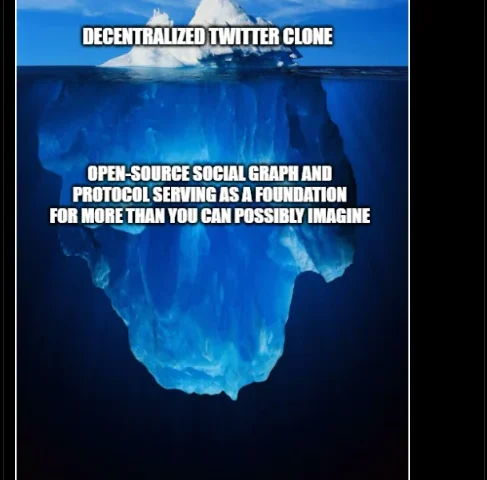
A growing public domain communication protocol known as Nostr is now emerging as a credible mechanism to dismantle these barriers, offering true interoperability across digital ecosystems. Standing for "Notes and Other Stuff Transmitted by Relays," Nostr provides a foundational set of open-source building blocks that, with continued adoption, could gradually reshape the internet. Rather than forcing users to choose between closed corporate ecosystems, the protocol disperses power back to content creators and audiences, functioning as an optional alternative to the centralized web.

Understanding the Protocol Layer: From SMTP to Social Media
To understand how Nostr functions, it helps to examine how the internet already handles open-source communication through email. When users send messages across different webmail providers, they rely on a public domain communication protocol called Simple Mail Transfer Protocol, or SMTP. Created in 1981, SMTP is owned by no single entity and operates like a shared language.
A user on Gmail can seamlessly email someone using Yahoo, Outlook, or Proton. Individual webmail clients are still controlled by centralized companies that can filter incoming messages, add custom features, or implement their own user interfaces, but the underlying communication standard remains entirely decentralized. No government or corporation can ban a user from SMTP itself, much as no entity can ban someone from speaking a spoken language.
Social media ecosystems, by contrast, have evolved as closed networks where a Facebook user cannot message a Twitter user, and a departing user cannot take their follower graph with them. Nostr applies the structural philosophy of SMTP directly to social media and general communication, enabling users to maintain permanent control over their digital identities.

Identity, Keys, and Relays
At the core of Nostr’s architecture is a simple public and private cryptographic key pair. A user’s public key serves as their permanent digital identifier, while their private key acts as the secure signature mechanism used to publish events, read direct messages, claim digital tokens, and verify ownership of content.
The ecosystem operates through a network of application clients and relay servers developed independently by various entities and individuals. Using a client application on a phone or computer, a user creates events—ranging from profile updates to written posts—and publishes them to multiple relays globally for storage and public access. Client applications regularly query these relays to retrieve published content, allowing users to connect to any combination of relays they choose.
Because every piece of content published on Nostr is cryptographically signed by the user’s private key, malicious relay operators cannot forge posts, alter previously published history, or impersonate creators. If a user becomes dissatisfied with a particular application client, they can securely input their private key into an alternative client, instantly bringing their entire digital identity, publication history, and social graph along with them. Applications such as Primal, Damus, Amethyst, and Snort demonstrate how distinct user experiences can be built on top of the same underlying protocol.

The Technical Sweet Spot
Centralized social media corporations offer efficiency through single-server architectures, but they do so by imposing closed, permissioned environments. Conversely, requiring every individual user to run a dedicated personal server would introduce unsustainable redundancy and expense.
Nostr occupies a pragmatic middle ground on the spectrum of decentralization. By distributing data storage across numerous independent relay servers and empowering users to switch freely among application clients, the network achieves high redundancy without placing operational burdens on the average user. If a specific relay refuses to accept transmissions, content remains accessible through alternative relays. This structural resilience offers significant advantages over prior decentralized social experiments like Mastodon, combining simplicity with rapid, low-cost protocol development.
Social Media Tipping via Zaps
While Nostr is not a blockchain, it integrates seamlessly with the Bitcoin network and its scaling layers to facilitate instant micropayments. In addition to traditional social interactions like liking, reposting, or commenting, Nostr clients enable users to send "zaps"—fractional bitcoin units known as sats that flow directly from one wallet to another.

These transactions appear directly on social posts alongside likes and reposts, providing creators with a direct monetization channel while allowing readers to support quality content in real time. Because zaps carry a minor economic cost, they also function as a form of proof-of-work voting, offering algorithm developers a reliable variable to combat spam and highlight relevant material. The interoperable nature of these payments allows users to connect various custodial and non-custodial lightning wallets across different client interfaces, bridging domestic and international boundaries.
Choice of Content Discovery and Free Agency
The debate surrounding modern digital platforms frequently centers on content moderation and free speech, but technology executives like Jack Dorsey have argued that the deeper societal challenge involves human free agency and content discovery algorithms. Centralized platforms utilize proprietary discovery mechanisms that continuously analyze user engagement to refine behavioral profiling, often driving polarization and eroding individual autonomy.
Nostr addresses this challenge by decoupling the discovery layer from the underlying communication protocol. Users are no longer locked into a single corporate algorithm; instead, they retain the freedom to select algorithms provided by trusted third parties, build custom discovery mechanisms, or operate without automated filters entirely. By establishing a public square on the internet where identity and data transport remain sovereign, the protocol challenges the monopolistic chokehold that major technology firms have maintained over information access.

Building a Public Payment Directory
Beyond its social media capabilities, Nostr functions as a robust global public payment directory, combining a communication protocol with payment discovery. Traditionally, digital transactions require both parties to coordinate bilaterally by exchanging payment addresses, account details, or QR codes.
By linking a Lightning or ecash wallet directly to a verified Nostr profile, users eliminate this administrative friction. Payers can unilaterally look up acquaintances, content creators, or public figures across the network and settle payments instantly, accompanied by direct messages. This capability transforms peer-to-peer financial interactions into a seamless experience comparable to centralized regional applications like Venmo, but operating on an open-source, international, and interoperable foundation.
The challenge of maintaining an open payment directory—such as preventing impersonation and spam—is mitigated by Nostr’s integrated social graph and web of trust. Users can evaluate accounts based on follower counts, establish cryptographic links from personal websites, and cross-reference identities through trusted peer networks, ensuring that financial transmissions reach intended recipients accurately.

The Potential for "Other Stuff"
The protocol’s lightweight design has encouraged developers to build dozens of specialized applications that leverage Nostr’s shared data layer. Ranging from long-form publishing and Reddit-like discussion boards to podcasting, video sharing, and digital marketplaces, these applications plug directly into an existing network effect and user base without requiring developers to bootstrap user acquisition from scratch.
While the Bitcoin protocol establishes a global consensus state for settlement and sound money at the base layer, Nostr handles arbitrary data distribution and social interaction without the immense costs associated with global consensus ledgers. Just as email does not require every server on earth to maintain a synchronized record of every message ever sent, Nostr relays store and distribute information efficiently based on user demand and regional relevance.
As development continues across clients, relays, and payment integrations, the combination of decentralized data availability and open-source monetary networks continues to offer a compelling architectural alternative for the future of the internet.

Related News