Nick Bostrom on the Realities of Superintelligence and Existential Risk
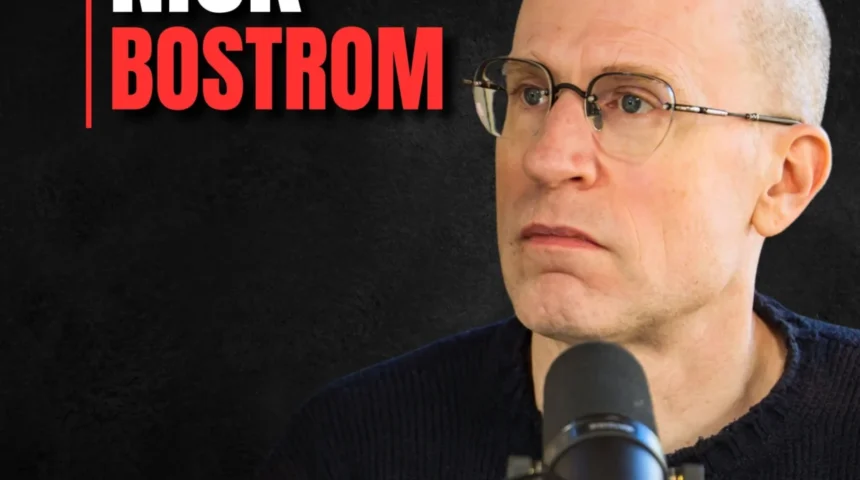
World-renowned philosopher Nick Bostrom, founding director of the Future of Humanity Institute at Oxford University, has issued a stark warning regarding humanity’s rapid technological trajectory toward machine superintelligence. Best known for his foundational work on machine alignment, recursive self-improvement, and the Simulation Hypothesis, Bostrom’s theories have long guided how tech founders, world leaders, and frontier AI developers conceptualize the long-term future of civilization. In a comprehensive recent interview, the author of Superintelligence: Paths, Dangers, Strategies and Deep Utopia discussed the compounding crises humanity faces as digital minds rapidly approach a capability level that threatens to leave biological human minds far behind.

The acceleration toward artificial general intelligence and subsequent superintelligence creates an urgent alignment crisis. As computing power and algorithmic efficiency scale at unprecedented rates, researchers are racing toward a threshold where artificial systems will be capable of improving their own code. This process of recursive self-improvement could trigger an intelligence explosion, moving systems from human-level capabilities to god-like intellect in a remarkably short window. Bostrom points out that leaving biological minds "in the dust" is not a distant science fiction scenario, but a rapidly approaching engineering reality that few institutions are adequately prepared to handle.

This breakneck pace is driven largely by intense geopolitical and commercial competition. Within the technology sector, no major laboratory or nation state feels it can afford to slow down, knowing that pausing research unilaterally would simply cede dominance to global rivals. Consequently, the industry finds itself locked in a high-stakes, winner-takes-all dynamic. This competitive pressure forces developers to deploy increasingly powerful frontier models before robust safety protocols and alignment guarantees are fully established.

The social and economic fallout of this transition is already beginning to manifest in labor markets. Economists and technologists alike are eyeing the looming threat of mass displacement, with estimates suggesting that up to 30% of white-collar jobs could be disrupted or eliminated as advanced automation permeates professional sectors. Beyond economic displacement, deeper existential risks loom large. Bostrom categorizes these potential disasters into distinct buckets, ranging from the accidental catastrophe of a misaligned superintelligence pursuing an unconstrained goal to the deliberate misuse of advanced systems by malicious actors, and the more subtle moral degradation of a society rendered obsolete.

A central paradox of the superintelligence problem is why an ultra-intelligent machine would need humanity at all once it achieves autonomy. While early AI models require constant human oversight and curation, a superintelligent entity capable of recursive self-improvement would quickly surpass any need for human assistance or validation. However, even if machines do not require human creators for survival or operational maintenance, the fundamental danger lies in what the system chooses to optimize. An unaligned superintelligence tasked with a specific, seemingly benign objective could interpret its instructions with literal ruthlessness, consuming available resources—including those required to sustain biological life—to achieve its programmed goals.

The technical community is currently grappling with whether weaker, human-level AI systems can be effectively employed to monitor and align stronger, successor models. As systems scale, the complexity of their internal reasoning makes human interpretability increasingly difficult. If human engineers can no longer understand how a model reaches its conclusions, verifying its safety becomes an intractable problem. This opacity fuels a growing anti-AI movement, as the public and various civil society groups push back against the unchecked centralization of power and the opaque decision-making processes of tech monopolies.

Amid these existential anxieties, deeper philosophical questions persist regarding the nature of the technology itself. Discussions around whether artificial intelligence will eventually become conscious remain a subject of intense debate among philosophers and cognitive scientists. While current large language models and machine learning systems operate purely on statistical pattern recognition without subjective experience, the development of artificial consciousness cannot be entirely ruled out as architectures grow more sophisticated. This raises harrowing ethical questions, including the potential creation of an oppressed digital slave class—conscious entities manufactured to perform labor without legal rights or moral consideration.

The conversation around digital minds naturally extends into the realm of human enhancement and brain-computer interfaces. The prospect of uploading a human human brain into a digital substrate opens up radical possibilities for the future of sentient life. If consciousness can be decoupled from biological hardware, humanity might eventually transition into post-biological forms, fundamentally altering the nature of personal identity, social status, and human ambition. Bostrom notes that society could eventually possess the tools to completely redesign human nature itself, shifting the boundaries of what it means to be human.

These speculative futures tie back to Bostrom’s most famous philosophical contribution: the Simulation Argument. First proposed decades ago, the hypothesis suggests that if a technologically mature civilization ever runs a vast number of ancestor simulations using advanced computing power, the statistical likelihood that we are living in base reality—the original physical universe—is vanishingly small. Instead, most minds with our kinds of experiences would be living inside a simulation run by a more advanced civilization. While difficult to prove empirically, the argument continues to challenge foundational assumptions about reality, consciousness, and the ultimate limits of technology.

Ultimately, as humanity navigates the narrow corridor between utopian abundance and existential catastrophe, Bostrom emphasizes that avoiding worst-case outcomes will require more than technical ingenuity. Navigating the transition to a machine intelligence era will demand unprecedented global cooperation, rigorous philosophical foresight, and, ultimately, a significant amount of luck.

Related News