CVS Health Plans Historic Split to Dismantle $78 Billion Aetna Merger and Separate Retail Pharmacies from Insurance
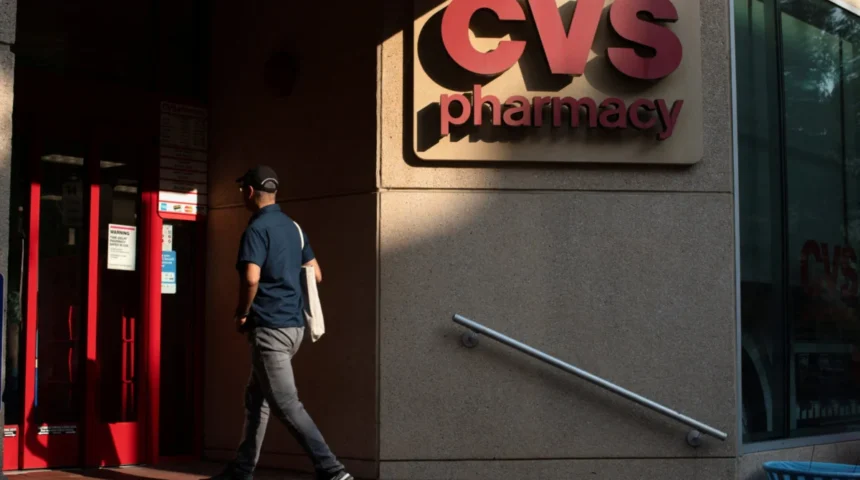
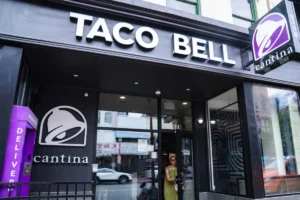
CVS Health announced on Wednesday that it plans to split into two separate publicly traded companies by the first half of 2028, in what would stand as one of the largest corporate breakups in history. The sweeping decision marks a complete reversal of the healthcare giant’s massive $78 billion acquisition of insurer Aetna and formally dismantles the vertically integrated healthcare conglomerate that the company created in 2018. Under the proposed plan, CVS will cleanly separate its approximately 9,000 retail pharmacies from its major insurance operations and its pharmacy benefit manager, Caremark, which ranks as one of the nation’s three largest PBMs.
The structural overhaul follows what the company described in a news release as a "comprehensive strategic review" conducted by its board of directors. It represents a stunning pivot for a healthcare powerhouse that spent the last two decades transforming itself into an all-encompassing, one-stop health destination for American consumers. The announcement also arrives as CVS navigates an aggressive turnaround plan under CEO David Joyner, which has already shown substantial progress. Under Joyner’s leadership, the company has pursued $2 billion in cost cuts, strategic store closures, leadership shakeups, and renewed efforts to rein in escalating Medicare Advantage costs.
"From a position of strength, and a focus on the long term, we plan to create two focused companies to improve consumer engagement, affordability, and care coordination," Joyner said in the official release. Company performance has notably rebounded since Joyner took the helm in October 2024, with shares jumping roughly 70% and bringing the corporation’s market value to $117 billion.
Following the completion of the split, both resulting entities will operate as independent, publicly traded companies. The insurance and pharmacy benefit manager division will retain the CVS Health name and remain under the executive leadership of Joyner. Meanwhile, the standalone retail pharmacy business will be named CVS Pharmacy and will be led by Prem Shah, who currently serves as group president of CVS Health. The company stated that additional executive leadership positions and board members for both entities will be formally announced at a later date. Existing CVS shareholders will retain ownership stakes in both new publicly traded companies after the transaction is finalized. The Financial Times first reported the potential breakup plans on Tuesday.
Financial disclosures illustrate the immense scale of the segments involved in the split. In 2025, the company’s retail pharmacy business generated $37.66 billion in sales, while its insurance unit booked $36.29 billion in revenue and its broader healthcare services segment pulled in $51.24 billion. Ahead of the formal breakup announcement, CVS also outlined plans to lump its core insurer and PBM units alongside its primary care business Oak Street Health, home-visit provider Signify Health, and its specialty drug business.
Executives and analysts alike have emphasized that the separation will allow both independent corporate entities to pursue a more "focused strategic agenda" while boosting their capacity to "innovate, adopt technology, increase efficiency," and deliver targeted services.
While the announcement formalizes the company’s direction, it is not the first time CVS leadership has evaluated breaking up the enterprise. In October 2024, CVS engaged outside financial advisors to conduct a formal strategic review of its business model, during which executives actively weighed the possibility of separating its retail pharmacy operations from its insurance units.
Even with those prior considerations, market analysts expressed genuine surprise at the definitive news. Leerink Partners analyst Michael Cherny noted in a note to clients on Tuesday that the planned split "feels like a complete shock." However, Cherny pointed out that the standalone retail pharmacy business has been performing impressively well, successfully capturing market share from competitors and experiencing stabilizing gross margins. This resilience has been supported in part by CostVantage, a new pharmacy reimbursement model that CVS introduced to the market last year.
"In this context, perhaps the outlook for a standalone retail pharmacy (still with meaningful scale and leverage on its own) is stronger now than before," Cherny wrote. He further observed that "the rationale could also be to avoid what has been relentless state legislative scrutiny over the company’s level of vertical integration."
The potential breakup comes at a time when pharmacy benefit managers are facing mounting, intense bipartisan scrutiny in Washington, D.C., and across various state legislatures. PBMs, which serve the crucial function of negotiating drug prices and managing prescription drug benefits on behalf of corporate employers and health insurers, have increasingly drawn public and regulatory criticism. Critics have frequently targeted their opaque pricing structures, growing market power, and inherent potential conflicts of interest when operations are housed under the same corporate umbrella as major health insurers and retail pharmacy chains.
In response to these pressures, the federal government has stepped up oversight. Congress enacted sweeping PBM reforms in February, which included specific provisions designed to alter how PBMs are compensated under the Medicare Part D program. At the state level, lawmakers have moved aggressively to restrict PBM ownership of retail pharmacies, creating a complex regulatory environment that has heavily influenced the strategic calculations of major healthcare conglomerates nationwide.

Related News