The Election Aftermath: Why Investors Must Let the Market Finish Voting
Introduction
Financial markets are rarely accused of lacking drama, but the twelve-hour stretch following election night delivered a masterclass in market volatility and knee-jerk sentiment. Late Tuesday night, equities tumbled roughly 2%—led sharply lower by the Nasdaq—as early election returns pointed toward Democrats capturing control of Congress. Yet, by the opening bell the following morning, the narrative had flipped entirely, with the S&P 500 opening about 1% higher.
This dramatic three-point round trip accomplished on identical underlying information highlights a timeless and often painful lesson for market participants: initial reactions are driven far more by positioning, reflexive algorithmic trading, and forced covering than by sober political analysis. At two in the morning, no automated trading desk or leveraged fund is accurately pricing the long-term regulatory outlook for a regional utility or the nuanced legislative shifts facing the healthcare sector. Instead, investors are forced to reckon with the reality that market guesses frequently miss the mark, making patience the ultimate virtue during periods of political transition.

The Anatomy of the Post-Election Reaction
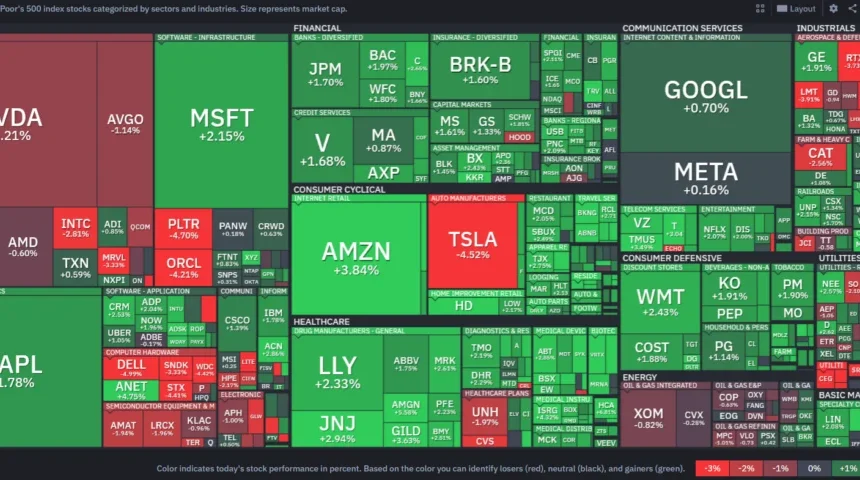
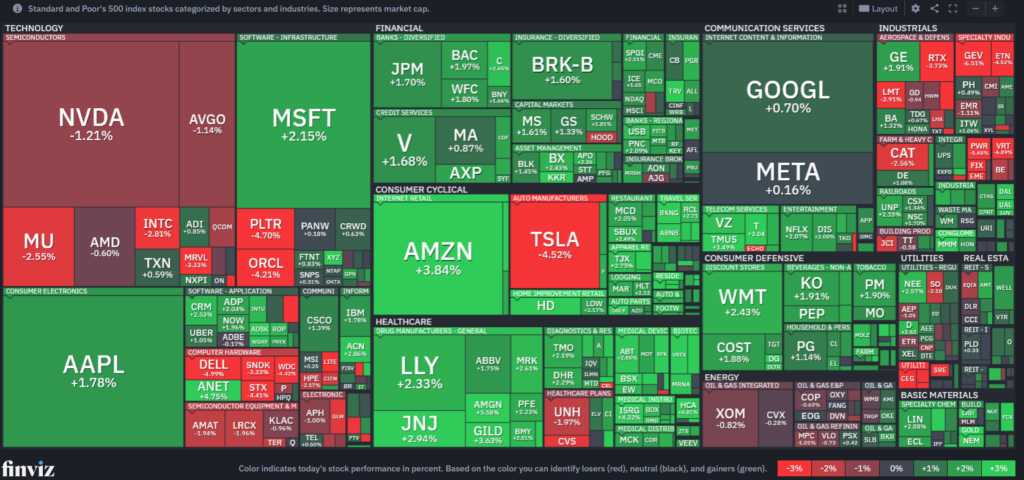
To understand the mechanics of the initial sell-off, one must examine the specific segments of the market that bore the brunt of the overnight weakness. As election returns crystallized, a distinct value rotation reasserted itself across major indices, with traditional sectors like banking, healthcare, and consumer staples outperforming. Meanwhile, the momentum-heavy Magnificent Seven stocks generally pushed higher, with notable exceptions in Nvidia and Tesla, demonstrating that the sell-off was not a generalized panic, but rather a targeted and specific unwinding.
The most acute damage was concentrated within the data center power complex. Infrastructure and equipment providers saw steep declines, including Vertiv falling 6.8%, GE Vernova dropping 6.3%, Quanta sliding 5.5%, and Eaton losing 4.7%. Major enterprise software and analytics firms also faced pressure, with Oracle falling 4.3% and Palantir retreating 4.0%. Defense contractors fared little better, as Lockheed Martin drifted down 4.1% and RTX declined 3.2%, alongside widespread weakness across the semiconductor landscape affecting Nvidia, Broadcom, Intel, and Micron.

These immediate price movements represented speculative bets on which specific policies might eventually emerge from a divided or newly configured Washington, as well as assumptions about how the executive branch would navigate a new congressional dynamic. However, historical precedent suggests these opening salvos are rarely correct. Market veterans often recall when S&P 500 futures plunged more than 5% on the night of the 2016 presidential election, only to stage a massive reversal and finish the following trading session firmly in positive territory. As market strategist Nick Colas famously observed in the wake of that historic night, assessing market direction based entirely on overnight reactions proved entirely wrong within a matter of hours.
Markets do not vote in a single night; they vote slowly over weeks and months. They require committee assignments, the unveiling of legislative calendars, and the lengthy crucible between what is initially proposed on a campaign trail and what ultimately survives the legislative process. Consequently, the most useful question for investors is not what moved sharply during an overnight session, but which of those technical moves will still be standing a month down the road.
Sector Rotation and the Crowd in Defensives
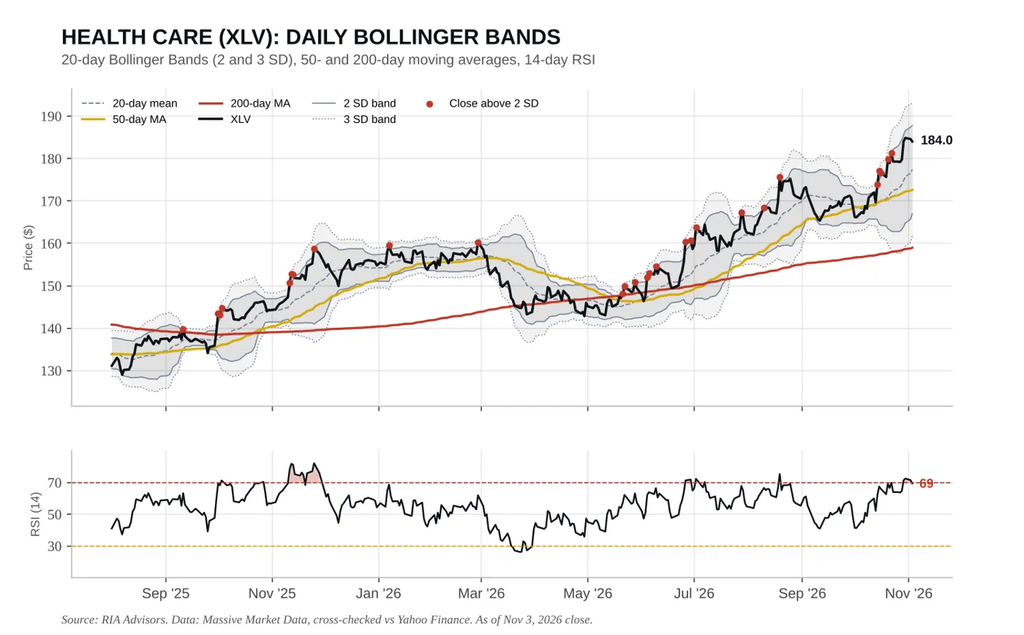
The broader underlying trends in the equity market reveal that institutional investors have been quietly rearranging their portfolios well before the election results settled. Since the Nasdaq 100 reached its peak on October 6, a significant divergence has played out beneath the surface of the S&P 500. While semiconductors tumbled 18% and the broader technology sector gave up 12.6%, defensive havens experienced massive inflows. The Health Care Select Sector SPDR Fund (XLV) advanced 10.1%, and the Consumer Staples Select Sector SPDR Fund (XLP) gained 8.7%. Over the same period, the benchmark S&P 500 slipped a relatively modest 3.2%, signaling that the broader market was experiencing a calculated sector rotation rather than an indiscriminate panic.
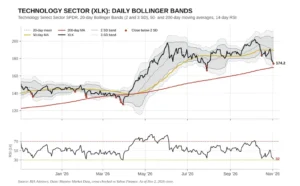
This migration toward safety, however, has created a new set of risks. True safety has quietly stopped being cheap. XLV closed trading at $184.02, sitting approximately 15.8% above its 200-day moving average near $158.95, and about 6.6% above its 50-day average near $172.60. Furthermore, the 14-day Relative Strength Index hovered near 69 after pushing past 70 the previous week. Historical data indicates that since 2005, the healthcare sector has closed 15% or more above its 200-day moving average in only two other distinct periods: late 2009 into early 2010, and the spring of 2013.
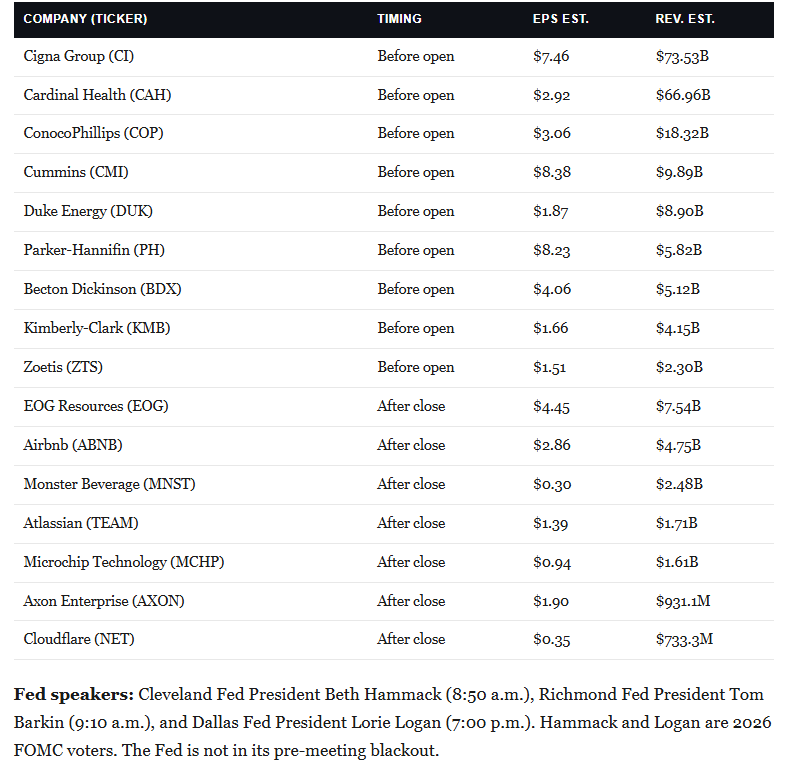
While historical valuation extremes do not guarantee an immediate reversal, they do offer cautionary context. In the six months following those 2010 readings, XLV drifted 6% to 9% lower, whereas following the 2013 peak, it managed to push another 5% to 12% higher. A double-digit percentage gain achieved in just four weeks by a sector that typically exhibits low-beta characteristics strongly suggests that aggressive positioning and momentum chasing drove the buying far more than fundamental earnings growth. Applying classic market principles regarding extremes, an excess in one direction inevitably plants the seeds for an eventual counter-reaction. The unwind of high-flying technology stocks represented one such excess, while the frantic rush into overcrowded defensives looks increasingly like its counterpart.
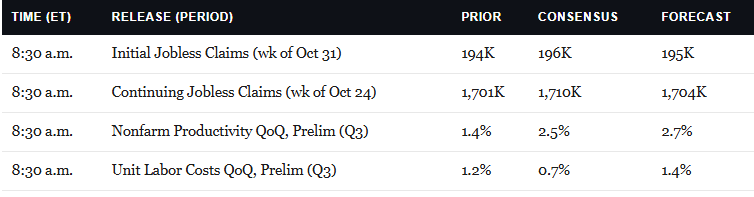
While healthcare remains a logical destination for capital during economic slowdowns, defensive positioning is never entirely risk-free. With major industry players reporting earnings ahead of the market open—including companies such as Cigna, Cardinal Health, Becton Dickinson, and Zoetis—sectors priced heavily for absolute safety leave little room for error and face severe punishment for any quarterly disappointment.
Labor Market Resilience and the JOLTS Report
Amid the political and sector-specific crosscurrents, macroeconomic data continues to provide vital clues regarding the underlying health of the economy. Tuesday’s Job Openings and Labor Turnover Survey (JOLTS) for September delivered a surprisingly strong headline figure, with job openings rising to 7.52 million compared to consensus expectations of 7.10 million. Additionally, the number of workers voluntarily quitting their jobs climbed to 3.37 million, pushing the quits rate back up to 2.1% and breaking above the 2% threshold for the first time since June 2025. Economists closely watch the quits rate because workers typically only leave their current positions when they possess confidence that alternative employment is readily available.
However, a closer examination of the broader employment metrics reveals a more nuanced picture of a cooling labor environment. While the increase in job openings represents a preliminary step toward improved market health, actual hiring behavior reflects a more cautious corporate stance. The hiring rate ran at a sluggish 3.4% in September, marking the slowest pace recorded since 2013, while total employment separations have remained virtually unchanged for two and a half years. In practical terms, employers are advertising more open positions without proportionally filling them, supported in part by a non-cyclical surge of roughly 104,000 openings within state and local governments outside of education.
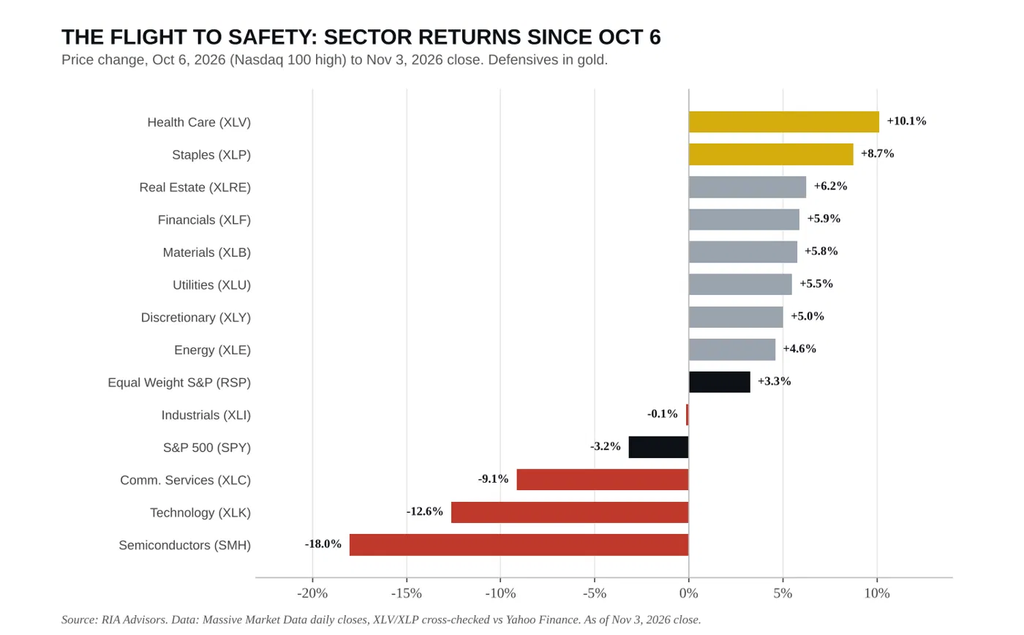
These mixed labor market signals provide context for forthcoming employment figures from the Bureau of Labor Statistics. Analysts anticipate another modest payroll expansion rather than a sudden breakout. Given that the September BLS report added a meager 29,000 jobs and left the three-month average hovering near 51,000, the overall narrative remains one of a frozen rather than collapsing labor market. Because the JOLTS layoff rate has held steady at a modest 1.0% since mid-2024, the economy continues to produce low hiring and low firing figures in tandem, suggesting that strong underlying job openings may eventually lay the groundwork for improved labor market dynamism in the months ahead.
Credit Spreads and Underlying Corporate Stress
Beyond equities and employment, the corporate credit markets are broadcasting a distinctly bifurcated message about financial conditions and systemic risk. On the surface, credit spreads remain remarkably compressed. Investment-grade corporations continue to borrow at spreads sitting near the bottom of their historical 20-year ranges, while the broader high-yield index resides comfortably near the middle of its long-term range. These tight spreads imply that institutional bond investors harbor very little fear of an impending broad-based recession or a sudden, severe tightening of financial liquidity.
Beneath this calm exterior, however, distress is clearly visible in the lowest tiers of corporate debt. Spreads on CCC-rated bonds have experienced sharp widening, signaling that market participants are drawing a strict dividing line between resilient enterprises capable of managing elevated borrowing costs and vulnerable companies facing severe refinancing pressures. Because the weakest borrowers rely most heavily on continuous debt issuance, they are naturally the first to feel the pinch of higher structural interest rates.
Encouragingly, this localized distress has not yet migrated upward into the BB and B rating categories. Nevertheless, financial monitors emphasize that if stress among CCC-rated issuers begins to bleed into higher-quality B, BB, and ultimately investment-grade BBB credit cohorts, it would serve as a much more consequential warning signal for both the broader economy and the equity markets. For now, investors navigating these complex crosscurrents must maintain perspective, rely on disciplined portfolio rules, and allow the broader financial markets ample time to process the true economic reality behind the political noise.

Related News