Indonesia’s Clean Energy Future Hangs on the Success of Its Green Super Grid
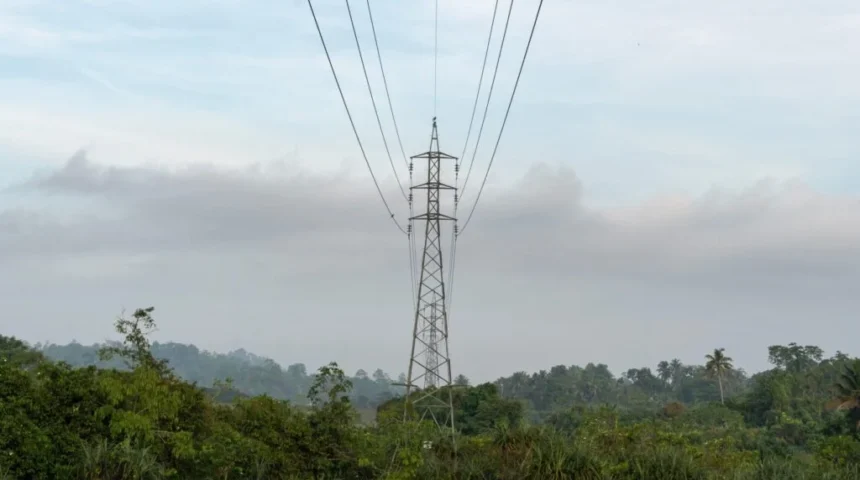
Indonesia’s clean energy future will ultimately not be determined by how many renewable power plants the nation manages to construct, but rather by whether electricity generated in one isolated part of the sprawling archipelago can actually reach consumers thousands of kilometers away.
That fundamental logistical reality forms the basis of a compelling argument for Jakarta to present an ambitious proposal to the European Union: seek vital international assistance to help finance and construct Indonesia’s sweeping Green Super Grid. Authored by energy analysts and policy observers Bhima Yudhistira Adhinegara and Muhammad Zulfikar Rakhmat, this strategic shift in perspective highlights an urgent infrastructure bottleneck that threatens to stall Southeast Asia’s largest economy on its path toward decarbonization.
The timing for such a bold international partnership could not be more critical. The administration of President Prabowo Subianto has enthusiastically embraced an expansive vision aimed at significantly boosting domestic electricity generation and rapidly accelerating the country’s ongoing energy transition. Yet, deploying renewable energy projects in isolation will not suffice to deliver on these lofty objectives. Without a vastly strengthened, modernized transmission network capable of handling massive power loads across vast distances, a substantial portion of Indonesia’s immense renewable energy potential risks remaining stranded far from the urban centers and industrial zones where it is needed most.
The root of the dilemma lies not merely in an absence of generation capacity, but in the unique and formidable geography of the nation. Indonesia’s most promising, high-yield renewable resources are scattered across a vast archipelago that stretches thousands of kilometers from east to west. Abundant large-scale hydropower resources are heavily concentrated in the remote jungles of Kalimantan and Papua, while vast solar and wind energy potential is spread across the islands of eastern Indonesia. Conversely, the nation’s largest concentration of electricity demand remains firmly anchored in Java and other densely populated industrial centers. Bridging this vast physical divide between supply and demand hubs has quickly emerged as one of the most vital infrastructure challenges facing the Indonesian government today.
For decades, Indonesia’s electricity system has largely developed as a collection of fragmented regional grids rather than a unified national network. That localized model made practical sense during an era when power generation was heavily localized and entirely dependent on fossil fuels such as coal and natural gas. However, that legacy architecture is increasingly incompatible with a modern, sustainable economy powered by intermittent and decentralized renewable energy sources.
Renewable energy inherently requires a high degree of connectivity and flexibility to operate efficiently. A solar-rich region should possess the technical capability to easily export its surplus power to a bustling industrial hub hundreds of kilometers away. This operational flexibility is particularly crucial as Indonesia aggressively pursues its national ambition to add 100 gigawatts of new power capacity to its grid, an initiative that includes an ambitious initial 17-gigawatt phase supported by large-scale battery energy storage systems. Furthermore, reliable hydropower resources can effectively complement intermittent renewable generation originating elsewhere in the system. Electricity must be allowed to move fluidly and efficiently across administrative and geographic regions rather than remaining artificially confined within isolated local systems.
Recognizing this operational reality, the state-owned electricity company, Perusahaan Listrik Negara (PLN), has placed unprecedented emphasis on transmission infrastructure in its latest comprehensive electricity development plan. The utility plans to develop the comprehensive Green Super Grid alongside nearly 48,000 kilometers of new high-voltage transmission lines over the coming decade. The core objective of this massive undertaking is straightforward: create the robust national backbone necessary to support an integrated clean-energy system.
The primary obstacle standing in the way of this grand vision is financing. Transmission projects notoriously struggle to attract the same level of political attention or private sector enthusiasm as power plants. Investors naturally gravitate toward generation assets that offer clear, tangible, and predictable revenue streams over time. Transmission infrastructure, by sharp contrast, requires massive upfront capital investments, extended development timelines, and extensive cross-jurisdictional coordination that can complicate project execution.
Despite these hurdles, transmission infrastructure may well represent the single most important investment that Indonesia can make in its economic future. A stronger, fully integrated national grid would allow renewable energy projects to operate at peak efficiency, drastically reduce energy curtailment, dramatically improve overall system reliability, and lower long-term electricity costs for both consumers and businesses. More importantly, it would provide the critical foundation necessary to support Indonesia’s broader economic and industrial ambitions.
The proposed Green Super Grid is not merely an environmental energy project; it is fundamentally a vital industrial policy initiative. Indonesia is currently pursuing an aggressive national strategy aimed at developing domestic downstream mineral processing, electric vehicle manufacturing, advanced data centers, and a wide array of other energy-intensive modern industries. These rapidly expanding sectors require enormous quantities of reliable, uninterrupted electricity to function competitively on the global stage. Building isolated renewable energy projects without simultaneously expanding and upgrading transmission infrastructure risks creating disconnected pockets of green generation rather than an integrated national market capable of sustaining long-term industrial growth.
This systemic financing gap represents a prime opportunity for deeper European engagement. The European Union’s Global Gateway initiative was specifically established to support sustainable, high-quality infrastructure and strategic connectivity projects around the globe, with modern energy infrastructure designated as one of its core strategic priorities. Rather than focusing financial and technical resources solely on individual, standalone renewable energy projects, Europe should direct its support toward the foundational infrastructure that enables all of those individual projects to succeed and scale. The Global Gateway framework explicitly identifies cross-border energy connectivity and sustainable infrastructure as central pillars of its international development strategy.
Such targeted bilateral cooperation would yield mutual benefits for both sides of the partnership. For Indonesia, active European participation would help mobilize much-needed concessional financing, high-level technical expertise, and rigorous project preparation support for one of the country’s most strategically vital infrastructure priorities. For Europe, supporting the development of Indonesia’s Green Super Grid would tangibly demonstrate that the Global Gateway initiative can deliver transformative, large-scale infrastructure outcomes in one of the world’s most dynamic emerging economies. Additionally, it would meaningfully strengthen the European Union’s economic and diplomatic presence in Southeast Asia at a time when international competition over infrastructure financing in the Indo-Pacific region is intensifying rapidly.
Most importantly, transmission is an area where European financial and technical support would generate the maximum possible impact. Financing a single renewable energy project simply adds a finite amount of generation capacity to the local mix. Financing comprehensive grid infrastructure, however, unlocks hundreds of future renewable projects that would otherwise remain unviable due to a lack of grid access.
Indonesia should therefore approach Brussels with a clear, pragmatic proposition. The next major phase of Europe-Indonesia energy cooperation should focus heavily on transmission connectivity, including high-voltage inter-island links capable of transmitting abundant renewable energy resources directly to the country’s major industrial and population centers. The overarching objective should not simply be to build more power plants, but to construct a resilient national electricity system capable of supporting a modern, competitive industrial economy.
The ongoing public debate surrounding Indonesia’s green energy transition frequently fixates on what specific types of power plants should be built next. That is fundamentally the wrong question to be asking. The much more critical question is how electricity will actually move across an archipelago comprised of more than 17,000 distinct islands. Power plants merely generate electricity, but transmission networks create cohesive energy systems. If Indonesia is genuinely serious about transforming into a regional renewable energy powerhouse, and if Europe is truly serious about positioning itself as a reliable strategic infrastructure partner, then joining forces to build Indonesia’s Green Super Grid would be the most consequential investment either side could possibly make.

Related News