The Battery Revolution: How Energy Storage Is Transforming the Global Renewable Grid
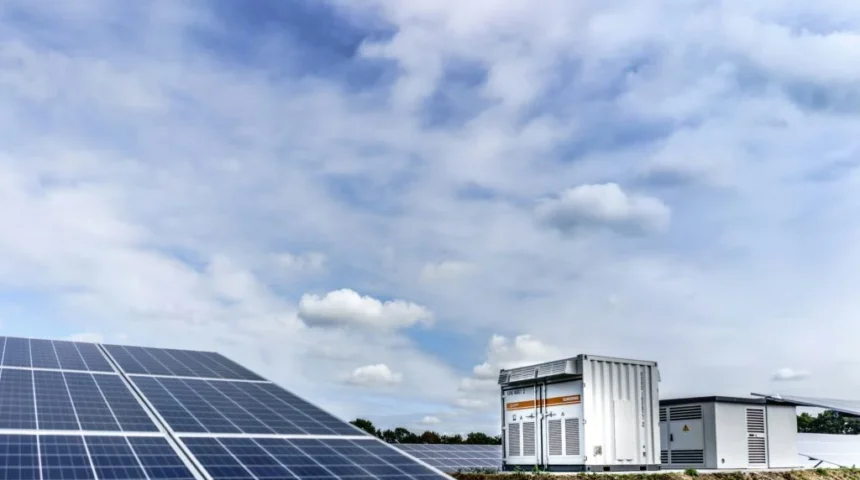
The "battery revolution" is fundamentally reshaping the global debate over whether wind and solar can reliably power entire economies. For decades, critics of the green transition pointed to the inherent volatility of sun and wind, warning of widespread blackouts on overcast, windless days. Today, advanced battery storage options are rapidly emerging as the backbone of a complex, decentralized, and volatile electrical grid, resolving the long-standing paradox of how to store clean energy for times of peak demand.
On a narrow strip of land connecting northernmost Germany to Denmark, this transformation is already visible. Surrounded by expansive farmland, Germany’s largest battery installation—the pride of a joint German-Norwegian firm—spans a modest three-acre site. Since last year, the facility has housed 64 gleaming white industrial containers arranged in symmetrical rows, packed with more than 200,000 South Korean-manufactured lithium-ion batteries. This single installation stores enough electricity to supply roughly 170,000 households with renewable power for two hours, serving as a critical buffer in a region heavily reliant on volatile wind generation.
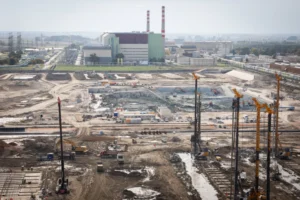
Yet, this flagship project is already on the verge of being overshadowed by the breakneck pace of storage expansion in Germany and across international markets. A massive new project currently under construction in eastern Germany will soon possess the capacity to keep the lights on in 1.6 million households for four hours. Even that industrial behemoth—operating as part of a integrated "gigawatt factory" that combines solar panels, wind turbines, battery storage, and hydrogen-capable gas plants—will not hold Europe’s record for long. Industry projections indicate that battery storage capacity is poised to expand six-fold globally by the year 2030. Driven in part by modern European Union legislation, this sweeping growth will not rely solely on utility-scale monster facilities, but also on decentralized systems compact enough to fit under a car hood or in a suburban basement.
"The quest for reliable, cost-effective electricity storage has long been seen as a holy grail for the power sector," says Toby Couture of E3 Analytics. "Now, after decades of technological advances, accelerated by the economies of scale from mobile phones, we essentially have it. And it’s changing everything."
Energy analysts describe a profound battery revolution sweeping through international markets, propelled by a dramatic collapse in utility-scale storage costs alongside a massive surge in hardware manufacturing capacity. This technological leap is fundamentally transforming the debate over whether intermittent renewables can sustain entire industrial economies. "Solar and wind energy, paired with battery storage, are reliable and already deliver cost-effective, round-the-clock electricity," concludes a recent report published by the International Renewable Energy Agency (IRENA).
For years, the energy transition struggled against a fundamental structural imbalance. "Over the last 25 years, we added renewables, renewables and more renewables that introduced incredible volatility, but we had few ways of balancing it out," explains Eva Zimmermann of Aurora Energy Research. "Our energy systems were still stuck in the age of fossil fuels."
Until recently, skeptics could legitimately point to the intermittency of sun and wind as a fatal flaw in deep decarbonization strategies. Traditional storage alternatives—such as pumped hydroelectric power, compressed air, mechanical flywheels, and green hydrogen—were frequently too capital-intensive, location-constrained, or impractical to deploy at scale. Ensuring that clean electricity remained accessible wherever and whenever it was demanded, rather than simply when weather conditions favored generation, stood out as one of the energy transition’s most formidable obstacles.
For these reasons, storage was long characterized as the "missing link" of a renewables-powered future. Today, industry leaders refer to it as the "great enabler."
"The long-standing argument that renewables lack reliability no longer holds," states IRENA Director-General Francesco La Camera.
According to Kai-Philipp Kairies, a prominent battery expert and energy technology founder, modern storage infrastructure is uniquely suited to modern demands. "The new battery storage options can be the backbone of a more complex, more decentralized, more volatile grid," Kairies observes. "Every day our grids are getting more complex—for example with data centres. Batteries are keeping the lights on."
Falling Costs and Rising Stakes
Innovations in lithium-ion chemistry have driven down battery storage prices by as much as 93 percent since 2010, and industry trajectories suggest this downward trend has not yet reached its floor. This affordability has been further reinforced by the broader electrification of the global economy—the systematic shift away from fossil-fuel-burning technologies toward electric alternatives powered by renewable generation.
Equally critical has been the maturation of energy storage markets. Once viewed as a niche component of legacy power systems, storage has rapidly moved to the center of the global energy transition. Historically, most regions relied heavily on pumped hydroelectric storage, a mature technology that converts surplus electricity into kinetic energy by pumping water to upper reservoirs, releasing it through turbines on demand.
However, regulatory shifts have unlocked new potential. Zimmermann notes that EU legislation liberalizing regional energy markets arrived "at just the right time," coinciding with the acute energy crisis triggered by Russia’s invasion of Ukraine. That geopolitical shock demanded the rapid deployment of indigenous renewable capacity. "These new liberalizations enabled battery storage to enter the market and offer the grids exactly what they needed," Zimmermann says.
A modern renewables-based power system demands more than just baseline storage capacity; it requires nimble providers capable of responding within seconds or minutes. This extreme operational volatility has fueled the expansion of faster balancing markets, including ancillary services and grid stabilization mechanisms like voltage control. These tools match electricity supply and demand in real time in ways that were practically unimaginable just a few years ago.
Kairies, who also leads ACCURE Battery Intelligence, points out the distinct operational advantages batteries hold over traditional generation assets. "Grid operators pay generators to hold back energy and push it into the grid on demand—that’s been done with gas and coal plants for decades," Kairies explains. "Batteries do it better. They’re more dynamic, controllable at finer granularity, and their cost is a fraction of legacy players like gas, coal, and pumped hydro."
Carsten Körnig of BSW Solar, Germany’s national solar energy association, echoes this sentiment. "Battery storage can significantly reduce the need for expensive backup gas power plants," Körnig says. "They can be built more quickly, produce no direct CO2 emissions and reduce system costs by integrating renewable energy and alleviating grid congestion."
Room for Small Players
While utility-scale battery farms will undoubtedly perform the heavy lifting in regional balancing markets, market rules increasingly accommodate smaller, decentralized participants. Recent EU legislative frameworks have formally opened markets to energy "prosumers," mirroring the policy shifts that empowered household renewable energy producers decades ago. Germany currently leads Europe in this sector, accounting for roughly 70 percent of the continent’s residential storage capacity. This adoption has been heavily catalyzed by incentive structures, including feed-in tariffs for surplus stored energy and direct subsidies covering up to 30 percent of initial storage installation costs.
The United States is actively closing the gap, particularly in forward-looking states like California, Texas, and Hawaii, where a federal 30 percent tax credit applies directly to small-scale residential storage systems. Through virtual power plants—companies that aggregate household flexibility to deliver commercial balancing services to grid operators—homeowners can generate anywhere from hundreds to more than $10,000 annually by sharing their stored capacity.
In the United Kingdom, escalating energy costs and market volatility have similarly motivated consumers to invest in domestic batteries and green infrastructure. "For the right home, home batteries can cut bills, increase flexibility and make everyday energy use smarter and more resilient," notes British energy expert Tom Pakenham.
Despite these advances, Germany’s broader energy transition remains a work in progress. The country has set a target to generate 80 percent of its electricity from renewable sources by the end of the decade. As the share of wind and solar climbs, the grid requires ever-greater amounts of fast-responding operational flexibility. One prominent German research institute estimates that the nation’s storage demand will surge between 100 and 170 gigawatt-hours (GWh) by 2030, a sharp escalation from its current capacity of approximately 27 GWh.
At the same time, international institutions urge strategic caution. IRENA’s recent analysis points out that standard lithium-ion systems are primarily engineered for short-duration storage. Achieving deep decarbonization and managing multi-day wind and solar lulls will eventually require the large-scale deployment of long-duration storage technologies, such as sodium-ion batteries, solid-state configurations, iron-air storage systems, and green hydrogen infrastructure. Furthermore, the rapid industrial buildout of batteries demands vast quantities of critical minerals, carrying well-documented environmental and geopolitical extraction challenges.
Ultimately, ongoing advancements in battery storage represent another formidable challenge to the dominance of fossil fuels and nuclear power. Yet, the pace of manufacturing and deployment must accelerate rapidly to keep up with both existing renewables and the wave of new capacity entering the grid. "We’re still playing catch-up as the target moves ahead," Zimmermann cautions. In Europe, the first quarter of the year saw twice as many negative-price days as the corresponding period twelve months prior, underscoring that closing the infrastructure gap by 2030 will require sustained and concerted effort.

Related News