El Salvador’s Historic Tourism Boom Takes Center Stage at Turinnova 2026 Congress
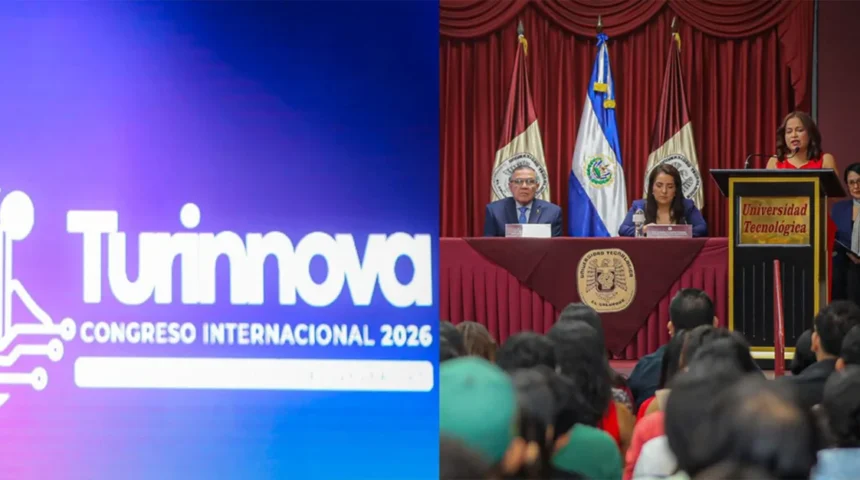
Industry leaders, distinguished academics, and high-ranking government officials converged in San Salvador on Thursday for Turinnova 2026, an international congress dedicated to evaluating the cutting-edge technological trends and sustainable practices that are rapidly reshaping the global travel and hospitality sectors. Hosted in close coordination with the Ministry of Tourism (MITUR) and the Universidad Tecnológica de El Salvador (UTEC), the high-profile summit underscored how strategic digital transformation and rigorous eco-conscious initiatives are accelerating the Central American nation’s economic momentum under the visionary administration of President Nayib Bukele.
The gathering served as a dynamic platform for stakeholders from across the public and private spheres to dissect the mechanisms driving El Salvador’s meteoric rise as a premier international destination. By uniting policymakers, educators, and industry practitioners, Turinnova 2026 fostered critical dialogues regarding the future of travel, focusing specifically on how technological integration can optimize visitor experiences while safeguarding natural and cultural resources. The collaborative atmosphere of the congress reflected a shared commitment to ensuring that the country’s unprecedented tourism surge translates into enduring, equitable prosperity for all Salvadorans.
Opening the landmark event, Tourism Minister Morena Valdez took to the podium to underscore tourism’s pivotal role as a primary engine for national economic expansion and social development. Minister Valdez provided a comprehensive overview of the sector’s extraordinary trajectory, noting that international visitor arrivals have experienced an astonishing upward surge, jumping from 2.6 million in 2019 to an impressive 4.1 million by the conclusion of 2025. This phenomenal growth rate has firmly positioned El Salvador as the fastest-growing tourism destination in Latin America and the second fastest worldwide, according to official metrics compiled by UN Tourism. Building confidently upon this undeniable momentum, the nation has established an official projection of 4.2 million international visitors for the entirety of 2026, having already successfully welcomed 3.9 million travelers by the close of October.
This sustained influx of international travelers represents a fundamental paradigm shift for El Salvador’s economy, diversifying revenue streams and injecting vital capital into local communities, small businesses, and large-scale infrastructure projects alike. Minister Valdez emphasized that the government’s deliberate policies, targeted marketing campaigns, and continuous enhancement of public security have created an exceptionally favorable ecosystem for tourism investment. Travelers from North America, Europe, and beyond are increasingly discovering a nation that seamlessly blends modern amenities with rich cultural heritage and breathtaking natural landscapes, ranging from world-renowned surfing beaches to majestic volcanic mountain ranges.
Beyond the celebration of impressive arrival metrics and economic milestones, the congress focused heavily on the indispensable task of cultivating local talent to match rising global demand and elevate service standards across the board. Minister Valdez emphasized that tourism is rapidly evolving into a career of choice for young Salvadorans, inspiring a wave of ambitious professionals eager to enter the vibrant hospitality sector. This generational shift has prompted proactive state initiatives designed to train the next generation of hospitality leaders, equipping them with advanced proficiencies in digital tools, customer service excellence, and sustainable resource management. By investing directly in its human capital, El Salvador is ensuring that its workforce possesses the specialized skills required to excel in an increasingly competitive global marketplace.
Echoing this forward-looking perspective, UTEC Rector Nelson Zárate reinforced the administration’s vision during his keynote address at the summit. Rector Zárate eloquently stated that El Salvador has firmly consolidated itself on the global stage, yet this remarkable surge demands not only traditional hospitality, but also visionary leadership, rigorous preparation, and, above all, a deep, institutional capacity for adaptation. His remarks resonated deeply with the diverse audience of educators, students, and industry executives, highlighting the vital necessity of aligning higher education curricula with the rapidly evolving demands of the modern travel economy.
The synergy between academia and government policy was a central theme throughout the congress proceedings. By bridging rigorous academic preparation with state-of-the-art technological innovation, El Salvador is proactively positioning itself to secure long-term competitiveness while guaranteeing that its ongoing tourism boom yields lasting, tangible socio-economic benefits for local populations. Panel discussions throughout the day explored a wide array of specialized topics, including the implementation of smart tourism infrastructure, the reduction of carbon footprints within the hospitality sector, and the integration of artificial intelligence in travel planning and destination management.
As the late-year peak travel season unfolds across El Salvador, Turinnova 2026 has successfully established a clear, actionable blueprint for leveraging emerging technologies and robust sustainable frameworks to support the country’s historic sector growth. The insights generated during the congress will undoubtedly guide policymakers and industry leaders as they navigate the complexities
of a rapidly modernizing global travel landscape. With a solidified reputation for innovation, safety, and warm hospitality, El Salvador enters the final stretch of 2026 poised to cement its status as a crown jewel of international tourism.

Related News