How ‘Cultural Socialism’ Eroded Academic Freedom and Truth-Seeking in Western Universities
Western
higher education institutions have abandoned their foundational commitment to analytical rigor and objective truth-seeking, replacing these core principles with an ideological framework known as "cultural socialism." This is the assessment of Professor Eric Kaufmann, a prominent political scientist who spent more than two decades at Birkbeck College before leaving to launch the Centre for Heterodox Social Science at the University of Buckingham.
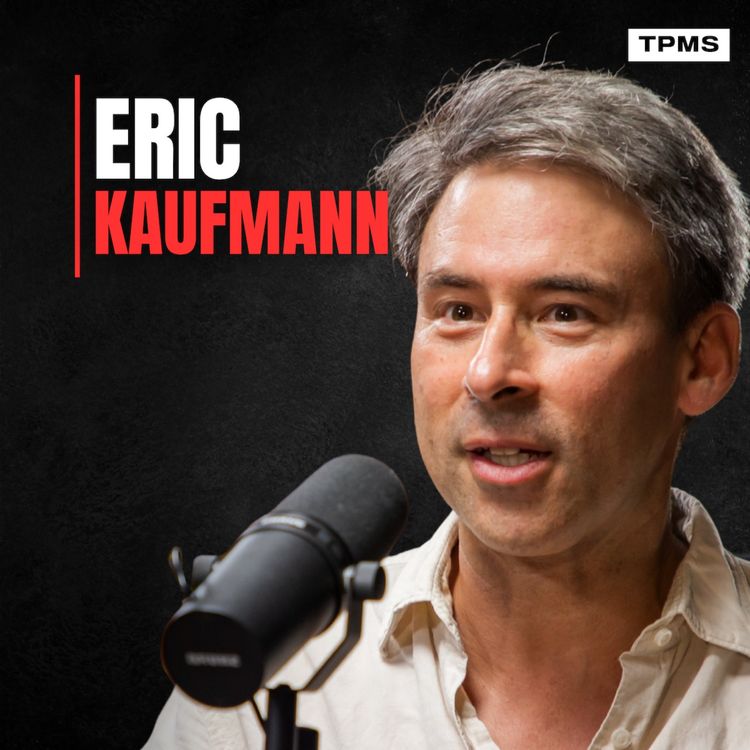
In a wide-ranging discussion, Kaufmann detailed how modern universities have shifted their priorities away from merit, reason, and standard academic excellence. Instead, higher education has increasingly embraced an ethos that prioritizes equal outcomes and the protection of marginalized groups from emotional harm. According to Kaufmann, this cultural shift has fundamentally transformed the academic landscape, creating an environment where ideological conformity often supersedes open inquiry.
The conversation explored several facets of this transformation, ranging from institutional scandals at historic universities to broad statistical trends in academic publishing and the ideological conditioning of younger generations in secondary schools.

The Institutional Capture of Academia and the Rise of Heterodox Science
Kaufmann pointed to high-profile controversies, such as the Jason Day scandal at Cambridge University, as emblematic of a much larger, systemic issue within Western academia. Rather than isolated incidents, he views these events as the tip of a massive institutional iceberg that reveals how deeply activist ideology has penetrated elite educational spaces.
To combat what he perceives as a growing crisis of intellectual monoculture, Kaufmann relocated his academic efforts to the University of Buckingham, where he established the Centre for Heterodox Social Science. The initiative is designed to foster viewpoint diversity and support empirical research that challenges prevailing orthodoxies. The movement toward heterodox science seeks to push back against an institutional environment that critics argue has become increasingly hostile to dissenting perspectives.

During the discussion, Kaufmann highlighted empirical data illustrating the extent of ideological skew within academic literature. Citing an artificial intelligence-driven meta-analysis of political social science papers, he noted that approximately 90 percent of published research in the field now displays a distinct left-wing slant. This overwhelming bias, Kaufmann argues, points to a systemic filtering process that discourages conservative or classical liberal scholars from entering the field or publishing heterodox conclusions.
Ideological Transmission in K-12 Classrooms and Generational Divides
The erosion of ideological diversity is not confined to universities, according to Kaufmann. The foundation for this intellectual shift is increasingly laid much earlier in the educational pipeline. Data discussed during the interview indicates that roughly 80 percent of young Britons are now taught critical race and gender concepts during their primary and secondary schooling, frequently without exposure to counterarguments or alternative analytical frameworks.

This early and pervasive exposure to specific ideological constructs helps explain broader generational shifts in political behavior. Kaufmann analyzed why voters under the age of thirty demonstrate a heavily lopsided voting pattern, supporting left-leaning political parties by margins as wide as 80 to 20 percent. This stark demographic division reflects years of sustained institutional messaging both in schools and universities.
The conversation also touched on broader themes of national identity, demography, and public morality. Kaufmann examined the psychological triggers behind modern populism, the ongoing cultural debates surrounding white British identity, and the ways demographic changes influence national cohesion and political alignment. He noted that public discussions around race, identity, and integration are frequently hampered by institutional taboos that prevent honest dialogue, occasionally driving minority voters toward right-wing political alternatives as they reject mainstream identity politics.

Charting a Path Toward Institutional Reform
Despite the entrenched nature of cultural socialism in academia, the discussion explored potential signs of a turning point. Kaufmann considered whether higher education has reached "peak woke," pointing to early indicators that public pushback, political pressure, and institutional recalibration might be taking root.
Fixing the system, in Kaufmann’s view, requires a combination of renewed public awareness, shifts in political power, and a deliberate rebalancing of public morality. By challenging ideological monopolies and championing heterodox viewpoints, institutions can begin to restore academic integrity. As the Centre for Heterodox Social Science and similar initiatives continue to push for institutional reform, the broader debate over the purpose, freedom, and neutrality of Western universities remains a central flashpoint in contemporary cultural and political life.

Related News