Former FBI Agent Pleads Guilty to Stealing $2.47 Million in Crypto Using Bureau Credentials and ChatGPT
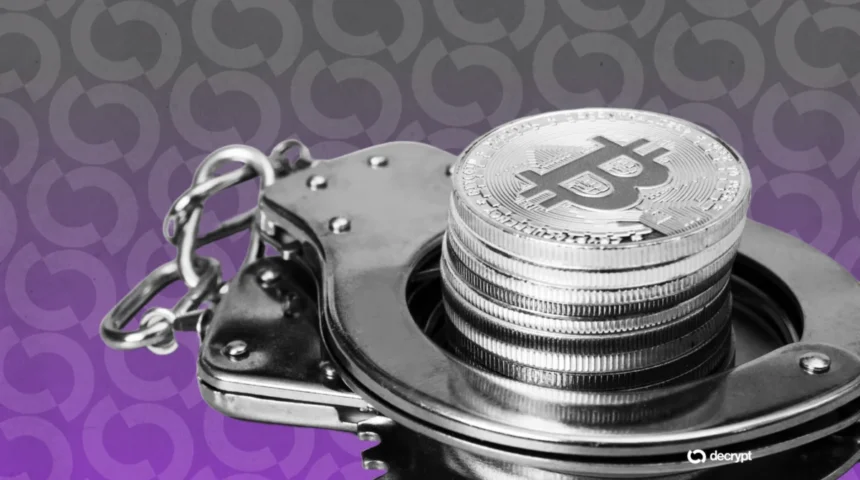
A former Federal Bureau of Investigation special agent has formally pleaded guilty to wire fraud and money laundering after admitting to stealing approximately $2.47 million in cryptocurrency. According to the U.S. Department of Justice, the defendant used sensitive wallet credentials that the bureau had accumulated during the course of various federal investigations.
Patrick Steven Yaroch, a 37-year-old resident of Ashburn, Virginia, entered his guilty plea in federal court in Alexandria. He now faces a maximum sentence of 20 years in federal prison. A judge has scheduled his formal sentencing hearing for March 4, 2027.
The case exposes a significant security breach within federal law enforcement systems, detailing how a trusted insider leveraged high-level database clearances to siphon digital assets from targets, foreign adversaries, and even an undercover operation managed by the bureau.
According to federal prosecutors, Yaroch’s career with the FBI spanned several years and multiple divisions. From 2017 until early 2025, he worked out of the bureau’s Boston Division, assigned to a specialized squad tasked with investigating an unnamed adversarial nation-state. He later transferred to the FBI’s Counterintelligence and Espionage Division. It was in this new role that Yaroch gained broad clearance to sensitive internal databases and secure systems housing cryptographic wallet credentials collected across numerous investigations.
Investigators state that Yaroch’s illicit activity began no later than December 2024. Utilizing his authorized access, he systematically targeted cryptocurrency wallets controlled by subjects of active federal inquiries, accounts operated by hostile nation-state actors, and at least one specific wallet that the FBI had created and funded for a specialized law enforcement operation.
Over the course of the scheme, Yaroch executed roughly 100 fraudulent transfers, drawing credentials from 35 distinct FBI investigations. To cover his tracks, he routinely swapped the stolen digital assets into alternative cryptocurrencies and bounced them through a complex web of secondary transactions designed to obscure their origins. Rather than hoarding the digital tokens in cold storage, he liquidated portions of the funds to cover personal living expenses, including credit card bills, car payments, and various other personal loans.
As the scope of his cryptocurrency accumulation grew, Yaroch allegedly began planning an escape hatch and a new life abroad. Court documents reveal that he turned to artificial intelligence for relocation advice, asking ChatGPT how to maximize investment returns and where to establish residency within the European Union.
After the chatbot suggested purchasing a vineyard in Portugal, Yaroch acted on the recommendation. He granted power of attorney to Portuguese legal counsel to secure a local tax identification number and made concrete arrangements to travel to the country in September.
According to the statement of facts filed with his plea agreement, Yaroch’s unauthorized extractions did far more than enrich his personal bank accounts. His actions severely compromised ongoing FBI investigations targeting international criminal syndicates and foreign intelligence adversaries. Furthermore, the theft compromised sensitive human sources and technical methods relied upon by the United States government for foreign intelligence collection.
Yaroch’s Confession
The investigation into Yaroch ultimately came to light not through an internal audit or a cyber intelligence breakthrough, but through his own confession. On July 29, Yaroch turned himself in after breaking down emotionally during a conversation with a former colleague at the Justice Department’s National Security Division. He admitted that he had made "very poor decisions" regarding cryptocurrency wallets, prompting him to self-report directly to FBI headquarters.
During his initial self-reporting, Yaroch claimed he had grown deeply frustrated that the bureau "could not or would not act" against a specific foreign adversary’s cryptocurrency accounts. He stated that this frustration drove him to "take matters into his own hands." At the time of his initial surrender, Yaroch estimated he had executed only 10 to 12 transfers totaling less than $1 million—a figure that turned out to be a substantial underestimation of the total scope uncovered by investigators.
Two days after his confession, federal agents executed a search warrant at Yaroch’s Ashburn residence. According to an affidavit filed in the case, agents seized a Trezor hardware wallet, three passports, and a handwritten slip of paper containing cryptographic seed phrases.
An inspection of his digital footprint revealed substantial remaining balances tied to the scheme. His account on the Kraken cryptocurrency exchange held approximately $188,600, predominantly denominated in U.S. dollars and the USDC stablecoin, alongside smaller holdings of Squid and Bitcoin. An additional $933,800 sat in Suilend, a decentralized lending protocol operating on the Sui blockchain, which he had accessed via the Slush mobile wallet application. In a bizarre detail noted in court records, Yaroch told agents he chose to deposit funds into Suilend "simply because he liked that the logo was a water droplet."
Promptly following the search, federal agents transferred approximately $925,000 from those accessible accounts into secure, government-controlled cryptocurrency wallets. However, roughly $165,600 held as fiat U.S. dollars within his Kraken account could not be immediately recovered through the same digital seizure procedures.

Related News