Russian Diesel Tankers Divert Away From US, Deepening Uncertainty Over Trump-Putin Deal
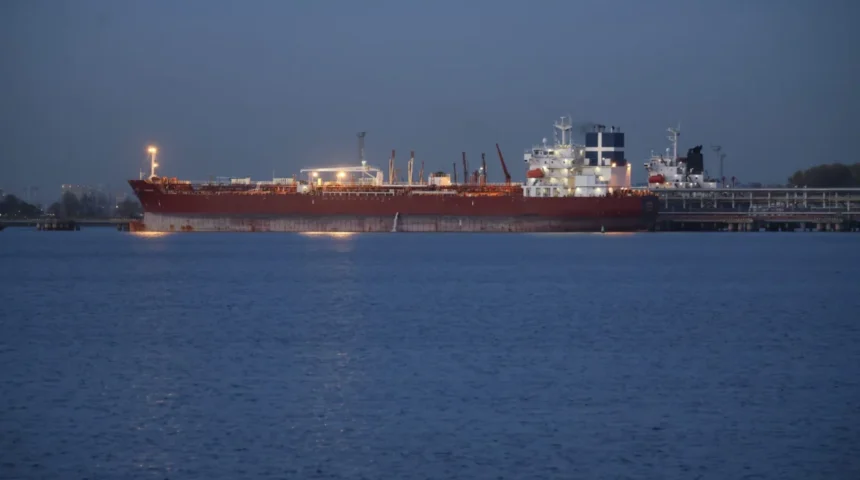
At least three tankers carrying Russian diesel destined for the United States have abruptly changed course, casting profound doubt over the implementation of an October agreement struck between US President Donald Trump and his Russian counterpart, Vladimir Putin.
Nearly a month has passed since the White House announced that Russia would be permitted to release crucial diesel stocks to the United States and international markets, bypassing existing sanctions to alleviate soaring energy costs. Yet, despite the high-profile diplomatic arrangement, zero Russian diesel has successfully reached American shores. The delay comes at a critical economic juncture for the United States, where domestic fuel prices have nearly doubled since the outbreak of the US-Israel war on Iran, placing immense financial pressure on consumers, transportation networks, and businesses ahead of upcoming political cycles.
In the wake of the October agreement, Russia has dispatched a total of four tankers loaded with diesel fuel. However, the operational reality of moving heavily sanctioned energy products through international waters—while navigating conflicting domestic and federal legal frameworks—has quickly thrown the ambitious plan into disarray.
What Has Happened to Tankers Carrying Russian Diesel to the US?
The logistical unraveling of the Trump-Putin energy pact became apparent through shifting maritime tracking data. Among the first vessels to set sail were the Russian-flagged tanker Talisman and the Sierra Leone-flagged Leruo. Both ships departed from the key Baltic export hub of Primorsk late last month, declaring the US East Coast as their intended destination.
However, data provided by marine analytics firm Kpler and vessel-tracking platform MarineTraffic showed a dramatic change in course. By Thursday, one of the vessels was actively heading toward Brazil, while the other had altered its trajectory to enter the Mediterranean Sea.
A third tanker, which remains positioned in the North Atlantic, has similarly updated its tracking information. Rather than steaming toward its previously declared port in New York, the ship has changed its destination to "for orders," leaving its final unloading point entirely open and fluid. Meanwhile, the financial tracking and reporting from publications such as the Financial Times highlighted the status of Beast, a sanctioned Seychelles-owned tanker that was loaded at Primorsk in late October. This vessel has reportedly set sail toward the western hemisphere, but is currently signaling its general location only as the "Atlantic," leaving its precise port of discharge ambiguous.
What Did Trump and Putin Agree To?
The underlying arrangement between Washington and Moscow was announced as a deal boasting large headline figures, yet it remained notably scant on operational details.
President Trump first revealed the diplomatic breakthrough following a telephone conversation with President Putin on October 9. According to the announcements made at the time, Russia agreed to immediately make more than 300,000 tonnes of diesel available to both US domestic and global markets. In the shipping industry, long-range product tankers capable of carrying such distillate supplies typically hold up to approximately 100,000 tonnes of diesel per voyage.
The initial announcement was followed by further commitments outlined by Trump on his Truth Social platform. He stated that an additional 500,000 tonnes would follow in November, to be succeeded by another 1 million tonnes "immediately thereafter." The overarching agreement brokered between the two leaders was designed to permit Russian diesel to be sold, delivered, unloaded, and legally imported into the United States until April 7.
This dramatic diplomatic reversal came on the heels of mounting economic distress. Weeks earlier, President Trump had openly blamed Ukraine for compounding regional and global diesel shortages by strategically targeting Russian energy infrastructure and refineries amid the ongoing Russia-Ukraine war. The subsequent deal represented a stark departure from long-standing US foreign and economic policy, which had instituted a strict, comprehensive ban on imports of Russian energy following Moscow’s full-scale invasion of Ukraine in February 2022.

To facilitate the transaction, the Office of Foreign Assets Control (OFAC) within the US Department of the Treasury issued a temporary sanctions exemption. This regulatory pivot immediately provoked fierce backlash from a cross-party coalition of lawmakers in the US Congress. Just weeks prior, in September, a bipartisan group had successfully passed a robust new sanctions package named in honor of the late, pro-Ukraine Senator Lindsey Graham.
When questioned by the Associated Press, the Treasury Department defended its actions, issuing a brief statement maintaining that the temporary exemption was executed "in compliance with all applicable laws." The physical rollout of the agreement gained further public attention when Russia announced its inaugural shipment of diesel during a high-level diplomatic visit to St Petersburg in October by US Special Envoy Steve Witkoff.
Despite these high-level maneuvers, critical aspects of the agreement remain opaque. Neither the White House nor the Kremlin has formally clarified whether the accord was ever formally put into writing. Furthermore, officials from both governments have steadfastly declined to reveal the agreed-upon price for the diesel, the specific payment terms, or the identities of the commercial companies involved in brokering and purchasing the shipments.
How Much Russian Diesel Is Now Waiting to Be Sold?
While exact figures regarding the total volume allocated under the secret terms of the agreement have not been made publicly available, energy analysts have emphasized that the quantities involved are likely insufficient to provide meaningful relief to everyday American consumers.
US retail diesel prices surged past $6 a gallon, equivalent to about $1.59 per litre, in September. This represented nearly double the prevailing pre-war price levels, and costs have stubbornly remained at those elevated plateaus.
Aarathi Krishnan, CEO of Raksha Intelligence, told Al Jazeera that the scale of the initial shipments pales in comparison to domestic demand. "The reported shipment is equivalent to roughly two hours of US distillate consumption," Krishnan noted, referring to the very first tanker dispatched by Russia. "Even if it arrives as planned, it will make very little difference to national supply."
Why Don’t Traders Want to Buy Russian Diesel?
The primary barrier preventing these shipments from reaching American ports is not a lack of supply, but rather profound legal and regulatory risk.
Even though the US Treasury Department took the extraordinary step of temporarily authorizing Russian diesel sales that would normally trigger severe penalties, Congress’s statutory ban on Russian energy imports remains legally intact. This glaring disconnect between executive branch exemptions and legislative prohibitions has generated an intolerable level of uncertainty for commercial traders, fuel distributors, and port authorities.
The domestic pushback has been swift and localized. New Jersey Governor Mikie Sherrill intervened directly in the logistics chain, issuing a strongly worded letter to port and terminal operators across her state instructing them to proactively turn away any ships carrying the controversial fuel. Governor Sherrill warned that "any effort to profit from the illegal trade in Russian fuel will be met with harsh penalties," arguing pointedly that the Trump administration possessed no independent legal authority to override the congressional import ban.
Similar warnings have echoed through financial and municipal corridors. Lawmakers have directly cautioned commercial banks, regional port authorities, and major fuel distributors that handling, financing, or processing the Russian imports could expose corporate entities and individuals to severe civil or criminal liability, alongside the looming threat of aggressive congressional investigations in the future.

Although the Trump administration has consistently maintained that its regulatory exemption is entirely lawful, no federal court has yet stepped in to adjudicate the constitutional and statutory dispute between the executive and legislative branches.
"It’s clear there’s hesitancy here in bringing these barrels onshore just because of the implications of doing so," Matt Smith, an analyst at Kpler, told the Associated Press, summarizing the paralyzing caution gripping the energy trading community.
Where Will the Diesel Go Now?
Given the compounding web of regulatory hurdles, sanctions fears, and local threats of legal action, energy experts widely agree that the stranded fuel is unlikely to find a home on American shores.
The observed behavior of the vessels supports this assessment. With the first two diverted tankers actively changing their trajectories toward Brazil and the Mediterranean, and the third vessel lingering indefinitely in the Atlantic, market watchers expect the remaining cargoes to be redirected to more accommodating international buyers.
"Because of regulatory [and] sanctions concerns, we may not see this cargo discharge on the US Atlantic coast," Smith reiterated.
Despite clear signals from maritime tracking data indicating that the initial shipments are bypassing North America, Moscow continues to project absolute confidence regarding the viability of the agreement.
Kremlin spokesman Dmitry Peskov dismissed concerns over the diverted vessels, assuring reporters that "all the diesel will find its buyers."
Meanwhile, Vladimir Putin’s special envoy, Kirill Dmitriev, took a more aggressive stance on social media, dismissing media reports of the diverted tankers as "fake" and insisting via the platform X that "tankers destined for the US continue on course."

Related News