Fed Promises What It Cannot Control as Markets Grapple With AI Spending and Oil Shocks
By RIA Team | October 30, 2026
Financial markets are facing a complex web of macroeconomic pressures, corporate capital expenditure booms, and geopolitical headwinds. Central to this environment is a subtle yet significant shift in tone from the Federal Reserve under Chair Warsh, whose policy statements have sparked intense scrutiny from analysts and investors alike. As Wall Street navigates these crosscurrents, robust corporate earnings reports and shifting labor cost metrics continue to shape trading strategies across major asset classes.
The Federal Reserve and the Limits of Monetary Policy
"The Committee will deliver price stability."
That promise has appeared prominently in the FOMC statement in each of Warsh’s first three meetings at the helm of the central bank. This phrasing deserves close scrutiny because the Federal Reserve historically avoids making absolute promises. Typically, the Fed Chair and the Federal Open Market Committee describe prevailing economic and financial conditions before outlining their policy intentions. They tend to be cautious about making guarantees because the central bank’s actual ability to dictate prices and economic activity is inherently limited.
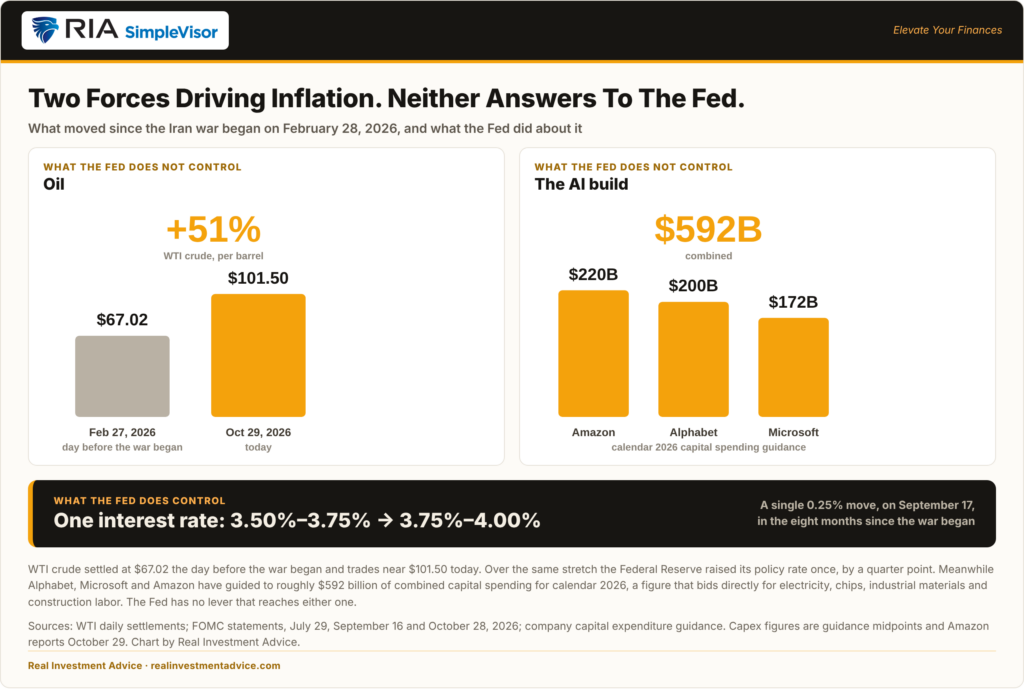
Today, two of the primary drivers of prices and broader economic growth reside completely outside the direct influence of monetary policy: global crude oil markets and artificial intelligence-related capital expenditure spending.
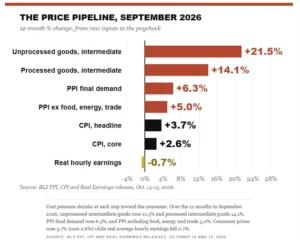
Crude oil prices have surged past $100 per barrel, marking an increase of roughly 70% over the past year and a 14% jump in a single month. This escalation is driven almost entirely by the ongoing conflict involving Iran. The Federal Reserve has no mechanism to manage international warfare or directly alleviate energy-driven inflation. The FOMC explicitly acknowledged these limitations in July, when its official statement attributed elevated inflation "in part" to "supply shocks that have driven price increases in certain sectors, including energy."

Compounding these supply-side pressures is an unprecedented capital spending boom within the technology sector. Across tech giants such as Alphabet, Microsoft, and Amazon, calendar 2026 spending guidance is approaching an astonishing $600 billion. Alphabet has already signaled that its capital expenditures will increase significantly heading into 2027. This massive outlays not only keep gross domestic product elevated but also exert persistent upward pressure on broader price levels.
The core dilemma for the central bank is that the Federal Reserve controls the overnight interest rate. It does not control the Strait of Hormuz, nor does it decide whether a handful of mega-cap technology corporations spend $600 billion or $400 billion in a given year. By continuing to promise an outcome it cannot guarantee, the Fed risks breaking its word, a misstep that could undermine the higher level of credibility that Chair Warsh is actively trying to restore. A more prudent phrasing would reflect the reality of central banking: "The Committee aims to deliver price stability."
What To Watch Today: Earnings and Economic Data
As the final session of October unfolds, markets are digesting a heavy slate of corporate earnings and crucial economic releases. Mega-cap earnings week concludes with major oil and pharmaceutical reports hitting the wires before the opening bell, featuring quarterly results from ExxonMobil, Chevron, and AbbVie.
On the economic front, the Department of Labor and regional data providers are delivering key insights into wage pressures and regional manufacturing health. The Employment Cost Index for the third quarter is projected to show a quarter-over-quarter increase in total compensation and wages, providing the Fed with updated metrics on labor market tightness. Additionally, the Chicago PMI offers a final reading on regional business activity for October.
Federal Reserve speakers are also back in focus following Wednesday’s policy decision to hold interest rates steady. St. Louis Fed President Alberto Musalem is scheduled to deliver remarks, marking the central bank’s first public commentary since the FOMC announcement. With Friday also serving as the final trading day of the month, institutional portfolio managers are expected to execute month-end rebalancing flows into the market close.
Market Trading Update: Alphabet and the Tech Sector Selloff
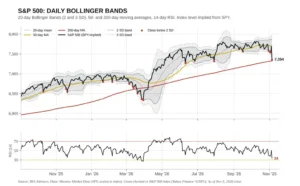
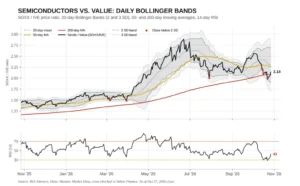
Recent market analyses have highlighted the underlying dynamics of a stealth bear market hiding beneath a seemingly flat S&P 500, prompting discussions around trimming overvalued value sectors and selectively adding to beaten-down technology platforms like Alphabet. The sharp earnings-driven selloff in Alphabet shares has provided an immediate test of that thesis.
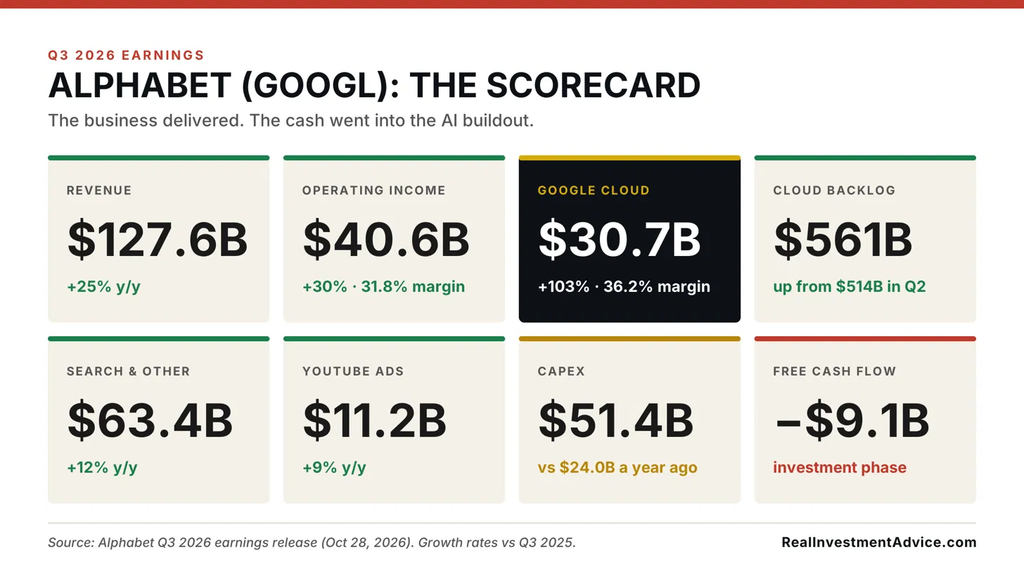
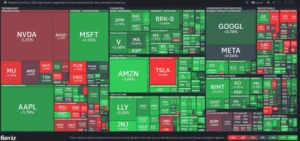
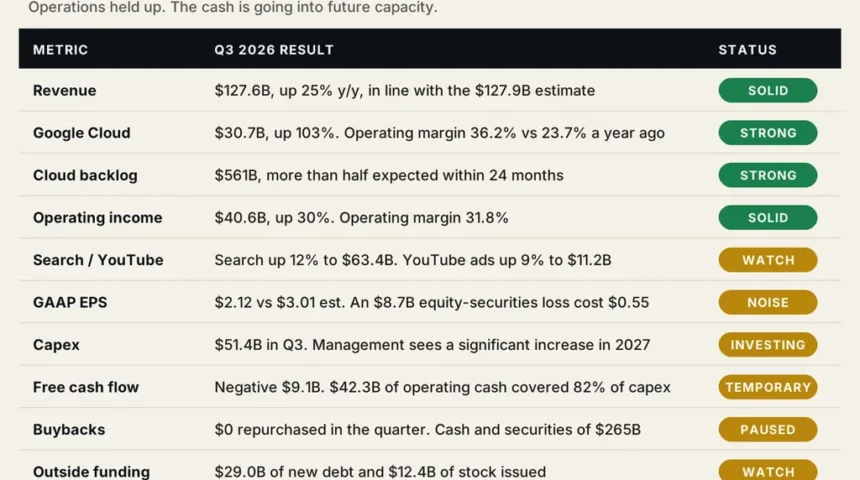
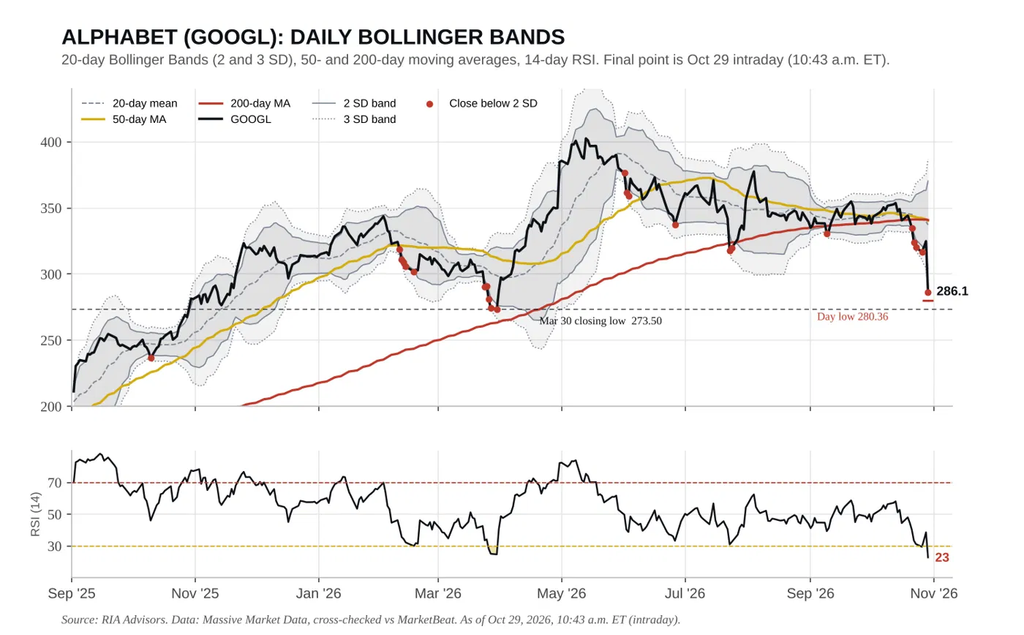
Alphabet shares opened sharply lower, experiencing a double-digit percentage decline that marked the stock’s worst single-session performance since March 2020. However, a deeper look at the underlying financial report reveals a stark contrast between operational performance and headline accounting figures.
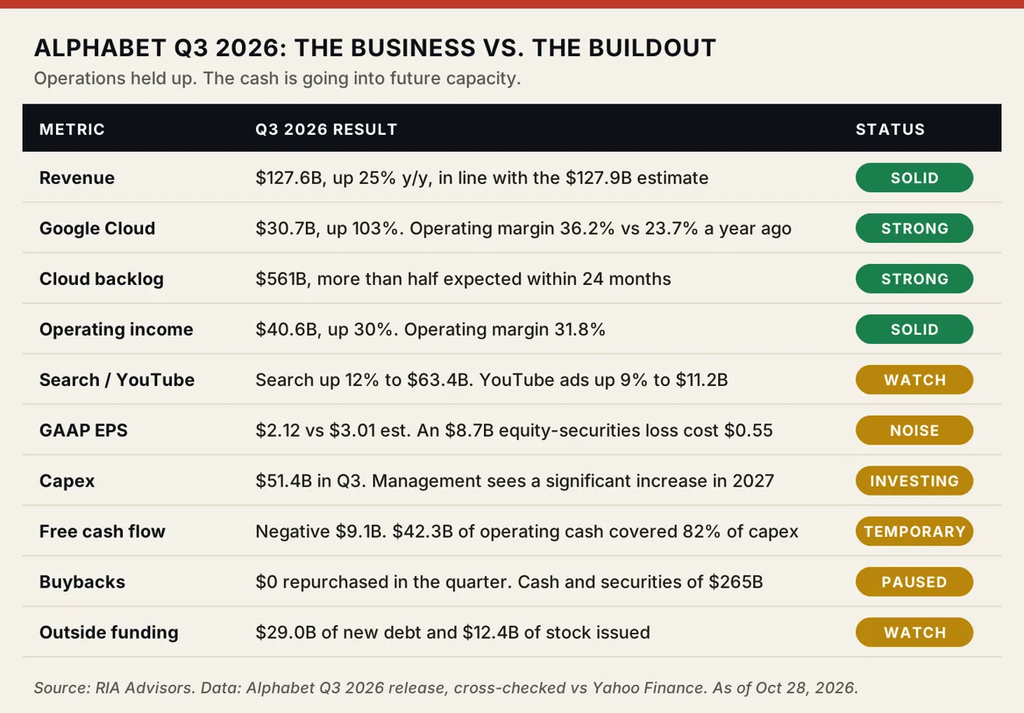
Google Cloud revenue doubled to reach $30.7 billion, while its operating margin expanded significantly from 24% to 36% over the past year. Furthermore, the company’s cloud backlog surged to an impressive $561 billion. The GAAP earnings miss was driven largely by an $8.7 billion paper loss on equity holdings—an accounting valuation adjustment rather than a fundamental flaw in the core business model.
Technical indicators suggest the selling pressure reached an extreme capitulation phase. The stock traded multiple standard deviations below its 20-day moving average, with the Relative Strength Index dropping into deep oversold territory levels not seen since the market lows earlier in the year. Strong institutional buying materialized during the opening hour of trading, absorbing heavy liquidation and driving trading volume well past a typical full session’s worth of shares in the first hour alone.
The primary catalyst for market anxiety was corporate cash flow. Capital expenditures reached $51.4 billion during the quarter, and management’s forward-looking guidance indicates that spending will rise significantly in 2027. Consequently, free cash flow turned negative at $9.1 billion, share buybacks were paused, and the company raised fresh debt and issued new stock to fund its infrastructure expansion.
This dynamic reflects a heavy investment phase rather than an operational crisis. Negative free cash flow is the temporary cost of building out the necessary capacity for future technological demand. Alphabet’s robust operating cash flow still covers a vast majority of its quarterly capital outlays, and the tech giant maintains hundreds of billions of dollars in cash and marketable securities. This positions the company differently from smaller cloud providers that must rely heavily on debt just to remain competitive.
The primary risk moving forward centers on future depreciation schedules. When the massive wave of equipment and infrastructure investments begins flowing through reported earnings as depreciation expenses, profit margins will face a stiffer test. Technical trends suggest patience is warranted, with traders closely monitoring key support levels and looking for confirmation of a sustained rebound before committing additional capital.
Alphabet Advertising Revenue Remains Resilient
For years, a prominent bear thesis surrounding Alphabet suggested that conversational artificial intelligence assistants, such as Gemini, would siphon users away from traditional search engines and erode core advertising revenue. However, the latest financial results challenged that narrative.
Google Search and associated revenues rose to $63.35 billion, while YouTube advertising grew to $11.21 billion. The Google Network publisher business posted steady gains, bringing total quarterly advertising revenue to a significant multi-billion-dollar figure, representing solid year-over-year growth.
Overall, Alphabet expanded its total revenue considerably, with advertising contributing a major portion of the top-line increase alongside the explosive growth of its cloud services division. The company has successfully diversified its revenue streams beyond traditional search advertising. For investors, the long-term question is no longer how revenue will be split between advertising and emerging technologies, but how the overall bottom line will perform as artificial intelligence integration matures across the global economy.

Related News