Why Most Cryptocurrencies Fail to Accrue Long-Term Value: A Market Perspective
As the broader digital asset landscape navigates fluctuating valuations and shifting market narratives, seasoned analysts continue to draw a sharp dividing line between the world’s premier cryptocurrency and the millions of alternative tokens populating public exchanges. While the broader cryptocurrency ecosystem spans countless projects, platforms, and speculative ventures, structural economic realities dictate that the vast majority of these assets will ultimately fail to accrue sustained long-term value for investors.
This perspective, grounded in historical market performance and economic theory, highlights a fundamental divergence in how monetary protocols and utility-driven blockchains function. Over successive market cycles, Bitcoin has continued to command a dominant share of the entire cryptocurrency market capitalization, routinely capturing over 60 percent of the space, and an even higher percentage when excluding dollar-pegged stablecoins. Meanwhile, alternative layer-one blockchains, decentralized finance protocols, and speculative utility tokens have largely struggled to maintain their relative economic weight or establish durable, long-term purchasing power parity against the pioneer asset.
The underlying mechanics of this phenomenon can be traced back to long-standing economic principles regarding technology rails and commoditized services. Observers of the sector have long pointed out that utility blockchains—even when they successfully provide functional utility to end-users—face intense, continuous competition that inevitably drives their operational and transactional revenues down toward the marginal cost of operation. Consequently, the primary beneficiaries of these utility networks are the everyday users who leverage them for transactions, rather than the long-term holders of the underlying platform tokens.
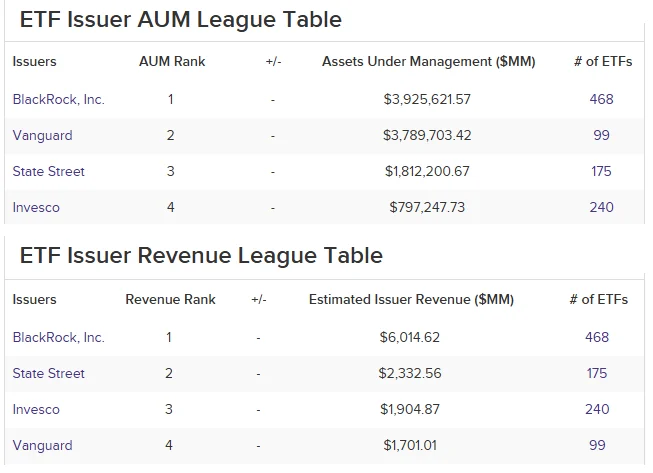
To understand this dynamic, one can examine traditional financial infrastructure. Exchange-traded funds revolutionized modern asset management, drawing trillions of dollars away from traditional mutual funds and other legacy investment vehicles. Yet, despite managing trillions of dollars in assets, the companies that create and operate these ETFs operate in a hyper-competitive environment where fee rates are continually driven downward. As a result, the aggregate market capitalization of the ETF management industry represents only a tiny fraction of the immense wealth flowing through the funds themselves.

A similar dynamic applies to major traditional financial exchanges. The United States equity markets handle hundreds of billions of dollars in daily trading volume across towering enterprise values, yet the parent companies operating the New York Stock Exchange and Nasdaq possess market capitalizations that are dwarfed by several prominent smart contract platforms and alternative cryptocurrencies. When digital asset networks are evaluated strictly on their programmable utility and transactional throughput, their valuations often price in expectations that far exceed the economic scale of traditional global financial giants, despite handling a fraction of the real-world economic relevance.
Over the years, the cryptocurrency industry has cycled through numerous compelling narratives in search of sustainable economic models. Earlier market cycles saw the rise of privacy-focused coins, various scaling experiments, and Initial Coin Offerings that functioned largely as unregulated capital-raising vehicles without durable underlying products. Subsequent cycles brought waves of decentralized exchanges, automated market makers, and decentralized lending protocols. While these platforms provided alternative mechanisms for trading and borrowing, they frequently shifted custodial risks into complex technical vulnerabilities, such as cross-chain bridge exploits, while running up against natural ceilings imposed by competition from centralized providers.
Digital collectibles and non-fungible tokens experienced a similar trajectory. While early collections achieved temporary cultural prominence and speculative fervor, the market was eventually flooded with an endless supply of alternative collections. This continuous influx ultimately exhausted aggregate demand, leaving many participants with illiquid assets once the initial speculative wave receded. As the limitations of various technological narratives became apparent, a portion of the market ultimately embraced meme coins—assets that transparently lack intrinsic utility and serve purely as instruments for global speculation and entertainment.
This pervasive speculative cycle has often masked the reality of underlying product demand. Once initial token speculation subsides, many projects reveal a distinct lack of substantive economic activity. Furthermore, as blockchain infrastructure becomes increasingly commoditized, the revenues generated by these networks face unrelenting downward pressure from open-source competition.
Despite the headwinds facing the broader altcoin ecosystem, certain segments of the digital asset economy continue to experience genuine, organic growth. Stablecoins, which function as modern digital equivalents of the eurodollar, have seen their aggregate market capitalization expand dramatically over the years. This proliferation highlights a robust and sustained global demand for digital representations of fiat currencies, particularly among populations seeking access to stable monetary units outside their local banking systems. However, because these instruments are strictly pegged to the fiat currency they mirror, they generally do not function as traditional investments for passive capital appreciation outside of the issuing entities.

Similarly, the tokenization of traditional assets, such as high-quality equities and government securities, offers functional utility by bridging the gap between core global financial markets and individuals around the world who might otherwise face structural barriers to direct access.
Within this vast landscape of digital assets, Bitcoin continues to occupy a distinct category. Rather than functioning as the underlying computational rails for decentralized applications or smart contracts, bitcoin is acquired primarily for its own sake as portable capital and a decentralized store of value. Backed by strong network effects, high perceived security, and strict supply assurances, it serves as a monetary protocol rather than a commoditized technology service.
As the digital asset sector matures alongside traditional financial markets, the fundamental distinction between monetary assets that capture network effects and commoditized technology rails that compete on marginal costs remains a defining principle for institutional and retail participants alike. While the broader industry will undoubtedly continue to host a wide array of tradeable instruments and specialized utility networks, the economic realities of value accrual suggest that the vast majority of alternative cryptocurrencies will struggle to justify their valuations over a multi-year horizon.

Related News