Renowned Financial and Technology Analyst Lyn Alden Steps into Sci-Fi with
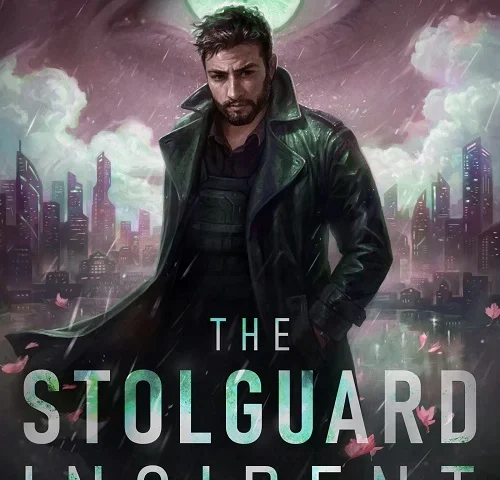
Debut Thriller The Stolguard Incident
Renowned macroeconomist, financial analyst, and author Lyn Alden is expanding her literary footprint into the realm of speculative fiction with the release of her debut sci-fi thriller, The Stolguard Incident. Best known for her extensive, widely read nonfiction writing on global finance, energy systems, and emerging technologies, Alden has spent over a decade quietly developing a complex dystopian narrative that is now available to readers worldwide.
The novel officially launched in print, e-book, and audiobook formats on Amazon, while physical copies have also been made available through Barnes & Noble and independent bookstores upon request. The release marks a major departure from Alden’s typical analytical commentaries, offering readers an immersive journey into a dark, technologically saturated future that draws heavily on her background as an engineer.
Set in the late 21st century, The Stolguard Incident paints a stark picture of a society more fractured and politically polarized than ever before. In this future world, billions of citizens retreat from harsh reality into immersive virtual worlds, pacified by endless digital distractions. This mass escapism leaves the ruling class entirely unchecked, granting those in power unprecedented freedom to tighten their grip on the physical world, expand ubiquitous surveillance systems, and consolidate control.
The narrative engine of the thriller kicks into gear when a terrorist possessing bizarre and inexplicable abilities launches a violent campaign against the established order. This escalation forces the powers that be to take swift action, thrusting military investigator Asim Rahal into a high-stakes race against time to track down and neutralize the elusive threat. However, as Rahal delves deeper into the investigation and pursues the suspect across a fractured landscape, each successive revelation proves that the danger is far worse, and far more systemic, than he could have initially imagined. Uncovering the full scope of the conspiracy threatens to cost Rahal everything he holds dear.

In setting up the philosophical core of the novel, the narrative confronts readers with heavy moral dilemmas. While truth has historically exacted a heavy toll, and heroes throughout literature have routinely grappled with what is worth dying for, The Stolguard Incident forces its characters to confront a much darker and more complex question: what is truly worth killing for?
Early critical reception for Alden’s debut has been overwhelmingly positive, drawing praise from academics, established science fiction authors, and premier review outlets alike. Bradley Rettler, a professor of philosophy at the University of Wyoming, expressed admiration for the novel’s seamless transition into creative writing, noting the high quality of the prose.
"I just read this novel and it is absolutely unfair that Lyn can write fiction this well given the rest of her talents," Rettler remarked. "You are definitely going to want to get your hands on this when it’s published."
Bryan Thomas Schmidt, a recognized author and Hugo-nominated editor, also championed the work, highlighting its immersive qualities and positioning Alden as a fresh voice in the cyberpunk subgenre.
"A compelling and exciting new voice in cyberpunk, Lyn Alden has created a world and story that suck you in and leave you on the edge of your seat. Unputdownable!" Schmidt wrote.
Meanwhile, Kirkus Reviews commended the balance achieved within the text, describing the project as "a skillful and compelling dystopian tale that balances horrors with heartfelt moments."

Why a Sci-Fi Novel?
For Alden, the leap from financial markets and energy grids to futuristic dystopias is not as disjointed as it might initially appear. She has long maintained that fiction holds an educational and psychological weight every bit as important as nonfiction, having been profoundly shaped throughout her life by the characters and narratives she has consumed over the decades.
Reflecting on the unique properties of the medium, Alden points out that general fiction provides a vital mechanism for exploring human perspectives from the inside out. The traditional novel format, in particular, grants readers an intimate window into the psychological depths of characters in a way that visual mediums like film and television rarely achieve. It serves, in her view, as an exceptional cognitive exercise for broadening global understanding while remaining deeply entertaining.
Speculative fiction—encompassing science fiction, fantasy, and horror—holds an even more specific appeal for creators and readers alike. By removing constraints and setting stories outside the familiar boundaries of the present day, speculative fiction allows writers to stress-test the edges of what is scientifically and socially possible, tackle complex ethical dilemmas, and explore hypothetical "what if" scenarios in entirely new environments.
The conceptual foundation for The Stolguard Incident has been gestating in Alden’s mind for well over ten years. During the early stages of this creative conception, however, she was working primarily as an engineer rather than a professional writer and lacked the specific prose-crafting abilities required to bring such a sweeping narrative to life. Over the subsequent decade, that dynamic shifted dramatically as she produced millions of words of rigorous nonfiction analysis covering the intersections of technology, monetary policy, and macroeconomic trends. This sustained writing regimen built up the exact structural and narrative skill set needed to tackle long-form fiction. With the completion of her financial and economic projects, crafting this dystopian thriller provided Alden with a long-overdue and much-needed creative outlet.
As an engineer by training, Alden naturally sought to ground her fictional universe in plausible technological trajectories. The writing process served as an intensive catalyst for her to refresh and update her technical knowledge across a wide array of rapidly evolving sectors. From cutting-edge battery chemistries and advanced virtual reality architectures to artificial intelligence, brain-computer interfaces, genetic engineering, and decentralized social media networks, the research required to build the world of The Stolguard Incident allowed her to cross-examine her own forward-looking expectations regarding fast-paced industries and their respective rates of real-world adoption.

While the novel deliberately steers clear of getting bogged down in dry technical expositions—prioritizing character development, pacing, and plot above all else—the underlying engineering realism permeates the background of the story, ensuring that the futuristic setting feels grounded and earned.
Who It’s For
The Stolguard Incident is tailor-made for enthusiasts of mature science fiction and speculative media. Readers who have gravitated toward iconic cinematic and literary works such as The Matrix, Blade Runner, Ghost in the Shell, Akira, Cyberpunk: Edgerunners, X-Men, Pantheon, Stranger Things, Red Rising, and Mistborn will find familiar thematic DNA within Alden’s debut.
Beyond genre loyalists, the book is designed to appeal to anyone who appreciates a thorough, meticulous character study paired with a steady, high-stakes stream of action. Regardless of a reader’s usual literary preferences, the human-centric narrative offers multiple entry points for engagement.
At the same time, the author notes that the story does not pull its punches, prompting a recommendation for reader discretion. Eschewing the tropes of a carefree or optimistic sci-fi adventure, The Stolguard Incident leans heavily into darker territory. It serves as a grim exploration of scientific hubris, the dangers of ubiquitous surveillance, the epistemic challenge of separating absolute truth from sophisticated lies in an interconnected digital society, and the enduring personal and societal consequences of political and physical violence. Through these dark motifs, Alden aims to do more than simply entertain; she challenges her audience to grapple with deeper philosophical questions about power, ethics, and human survival in an increasingly controlled world.

Related News