ABC Station Owners Fume Over Disney’s Multi-Platform Super Bowl Strategy, Fearing Steep Ad Revenue Losses
Disney may own some of the most lucrative media properties in the world, but in the corporate arena, business is frequently a full-contact sport. The entertainment giant has weathered its share of high-profile hits over the years, ranging from internal executive feuds to complex legal battles with federal regulators like the Federal Communications Commission. Yet, some of the sharpest friction Disney now faces is originating much closer to home: from its own network of local broadcast affiliates.
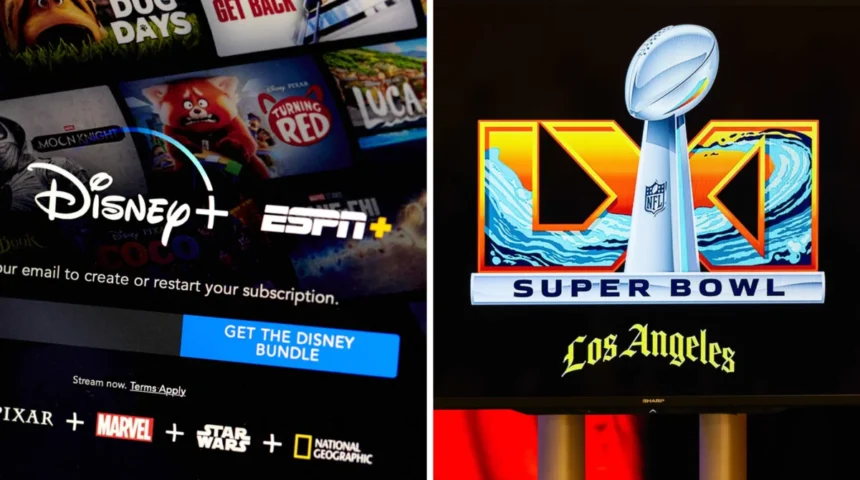
Station owners operating under the ABC banner are expressing profound frustration with Disney’s strategy to broadcast and stream the upcoming Super Bowl across an unprecedented array of platforms. Rather than keeping the marquee sporting event tightly bound to traditional broadcast television, Disney plans to distribute the game simultaneously across ABC, ESPN, Disney+, ESPN2, ESPNU, and the NFL Network, alongside various alternative viewing experiences.
According to a prominent station group chief executive officer who spoke on the condition of anonymity due to the private nature of the data, this aggressive, wide-net distribution model could fracture the audience so significantly that advertising revenue associated with traditional broadcast viewership might plummet by as much as 35% compared to previous years.
For Disney, the stakes are exceptionally high. The corporation secured the broadcast rights to this season’s Super Bowl as part of a sweeping, multi-billion-dollar media rights agreement struck with the NFL in 2021. It marks a historic homecoming for the network, as ABC has not held the broadcast rights to the Super Bowl since 2006.
The Super Bowl functions as a critical economic engine for local television stations across the country. While a portion of ABC affiliates are owned directly by Disney, the vast majority are independent local station groups managed by major broadcasting corporations such as Sinclair, Nexstar, and Tegna.
The financial arithmetic of the Super Bowl is staggering. Broadcasters typically command massive payouts for the high-volume inventory available during the game. Last year, Fox reported that airing Super Bowl LIX on its network and its free streaming platform, Tubi, generated more than $800 million in gross advertising revenue across all platforms. A standard game features roughly 85 thirty-second commercial spots. With an average price tag hovering around $8 million per spot, the primary broadcast network alone accounts for roughly $680 million in ad sales.
While most major advertising campaigns run nationally, brands frequently purchase ad space targeting specific large media markets. This localized structure allows smaller market affiliates to monetize their commercial breaks locally. While a standard primetime television program might pull in an average audience of around eight million viewers, the Super Bowl routinely multiplies that figure by fifteenfold or more, driving local advertising rates up in direct proportion. Super Bowl LX, played in February, drew a massive audience of 125.6 million viewers.
For a typical local affiliate station, the Super Bowl can account for approximately 3% of its total annual advertising revenue when the game falls on its airwaves. For owned-and-operated stations situated in major media markets, the financial impact is even more pronounced, with individual stations frequently pulling in roughly $10 million in direct advertising revenue from the single broadcast, according to industry sources familiar with the matter.
Under the traditional economic model of network television, local affiliate stations pay the corporate parents of broadcast networks—such as Disney for ABC, Comcast for NBC, Fox Corporation for Fox, and Skydance for CBS—what is known as a reverse retransmission fee. These fees grant the local stations the right to carry premier network programming.
The established negotiation process is well-worn: Disney invests billions of dollars to acquire live sports rights, then asks its local affiliates to contribute financially to offset those massive expenses. In turn, the local stations negotiate with pay-TV and cable providers, charging them retransmission fees to carry the local broadcast signal.
This financial interdependency is precisely why local broadcast affiliates are feeling aggrieved. For decades, the foundational promise of the Super Bowl was its absolute exclusivity to broadcast television. Securing access to the Big Game and its unmatched localized ad inventory was viewed as a core justification for the heavy financial burden of reverse retransmission fees.
Although major media companies have increasingly made the Super Bowl available across both broadcast television and digital streaming platforms in recent years, industry critics argue that Disney’s current rollout takes a sledgehammer to traditional broadcast exclusivity.
Disney’s Different Options
Because the game is produced under the ESPN banner and features the network’s primary "Monday Night Football" broadcast booth, led by veteran announcers Joe Buck and Troy Aikman, industry observers expect the cable network to capture a substantial share of the overall audience.
However, Disney is also pushing the broadcast onto Disney+, a subscription streaming service that has historically steered clear of live sports programming. While streaming the Super Bowl is no longer a novel concept—NBCUniversal’s Peacock, Fox’s Tubi, and Skydance’s Paramount+ have all streamed the game in previous years—those rival platforms utilize geofenced dynamic advertising insertion technology. This capability allows local affiliate stations to sell and insert commercial ads tailored specifically to their regional streaming audiences. Disney+, which does not typically carry live ABC sports programming, lacks this dynamic advertising insertion infrastructure.
Compounding the fragmentation, Disney is deploying a wide array of alternative broadcasts, commonly referred to as "alt-casts." ESPN2 will feature the popular ManningCast hosted by Peyton and Eli Manning. ESPNU will air a "Super Bowl LXI Field Pass with The Pat McAfee Show," while the NFL Network will carry a "Super Bowl LXI Playbook with Next Gen Stats" broadcast.
In an even more unconventional move, Disney is scheduled to air a "Star Wars"-themed alternative broadcast on Disney Channel and Disney XD, which will simultaneously stream on Disney+. According to a Disney spokesperson, the national commercials running across the primary broadcasts will remain uniform, while the "Star Wars" alt-cast will be presented entirely ad-free.
Through this multi-platform blitz, Disney aims to leverage its expansive corporate ecosystem to maximize overall viewership and capture aggregate advertising dollars.
"The Super Bowl is the year’s most-watched telecast, and our broad distribution across ESPN, ABC, and Disney+ will give fans everywhere more ways than ever to enjoy the game," a Disney spokesperson said in a statement. "Making marquee live events available via streaming is a well-established industry practice. Fox and NBC have recently offered the Super Bowl on Tubi and Peacock, and we’ve similarly streamed ‘The Oscars’ on Hulu and ‘Dancing with the Stars’ on Disney+, for example. There’s nothing unprecedented about this approach as we are meeting the modern consumer where they are."
Despite these justifications, industry stakeholders maintain that the sheer totality of the distribution strategy will inevitably depress traditional broadcast viewership. One station group CEO estimated that local advertising revenue tied directly to the game could experience a decline of up to 35%, though the executive declined to be identified due to the sensitive nature of the financial analysis.
"Any time you fragment distribution, you’re destroying value for each of the individual platforms," another station group CEO remarked anonymously out of concern for potential corporate retribution. "I don’t have a problem with what Disney is doing—I have a problem that there’s no acknowledgement that we’re losing money."
Affiliate Board Involvement
The mounting friction over declining broadcast viewership and the subsequent erosion of local advertising revenue has become severe enough to trigger formal discussions at the affiliate board level. The board functions as an elected governing body of executives drawn from across the television broadcasting industry, serving as the official liaison between local stations and their parent networks. At present, it remains unclear whether Disney intends to offer any form of financial compensation or ad revenue sharing to offset the projected losses for its affiliates.
The broader shift is driven by structural declines in traditional linear television viewership, which are pushing legacy media companies to aggressively target younger and cord-cutting demographics who consume media entirely outside the cable and broadcast ecosystem.
Nevertheless, local station executives are urging Disney to show greater commitment to preserving the profitability of the linear television landscape, even as it manages its transition into streaming. Several executives privately expressed concern that by failing to collaborate closely with local affiliates to keep core audiences focused on broadcast platforms, Disney risks undermining the broader linear ecosystem.
"Our ABC affiliates are important partners and we always take that into careful consideration when making these decisions," the Disney spokesperson said. "We’ve successfully navigated similar situations in collaboration with the governing board many times before, and this is no different."
The chairman of the ABC Television Affiliates Association Board of Governors declined to comment on the ongoing discussions.

Related News