Birdbuddy Officially Launches Next-Gen Smart Feeders with the Compact Nook and Flagship Home
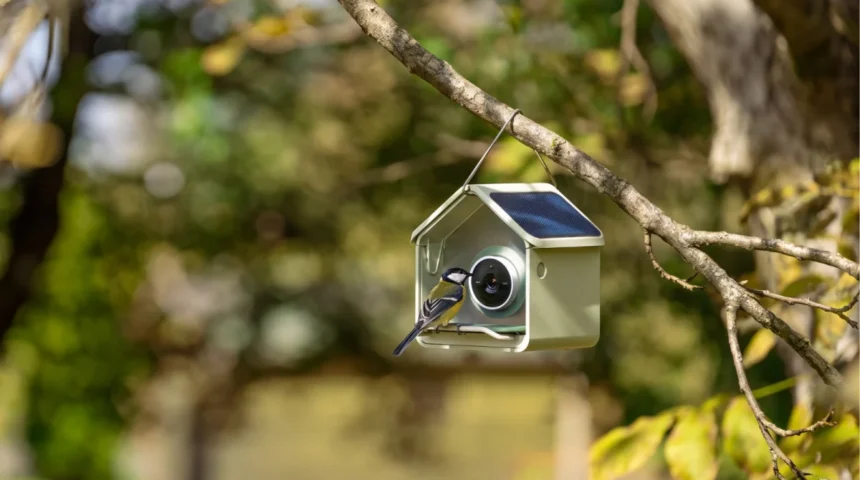
Backyard birdwatching is entering a distinctly high-tech era as Birdbuddy officially releases its highly anticipated next-generation smart feeders. First unveiled to the public earlier this year at CES 2026 under the temporary working titles Birdbuddy 2 and 2 Mini, the revamped lineup is officially dropping with fresh, consumer-friendly identities: the compact Birdbuddy Nook and the feature-rich flagship Birdbuddy Home.
The launch brings a host of significant technological advancements to the booming category of smart home wildlife observation. Both of the new feeders have been engineered around a completely redesigned instant-wake-up camera system. This hardware upgrade is specifically built to eliminate the frustrating shutter lag that occasionally plagued earlier generations of smart feeders, ensuring that these devices can capture feathered visitors the exact millisecond they touch down on the perch. For enthusiasts who have ever missed a rare fleeting visitor because a camera took too long to trigger from sleep mode, this foundational update promises a much higher yield of successful captures.
The entry point into this upgraded ecosystem is the Birdbuddy Nook, which retails for $99. Designed specifically for apartment balconies, smaller suburban yards, or first-time smart birders testing the waters, the Nook delivers an accessible and compact footprint. Measuring a modest 6.95 by 5.91 by 5.31 inches—or extending to 6.24 inches deep when accounting for the perch—the hardware fits comfortably into tight outdoor spaces where a bulky feeder would prove impractical.
Despite its smaller scale and lower price tag, the Nook does not skimp on core intelligence. It offers the exact same high-end camera quality found in the more expensive models, featuring 2K resolution, sophisticated artificial intelligence species recognition, and advanced audio birdsong identification. To accommodate its smaller physical size, the Nook features a tailored seed capacity, an easy-refill roof design, and modular flexibility that allows users to add either a single solar panel for continuous charging or a helpful perch extender depending on their specific installation needs. At $99, the Nook represents the most affordable official entry point into the broader Birdbuddy ecosystem to date, lowering the financial barrier for casual nature lovers who want to bring digital birdwatching closer to their windows.
For enthusiasts looking for maximum specifications, rugged outdoor durability, and comprehensive backyard coverage, the flagship Birdbuddy Home arrives at a price point of $219. The Home model introduces a completely redesigned circular camera housing that marks a departure from previous aesthetic layouts. This versatile housing supports both portrait and landscape mounting orientations, giving users more creative control over how they frame their backyard wildlife video feeds.
The optical system on the Birdbuddy Home is built to capture crisp media, recording in 2K HDR video complete with slow-motion recording capabilities and a wide 135-degree field of view. To protect this valuable lens from the elements, curious squirrels, and aggressive larger birds, the camera is shielded behind robust Gorilla Glass. Measuring 9.0 by 6.1 by 6.3 inches with the perch included, the flagship model boasts a substantially larger seed capacity than its compact sibling, reducing how often owners need to head outside to refill the reservoir.
Beyond its physical proportions, the Birdbuddy Home packs heavy-duty connectivity and power features. It includes dual integrated solar panels that work in tandem with an automatic night sleep mode to optimize battery life and ensure uninterrupted operation across changing seasonal weather conditions. For households dealing with crowded wireless networks or challenging distances between the router and the backyard tree, the Home introduces dual-band Wi-Fi support, accommodating both 2.4 GHz and 5 GHz frequencies for a more stable and responsive connection.
Both the Nook and the Home rely on advanced artificial intelligence to transform casual backyard feeding into an interactive educational experience. The onboard AI species recognition pairs visual camera feeds with a high-fidelity microphone capable of real-time birdsong audio identification. This dual-sensor approach means the feeders can log visitors not only by what they look like when they land on the perch, but also by the specific vocalizations they make while hovering nearby or calling from surrounding branches.
As these next-generation devices roll out to consumers, tech and nature reviewers are actively putting both models through their paces in real-world environments to evaluate how well the instant-wake cameras, solar charging, and audio recognition perform under everyday conditions. While comprehensive hands-on reviews will explore the nuances of battery longevity and network reliability in the coming days, the official market debut of the $99 Nook and the $219 Home firmly establishes a new benchmark for what consumers can expect from connected wildlife hardware.

Related News