Early iPhone Duo Reviews Praise Apple’s First Foldable, But Trash Its Under-Display Camera
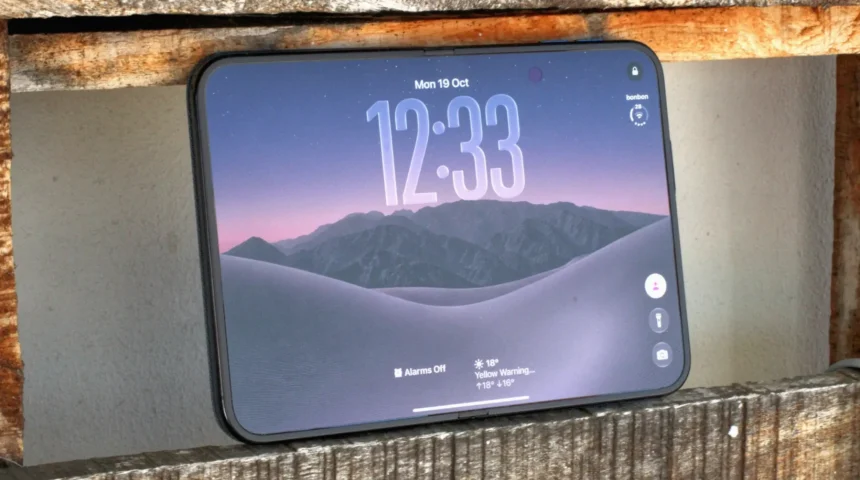
As the technology world prepares for the official Friday, Oct. 23 launch of the highly anticipated iPhone Duo, the embargo has lifted, and the first wave of comprehensive tech reviews has arrived. Among the early verdicts, a clear consensus has emerged from leading critics: Apple’s debut foldable device is an exceptionally fun, highly promising piece of hardware, especially for a first-generation product. However, nearly every early reviewer is aligned on a major drawback—the under-display FaceTime selfie camera.
While the iPhone Duo has successfully captured the attention of consumers and critics alike with its sleek design and fluid software experience, the hidden inner camera has quickly become the primary target of industry criticism.
In Mashable’s glowing review of the device, Stan Schroeder highlighted the FaceTime lens as one of the few tangible flaws on an otherwise impressive piece of engineering. According to Schroeder, any attempt to capture a half-decent selfie using the inner display results in a heavily processed, smudgy, and unnaturally AI-enhanced photo.

Prominent tech creator Marques Brownlee echoed these sentiments in a video review shared with his massive audience of 21.4 million YouTube subscribers. Mincing no words, Brownlee characterized the under-display sensor as distinctly "first-gen" and described the overall photo quality bluntly, calling the output "trash."
Other major tech publications arrived at similarly critical conclusions. Writing for Gizmodo, Ray Wong pointed out that the sensor packs a mere four megapixels, resulting in images that are low-resolution, washed out, and severely lacking in sharpness. Wong noted that users will likely want to avoid taking traditional selfies with the inner camera, describing it as serviceable only in a pinch for video calls, where the video feed still appears noticeably muddy.
Eric Zeman of PCMag shared a comparable assessment, noting that the photos captured by the under-display lens suffer significantly in terms of focus, contrast, and noise, making it a feature best restricted strictly to casual FaceTime conversations.
Why the iPhone Duo Camera Is Unique
To understand the shortcomings of the iPhone Duo’s photography setup, it helps to examine how the hardware is distributed across the device. While Apple has opted to drop the dedicated telephoto rear lens found on traditional flagship models like the iPhone 18 Pro and Pro Max, the foldable device still packs a total of four distinct cameras.

On the exterior, users have access to a dual-lens rear camera system featuring a 48-megapixel main camera and a 48-megapixel ultra-wide camera. Additionally, an external 12-megapixel Center Stage front camera handles standard duties when the phone is closed. The controversial fourth camera is the one Apple officially designates simply as the "FaceTime camera," which is housed directly under the screen of the inner folding display and remains inaccessible when the device is shut.
When Apple first unveiled the device and confirmed the inclusion of an under-display lens, initial consumer and industry anxiety largely centered on whether the hardware cutout would prove visibly distracting during media consumption, such as watching videos on the expanded inner screen. Fortunately, most reviewers have expressed satisfaction with Apple’s execution on that front, finding the camera well-hidden during daily use.
The primary grievance is not visibility, but rather output quality. Unlike the device’s other three lenses, Apple refrained from heavily promoting the megapixels of the FaceTime camera during its marketing announcements—a strategic omission that reviewers now realize was designed to downplay its modest four-megapixel resolution.
Apple and Samsung Struggle With Foldable Selfie Cameras
The technical hurdles surrounding under-display camera technology are not unique to Apple, highlighting an industry-wide engineering bottleneck. Fitting a digital sensor beneath an active organic light-emitting diode (OLED) display requires light to pass through layers of pixels and circuitry, which frequently degrades image clarity and forces heavy computational processing to salvage the final shot.

Competitors have grappled with similar compromises for years. Samsung, a pioneer in the foldable smartphone market, previously experimented extensively with under-display cameras on its Galaxy Z Fold series before shifting course. With the release of the Galaxy Z Fold 7 and the subsequent Galaxy 8 series, Samsung abandoned the under-display approach for its inner selfie cameras, opting instead for traditional pinhole cutouts.
Despite moving away from under-display placement, Samsung has continued to face hurdles with the quality of inner selfie lenses on foldable hardware. Timothy Beck Werth, Mashable’s Tech Editor, evaluated both the Samsung Galaxy Z Fold 8 and the Samsung Galaxy Z Flip 8 earlier this year, leveling critiques at their internal selfie cameras that closely mirror the feedback now being directed at the iPhone Duo.
Reflecting on the limitations of the Z Flip 8’s inner configuration, Werth noted that the performance left much to be desired, describing the selfie output in candid terms. Reviewers evaluating Apple’s new hardware have frequently reached for similarly blunt vocabulary—such as "bad," "low-res," and "trash"—to capture the stark performance gap between traditional slab-phone selfie shooters and their foldable counterparts.
Whether future iterations of the iPhone Duo will successfully bridge this technological gap remains to be seen. For now, the subpar performance of the under-display FaceTime camera stands as the single most prominent critique leveled against Apple’s debut foldable. Even so, this limitation has done little to dampen the overwhelmingly positive reception directed at the rest of the device’s hardware, software, and overall execution.

Related News