El Salvador Deploys Special Forces to Haiti Following Gang Attack and Abduction of Four Military Technicians
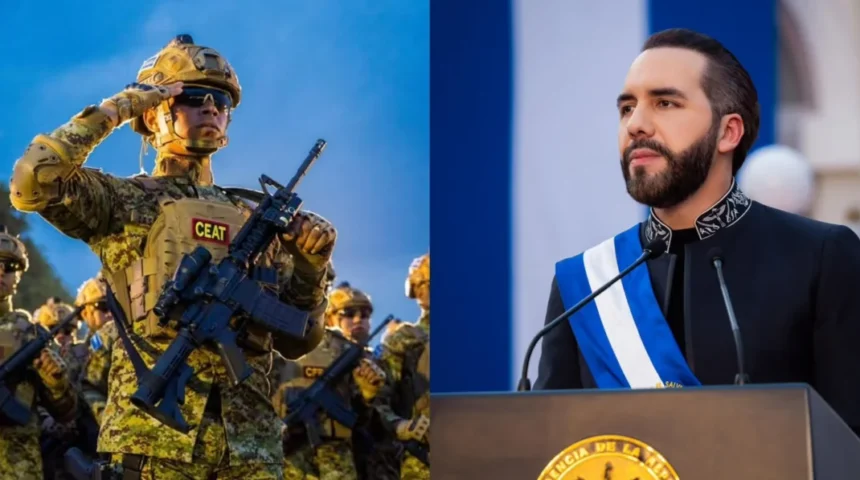
El Salvador has taken decisive international action following a violent escalation in the Caribbean, deploying 100 elite special forces personnel to Haiti. According to officials cited by The Associated Press, the heavily trained deployment is tasked with supporting urgent operations to locate and rescue four Salvadoran military aviation technicians who went missing after a brutal gang ambush.
The emergency deployment follows a direct announcement by Salvadoran President Nayib Bukele, who ordered a specialized military operation aimed explicitly at recovering the missing personnel safely. Operating under the working assumption that all four technicians remain alive, Salvadoran authorities are moving swiftly. Preparations are already underway to deploy an additional 100 soldiers to Haiti to reinforce the search-and-rescue mission, highlighting the government’s uncompromising stance on protecting its citizens and military personnel serving abroad.
Haitian authorities reported that the perilous incident unfolded on a Sunday in Croix-des-Bouquets, a volatile suburb northeast of Port-au-Prince known for heavy gang activity and territorial conflicts. The four Salvadoran technicians were traveling in a reinforced, armored vehicle when heavily armed gangs intercepted them. According to preliminary reports, the attackers opened intense gunfire on the vehicle and reportedly deployed explosives to breach or disable it, plunging the transport into a tactical trap.

The brazen daytime assault has triggered a massive, ongoing security operation in the Croix-des-Bouquets area. Intense, prolonged fighting between security forces and criminal factions has erupted in the surrounding neighborhoods, creating a high-risk environment. Local authorities and security contingents have issued urgent safety alerts, strongly warning civilian residents to remain indoors, lock their doors, and stay away from windows as armored patrols and tactical units comb the district for signs of the missing men and their captors.
This high-profile ambush represents a profound and immediate challenge for Haiti’s ongoing international security mission. The multinational effort, which works in close coordination with the chronically under-resourced Haitian National Police, has been striving to counter heavily armed criminal syndicates that have exerted brutal control over large swaths of the capital and its surrounding arteries. The joint response—now bolstered by El Salvador’s elite intervention—marks a critical development in broader regional efforts to contain, confront, and roll back gang violence in areas previously ceded to criminal governance.
El Salvador’s rapid mobilization forcefully underscores the government’s unwavering commitment to leaving no soldier behind. President Bukele has adopted a characteristically firm public posture regarding the crisis, issuing a stark warning that his administration expects the safe and unharmed return of the four captured technicians, while hinting at an even stronger, uncompromising response if any harm comes to them. The explicit message reflects San Salvador’s broader domestic security doctrine, which prioritizes overwhelming state force and zero tolerance for criminal impunity, now projected onto an international stage.
As the situation on the ground in Croix-des-Bouquets remains fluid and tense, the multinational operation is strictly focused on intelligence-gathering, area containment, and locating the four Salvadorans. Elite Salvadoran special forces, working alongside allied security elements, are coordinating tactical sweeps through the complex urban terrain. For now, the entire mission hinges on the delicate, high-stakes endeavor of rescuing the missing technicians before the volatile security situation deteriorates further.

Related News