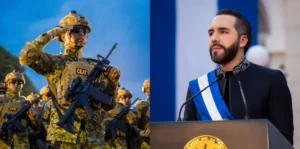
High-Stakes Rescue Operation Underway in Haiti After Armed Gangs Ambush and Kidnap Four Salvadoran Military Personnel

A high-stakes international rescue operation is currently underway in Haiti following the ambush and abduction of four Salvadoran military personnel on October 18. The soldiers, deployed as aviation and medical evacuation technicians under an international mission, were targeted by heavily armed criminal groups in an armored vehicle while returning from buying supplies at a local market. Joint military forces and the Haitian National Police have since launched intensive operations in the Santo area of Croix-des-Bouquets to track down the missing personnel, as security forces and international observers grapple with the rapidly unfolding crisis.
The incident marks a dramatic escalation in the ongoing security challenges facing international deployments in the Caribbean nation. The targeted Salvadoran personnel were not serving in a combat capacity, but rather fulfilling critical support roles focused on aviation and medical evacuations. These specialized technicians form part of a broader multinational framework aimed at stabilizing Haiti and restoring basic infrastructure and order. However, the omnipresent threat posed by entrenched and heavily armed criminal gangs operating in the metropolitan area of Port-au-Prince and its surrounding suburbs has once again manifested in a direct challenge to international personnel.
According to initial reports from the ground, the four soldiers were traveling in an armored vehicle when they were intercepted by gang members in the Santo sector, which falls within the broader Croix-des-Bouquets commune. The area has long been a stronghold for powerful criminal factions known for territorial control, extortion, and high-profile kidnappings. The attackers successfully overpowered the vehicle’s occupants, seizing the four Salvadoran technicians and plunging the international mission into a profound crisis.
In response to the abduction, coordinated units of the Haitian National Police, alongside allied security forces, swiftly mobilized. Intensive search and rescue operations were launched across the volatile Santo area and the wider Cul-de-Sac plain, a strategic geographical depression north of the capital that has frequently been the epicenter of violent confrontations between law enforcement and criminal syndicates. Checkpoints have been established, and intelligence assets have been deployed in an effort to locate the hostages before they can be moved deeper into inaccessible gang-controlled territory.
The gravity of the situation prompted an immediate and direct response from the highest levels of the Salvadoran government. El Salvador’s President, Nayib Bukele, took to social media to address the perpetrators directly, issuing a blunt and uncompromising message to the gang leaders holding the four men. Emphasizing the humanitarian and non-combatant nature of the mission, Bukele sought to strip away any pretext the gangs might attempt to use to justify the abduction.
"To the gang leaders and gang members holding our four compatriots hostage in Haiti," Bukele wrote, explicitly detailing the professional standing of the captured men. The Salvadoran leader underscored that the kidnapped individuals are strictly aviation technicians and support personnel participating in an international mission, rather than combatants engaged in hostilities against local factions. Bukele demanded their immediate and unharmed release, while simultaneously confirming that a dedicated military rescue mission had been deployed with the sole, uncompromising objective of bringing the four Salvadorans back home safely.
The rhetoric from San Salvador was accompanied by a stern and explicit ultimatum directed at the criminal leadership. Bukele cautioned the gang leaders that the military response currently being deployed on the ground in Haiti would pale in comparison to the consequences they would face if the hostages were harmed in any way. Drawing on El Salvador’s domestic security record against powerful transnational gangs, Bukele issued a stark warning regarding the capability and resolve of his administration.
"Do not take our words as empty threats," Bukele stated, drawing a direct parallel to his government’s aggressive crackdown on criminal organizations within El Salvador. "We have already finished with the gangs in El Salvador, and we can finish with yours too." At the same time, the Salvadoran president offered a temporary window of opportunity for the captors to avoid further escalation, signaling that a peaceful resolution centered on the safe return of the captives remains the preferred outcome, provided the ultimatum is heeded without delay.
The kidnapping underscores the severely deteriorating security situation in Haiti, where criminal coalitions have capitalized on institutional instability to expand their territorial footprint and challenge both domestic authorities and foreign missions. The incident serves as a severe test of the resolve, coordination, and operational capacity of international stabilization forces operating in the country. For years, international bodies and partner nations have sought to assist Haitian authorities in dismantling the violent gangs that paralyze daily life, disrupt supply chains, and terrorize local populations. However, the brazen targeting of foreign military technicians highlights the extreme risks inherent in these stabilization efforts.
As search and rescue operations continue to sweep across the Cul-de-Sac plain and surrounding sectors, the international community watches closely. The unfolding crisis puts immense pressure on both the local security apparatus and the external allies committed to restoring order in Haiti. All eyes remain fixed on the gang leaders in Croix-des-Bouquets to determine whether they will heed President Bukele’s stern warning and release the hostages or risk an unprecedented and forceful military confrontation with determined foreign and domestic security forces.

Related News