University of Glasgow Professor Lee Cronin Debunks AI Delusion and Explores the True Origins of Life
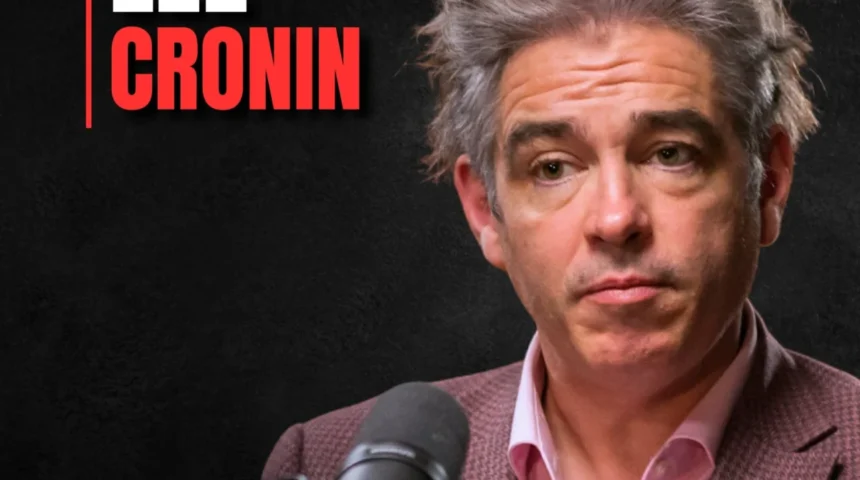
As Silicon Valley tech giants and venture capitalists pour billions of dollars into the race toward artificial general intelligence, predicting an imminent dawn of sentient machines, prominent chemist and University of Glasgow professor Lee Cronin is offering a starkly different perspective. In a comprehensive and wide-ranging discussion, Cronin has dismissed the prevailing tech narrative as a "massive AI delusion," characterizing modern artificial intelligence not as a nascent form of digital life, but rather as an advanced mechanism of plagiarism.
According to Cronin, large language models and contemporary AI architectures are fundamentally misunderstood by the public and their creators alike. Far from possessing consciousness, curiosity, or true cognitive autonomy, these systems are merely trained on the vast expanse of recorded human history. While Cronin acknowledges that these models function as exceptionally powerful computational tools, he emphasizes that they are entirely incapable of the biological intelligence, genuine awareness, and evolutionary depth that define actual living entities. Silicon, in his view, will never replicate the organic complexity of life.
Rather than being consumed by anxieties over silicon-based artificial intelligence taking over the world, Cronin’s actual scientific mission is significantly more ambitious and grounded in fundamental physics and chemistry: programming chemical systems to solve the mystery of the origin of life and ultimately turning inert sand into living cells.
This profound scientific endeavor explores why biological consciousness cannot be separated from an unbroken, 3.8-billion-year evolutionary lineage. During the conversation, Cronin breaks down a multitude of deep philosophical and scientific concepts, suggesting that DNA itself might simply be a cosmic fluke. He discusses how modern chemistry can be utilized to measure the complexity of life, touches upon the mysteries of dark matter and dark energy, and outlines his firm belief that humanity will detect actual alien life within the next two decades.
The discussion traverses a vast landscape of scientific inquiry, beginning with a critical look at why current AI models lack true intelligence and moving into the arduous process of trying to create life inside a laboratory environment. Cronin challenges conventional definitions of consciousness, arguing that it is an illusion, and dives deep into our current collective understanding—or lack thereof—regarding how life originally sparked on Earth. He notes that despite decades of scientific research, humanity still knows very little about the definitive origin of life, and points out the ongoing struggle within the scientific community to even formulate a universally accepted definition of what life actually is.
Expanding on these definitions, Cronin references alternative frameworks, such as the perspective offered by science communicator Adam Savage, while laying out the chronological progression of prebiotic chemistry. He explains how complex molecules had to come together long before the first living cells could emerge, reinforcing his thesis that biology is fundamentally a direct descendant of chemistry. This chemical foundation leads into broader cosmic questions, touching on the fundamental meaning of life as simply being existence itself, and what protocols researchers might follow if handed a sample of genuinely alien matter.
The conversation also highlights Cronin’s pioneering work in the realm of digital chemistry, a field that seeks to digitize chemical reactions and synthesize complex molecules automatically. He reflects on his own scientific journey, recounting six major "eureka" moments that have shaped his career, and notes that the sheer scale of the universe and the complexity of its chemical reactions render words like "unfathomable" entirely inadequate.
Addressing more speculative frontiers, Cronin tackles questions regarding the theoretical limits of biology, such as whether a human being could ever be digitally copied, while sharply dismissing viral narratives about artificial intelligence escaping containment as sheer nonsense. Shifting focus back to human culture and psychology, Cronin highlights the immense power of human curiosity, describing it as the coolest and most valuable trait humanity possesses. He concludes with sharp commentary on modern digital habits, issuing a warning that social media has effectively become the new smoking—a ubiquitous, highly addictive cultural fixture with profound long-term consequences for human society.

Related News