Zcash Leads Broad Crypto Market Rebound as Bitcoin Recovers and Institutional Inflows Surge

Cryptocurrency markets bounced back on Tuesday, staging a decisive recovery from recent losses, with privacy-focused digital assets leading the charge across the board. The broader market rebound was spearheaded by Zcash, which saw a notable double-digit percentage increase over a 24-hour window, lifting its overall market capitalization as traders rotated capital back into digital assets following days of downward pressure.
Zcash, a prominent privacy coin known for its optional zero-knowledge proof transaction shielding, rose 8.5% over a 24-hour period to reach $1,215.85. This strong daily performance pushed its total market capitalization to $20.57 billion. The privacy coin’s outperformance caught the attention of market analysts, who noted that the asset had experienced a heavy correction over the preceding weeks, leaving it in an oversold position that naturally paved the way for a sharp relief rally.
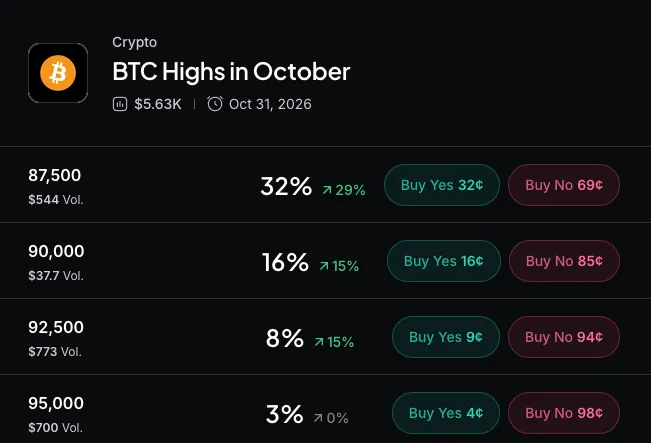
The wider digital asset ecosystem enjoyed a synchronized lift. Bitcoin, the world’s largest cryptocurrency by market capitalization, gained 1.57% to trade at $83,195, finding stable technical support near the $80,000 to $81,000 price band after weathering a turbulent week. Meanwhile, Ethereum, the leading smart contract platform, climbed 2.90% to settle at $2,463.35. Almost every major crypto asset outside of stablecoins finished the trading day in positive territory, signaling a widespread return of risk appetite among digital asset participants.

The general market recovery lifted the total crypto market capitalization by 1.68% to $2.78 trillion. Furthermore, the CMC20 index, which tracks the twenty largest cryptocurrencies by market value, advanced by 1.45% to $169.87 per unit. This data highlighted that smaller and mid-cap altcoins played a particularly vital role in Tuesday’s upward surge. Market observers pointed out that such a dynamic was widely anticipated following days of steep liquidations, particularly among the heavy-hitting mega-cap assets that usually dictate immediate market trends.
This renewed crypto momentum did not occur in a vacuum; it closely mirrored a broader recovery across traditional financial markets, specifically within the technology sector. Chipmakers and artificial intelligence stocks rebounded strongly on Monday from a prior week sell-off, with the tech-heavy Nasdaq Composite posting a gain of approximately 1.1%. Because cryptocurrencies have historically exhibited a high correlation with risk-on technology shares, the stabilization in equities provided an encouraging backdrop for digital asset buyers to step back into the market.
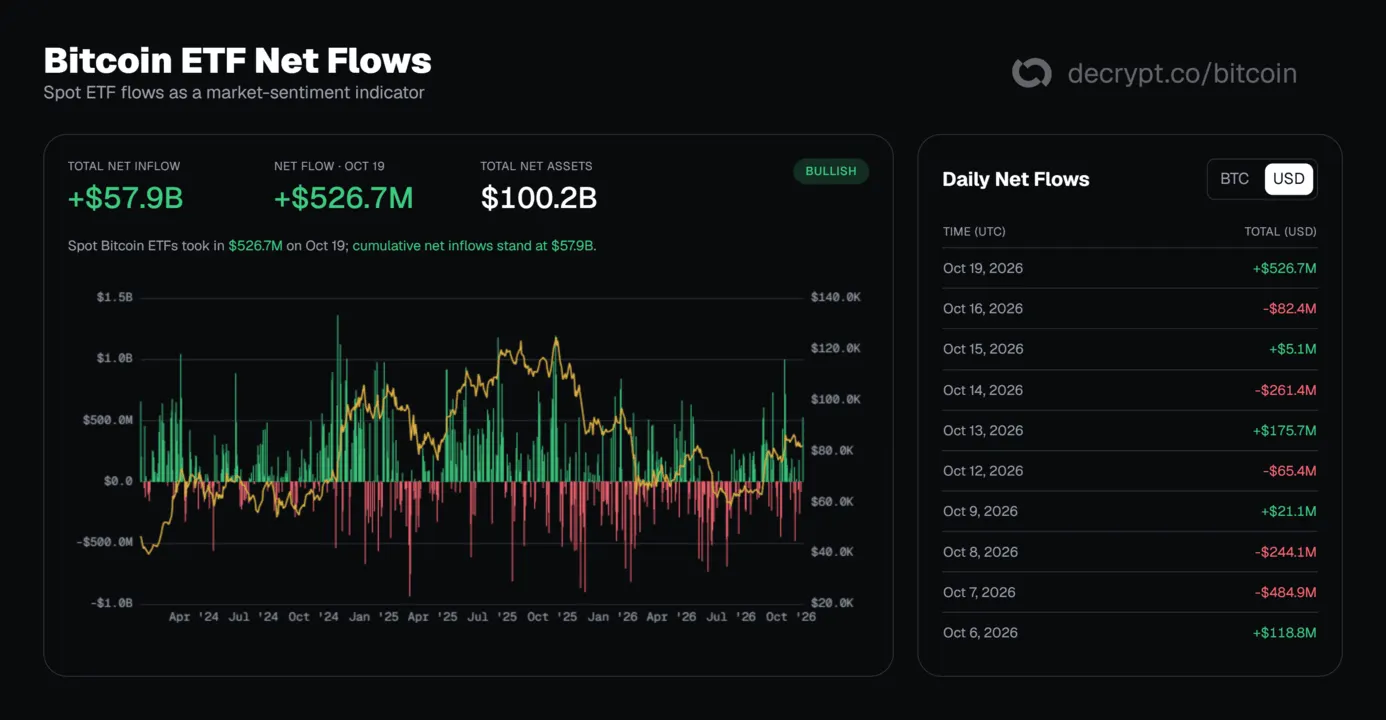
Traditional finance investors also provided direct support through institutional investment vehicles. Bitcoin and broader cryptocurrency exchange-traded funds (ETFs)—which allow institutional and retail investors to gain exposure to digital assets through traditional brokerage accounts—recorded substantial net inflows totaling $526.7 million. Monday’s influx of capital marked the largest single-day net inflows observed in a month, reflecting renewed confidence from institutional participants who viewed recent price dips as an attractive entry point.
Despite the encouraging daily performance, the macroeconomic environment remains complex, with persistent headwinds originating from traditional debt and commodities markets. U.S. Treasury yields continue to exert downward pressure on risk assets, with the benchmark 10-year Treasury note holding stubbornly above the 5% threshold. A yield represents the annual return investors demand for lending capital to the U.S. government. When sovereign bond yields climb, risk-free government debt directly competes with riskier alternatives like equities and cryptocurrencies for the same pool of available investment capital.
The broader geopolitical and economic landscape remains similarly tense. Brent crude oil continues to trade near elevated levels of around $110 a barrel. High energy costs act as a primary driver of inflation by increasing the expenses associated with fuel, global shipping, and general consumer goods manufacturing. Persistent inflationary pressures elevate the probability that the United States Federal Reserve will maintain high interest rates or potentially consider further monetary tightening measures. Because higher interest rates drive bond yields upward, any spikes in oil prices and subsequent inflation fears routinely trigger capital outflows from risk-sensitive asset classes like crypto, whereas cooling energy markets tend to favor digital asset recoveries.
Zcash’s impressive price action, however, was driven by more than just general market beta. Prior to Tuesday’s rally, the privacy coin had experienced a pronounced downturn, shedding roughly 25% of its value over the course of the preceding month. This steep correction created an oversold market condition, wherein leveraged traders who had opened long positions anticipating higher prices were systematically flushed out through exchange liquidations. Liquidations occur when trading platforms automatically force-close leveraged positions once cumulative losses reach predetermined thresholds, temporarily exacerbating selling pressure. Once this forced selling exhausted itself, the market dynamics shifted, leaving the asset primed for a powerful upward correction.
In addition to technical factors, Zcash benefited from fundamental project catalysts. Network developers prepared for a critical ecosystem decision regarding the implementation of the NU7 network upgrade on the testnet, prompting speculative buying ahead of the scheduled milestone. Privacy coins as a broader narrative have also demonstrated relative strength of late; competing privacy asset Monero posted a 15.29% gain over a seven-day period, trading at $609.87.
Despite its sharp 8.5% single-day jump compared to Bitcoin’s more modest 1.57% rise, Zcash remains characterized as a high-beta asset—meaning it tends to exhibit much higher volatility and more exaggerated price swings than the broader market in both directions. Over the wider seven-day timeframe, Zcash’s gains stood at a modest 1.17%, illustrating that Tuesday’s sharp rally has only just begun to recover the ground lost during its recent monthly decline.
Overall market sentiment currently remains neutral, reflecting a state of equilibrium between bullish and bearish participants. The popular Crypto Fear & Greed Index—a standardized 0-to-100 gauge measuring collective market emotion, where lower scores indicate intense fear and higher scores represent unbridled greed—printed a reading of 51. Meanwhile, the CoinMarketCap Altcoin Season Index registered at 60. Because a reading of 75 or higher traditionally signals the onset of an altcoin season, and 25 or below indicates a Bitcoin-dominated market, a reading of 60 places the market squarely in a neutral zone where neither camp holds absolute dominance.
Looking ahead, market participants are turning their attention toward upcoming macroeconomic policy decisions. The Federal Reserve is scheduled to convene for its next policy meeting on October 27 and 28, where investors and analysts will closely monitor central bank commentary for any official signals regarding the future trajectory of interest rates.

Related News