Birdbuddy Launches Next-Generation Smart Feeders Just Ahead of the Holiday Shopping Season
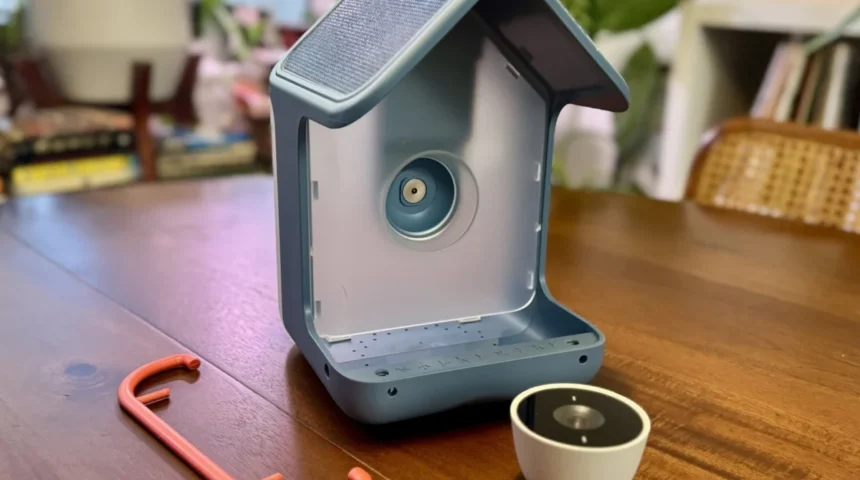
As the holiday shopping season approaches, smart home technology company Birdbuddy has officially expanded its lineup with two new connected bird feeders designed to bring wild bird watching into the digital age. The rollout includes the compact, budget-friendly Birdbuddy Nook, which starts at an accessible $99, and a next-generation flagship model named the Birdbuddy Home, retailing for $219 to replace the older Birdbuddy Pro.
Both innovative devices initially made their public debut at CES 2026, where they were showcased under the working titles Birdbuddy 2 mini and Birdbuddy 2. Following their initial announcement, the company has confirmed that both models are now widely available for purchase through various major retail channels, giving backyard enthusiasts and tech-savvy nature lovers a fresh way to observe local wildlife.

Ahead of the official release, Birdbuddy provided early review units of both the Nook and the Home for testing. Because local wild birds typically require time to discover and grow accustomed to newly installed feeding stations, reviewer Haley Henschel enlisted the assistance of a pet parrot named Melon to thoroughly evaluate the upgraded camera systems and the platform’s artificial intelligence-based species identification capabilities. Set up in the front yard of a Chicago apartment, the testing provided a unique look at how these redesigned smart feeders perform under real-world conditions.
Birdbuddy Nook: A Minimalist Smart Feeder for Under $100
Positioned as an entry-level option for consumers working with limited outdoor spaces, the Birdbuddy Nook is a small, minimalist hopper feeder tailored for balconies, patios, and compact yards. Its modular design features a charming sage green finish intended to blend naturally into outdoor environments while maintaining a sleek, modern aesthetic.

Despite offering a significantly lower barrier to entry than the flagship model, the Nook demands more active maintenance from the user. The feeder has a capacity of approximately three and a half cups of birdseed, meaning owners will need to perform frequent top-ups to keep hungry visitors satisfied. Furthermore, the base $99 model lacks built-in solar charging capabilities. Users who purchase the standard version will need to closely monitor battery levels and periodically bring the camera unit indoors to recharge it via a power outlet.
For those looking to avoid manual charging, Birdbuddy offers alternative configurations. The Birdbuddy Nook Solar is available for $159, while the Birdbuddy Nook Extended Edition retails for $199.99, bundling the solar roof along with a larger perch and a complementary Birdbuddy Family Premium membership. For customers purchasing components separately, the larger perch is available as an a la carte add-on for $34, though initial hands-on setup reports note that installing the larger perch can prove somewhat challenging without risking damage to the mounting screw holes.

Initial evaluation suggests that opting for a version equipped with the solar roof is a highly practical choice for several reasons. Beyond eliminating the chore of manual battery maintenance, the roof gives the feeder a more complete and finished appearance, as the bare model leaves small structural gaps around the edges where the attachment snaps into place. Additionally, the USB-C port where the roof plugs directly into the battery is positioned centrally within the seed reservoir, making the cleanup of fine seed dust and tiny debris a slightly tedious task.
Birdbuddy Home: A Feature-Rich Flagship Feeder
For consumers seeking a more robust, low-maintenance setup, the Birdbuddy Home serves as a comprehensive, all-in-one hopper feeder equipped with advanced hardware enhancements. The flagship device incorporates two built-in solar panels integrated directly into its roof structure, dual-band Wi-Fi connectivity for a more stable and reliable network connection, and an expanded reservoir capable of holding approximately five and a half cups of birdseed. Aesthetically, the slate blue finish is accented by a vibrant red-orange perch.

The Home utilizes the same high-resolution microphone and camera hardware found in the smaller Nook, but introduces a built-in speaker. This speaker serves a functional purpose during initial installation, emitting a bird-like chirp when the camera is first mounted and providing verbal audio prompts to guide the user through the application and Wi-Fi pairing process.
When comparing the two solar-capable configurations, testing indicates a clear preference for the flagship Home model. It features a convenient rear access hatch that simplifies the process of refilling seed, contrasting with the Nook design, which requires removing the entire top assembly to access the reservoir. Moreover, because the Home incorporates two solar panels on opposite sides of its roof, it enjoys a higher probability of capturing adequate sunlight throughout the day compared to the single-panel roof attachment on the Nook.

The Birdbuddy Home is similarly offered in an Extended Edition package priced at $249.99, which includes the upgraded perch and a Family Premium membership for users wanting access to advanced software features and priority data sharing.
Upgraded Camera Quality and Field Testing
Both new Birdbuddy models are outfitted with an updated 2K high-dynamic-range camera protected by a scratch-resistant Gorilla Glass casing. This represents a distinct evolution from older Birdbuddy generations, which relied on an oblong camera housing rather than the newly engineered round profile.

Before mounting the Home model outdoors, initial testing involved using familiar treats—specifically peanuts—to encourage the resident parrot, Melon, to step onto the feeding tray. Within moments of the visit, the companion mobile application delivered a digital "postcard" featuring a 30-second video clip alongside six automatically captured photographs documenting the brief interaction.
The automatically recorded video clip demonstrated remarkably clear audio performance and vibrant, detailed visual quality. However, the automated photo selection yielded mixed results, producing one blurry close-up alongside five images focused primarily on the bird’s back. Fortunately, users can easily bypass automated snapshots by utilizing the manual photo capture feature accessible directly through the Home model’s live video stream, which consistently yields sharper and more compositionally pleasing images.

As the units settle into their permanent outdoor locations, local wildlife monitoring tools within the Birdbuddy application indicate that regional species such as Cooper’s hawks, red-breasted nuthatches, and white-throated sparrows have been active in the vicinity. With the hardware fully operational, these backyard visitors are well-positioned to make their debut on camera.

Related News