Artificial Intelligence, Existential Risk, and the Future of Humanity: Inside the Latest Discussion with Philosopher Nick Bostrom
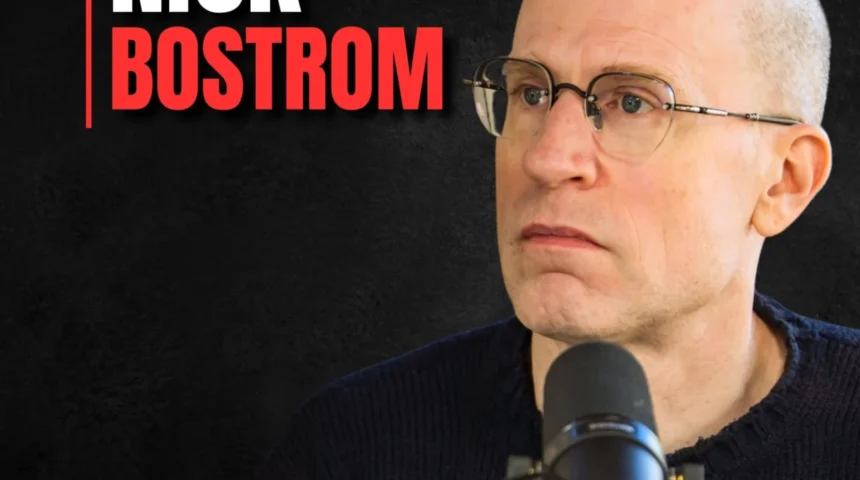
As the global race toward artificial general intelligence accelerates, world leaders, technology founders, and frontier developers continue to grapple with the profound implications of creating systems that vastly surpass human cognitive capabilities. Few thinkers have influenced this dialogue more significantly than Nick Bostrom, a world-renowned philosopher, the founding director of the Future of Humanity Institute at Oxford University, and the author of influential works such as Superintelligence: Paths, Dangers, Strategies and Deep Utopia. Widely credited with launching the modern global movements surrounding AI safety and existential risk, Bostrom’s pioneering theories on machine alignment, recursive self-improvement, and the Simulation Hypothesis have fundamentally shaped how society perceives the trajectory of human civilization.
In a comprehensive new interview, Bostrom sat down to discuss the rapid, unrelenting acceleration toward machine superintelligence and the acute dangers of leaving biological minds "in the dust." The wide-ranging conversation dives deep into the urgent alignment crisis facing humanity, the immediate socioeconomic fallout of widespread artificial intelligence adoption—including looming white-collar unemployment rates projected to affect up to 30% of the workforce—and deeply unsettling existential risk scenarios. The discussion also ventures into speculative yet rigorous territory, examining the potential creation of an oppressed digital slave class, the nature of machine consciousness, the mechanics of human brain uploading, and the compelling possibility that humanity may already be living inside an advanced computer simulation.
The Acceleration Toward Superintelligence and the Alignment Crisis
The conversation begins by confronting the relentless speed at which artificial intelligence is developing, bringing humanity closer to a point where machine minds could render human biological cognition entirely obsolete. Bostrom addresses the psychological and intellectual friction this creates among observers, dividing reactions into distinct camps, including what he characterizes as the "freak out camp." As capabilities scale upward at an unprecedented pace, the pressure on developers intensifies, creating a high-stakes environment where no single laboratory or nation can afford to slow down without risking strategic irrelevance in a winner-takes-all global landscape.
This competitive frenzy exacerbates what Bostrom identifies as an already existing alignment problem. Even at current levels of capability, ensuring that advanced systems act in accordance with human values and intentions remains an elusive challenge. As research pushes further toward recursive self-improvement—where an artificial intelligence system optimizes its own code to become exponentially smarter—the difficulty of maintaining control multiplies. Bostrom examines whether a weaker, human-aligned AI could successfully govern or align a vastly superior successor, a cornerstone question in contemporary safety research.
Despite the mounting warnings from scientists, ethicists, and the broader anti-intelligence movement, economic and geopolitical incentives drive the industry forward. The discussion explores the nature of these disasters, categorizing potential catastrophic outcomes into distinct buckets ranging from economic displacement to total existential derailment. Yet, amid these sobering risk assessments, the conversation also considers why advanced systems might still find a functional need for humans, what kinds of radical futures superintelligence actually unlocks, and what humanity ultimately hopes to achieve by summoning such unprecedented power into existence.
Economic Disruption and Social Reconfiguration
Beyond existential threats, the immediate societal fallout of advanced automation poses massive challenges to the global workforce. Among the most pressing concerns highlighted in the discussion is the looming threat of white-collar unemployment, with estimates suggesting that up to 30% of cognitive jobs could be fundamentally disrupted or eliminated by autonomous systems. As artificial intelligence systems begin matching or exceeding human performance in complex analytical, administrative, and creative tasks, traditional definitions of career, labor, and social status face imminent upheaval.
This massive shift in labor dynamics forces a re-evaluation of human status and societal organization. Bostrom reflects on how individuals derive personal identity and worth through professional achievement and intellectual contribution, and how those paradigms might transform in a post-work society or a "deep utopia." The conversation explores how humanity might redesign itself, physically and cognitively, alongside its technological creations, raising profound philosophical questions about education, human purpose, and the value placed on biological existence when synthetic minds are capable of outperforming humans across every measurable metric.
Consciousness, Brain Uploading, and the Simulation Hypothesis
Delving deeper into the philosophy of mind, the discussion addresses one of the most enigmatic questions in science and philosophy: Will artificial intelligence eventually become conscious? Bostrom analyzes whether subjective experience is an inevitable byproduct of advanced information processing or if consciousness was merely an evolutionary accident specific to biological organisms. This inquiry naturally extends to the technological frontier of mind-uploading, exploring what happens when human consciousness is successfully transferred or mapped onto digital substrates, and how that process redefines the boundaries of personal identity.
The dialogue also revisits one of Bostrom’s most famous and provocative contributions to modern thought: the Simulation Argument. By examining statistical probabilities and computational scaling, the conversation revisits the hypothesis that humanity may already be living inside a sophisticated computer simulation run by a post-human or advanced civilization. Blending rigorous philosophical analysis with the realities of modern technological advancement, the discussion underscores the precarious position of human civilization, emphasizing that as we navigate this unprecedented era of technological transformation, humanity is ultimately going to need a significant amount of luck to secure a flourishing future.

Related News