Bitcoin’s Early Uptrend Faces Critical Resistance as ETF Momentum Cools and Trading Volume Lags
Cryptocurrency markets are navigating a complex phase as Bitcoin attempts to sustain a broader recovery. While key on-chain metrics suggest resilient baseline support, recent market behavior highlights mounting headwinds. Cooling inflows from United States spot exchange-traded funds (ETFs), a persistent wall of sell orders near record local resistance, and muted trading volumes indicate that the current uptrend remains in its early, speculative stages.
Market analysts tracking institutional and on-chain activity note that the current market structure shares similarities with previous early-cycle phases, though it lacks the broad-based participation required to push prices decisively higher without encountering heavy resistance.

The ETF Bid Cools
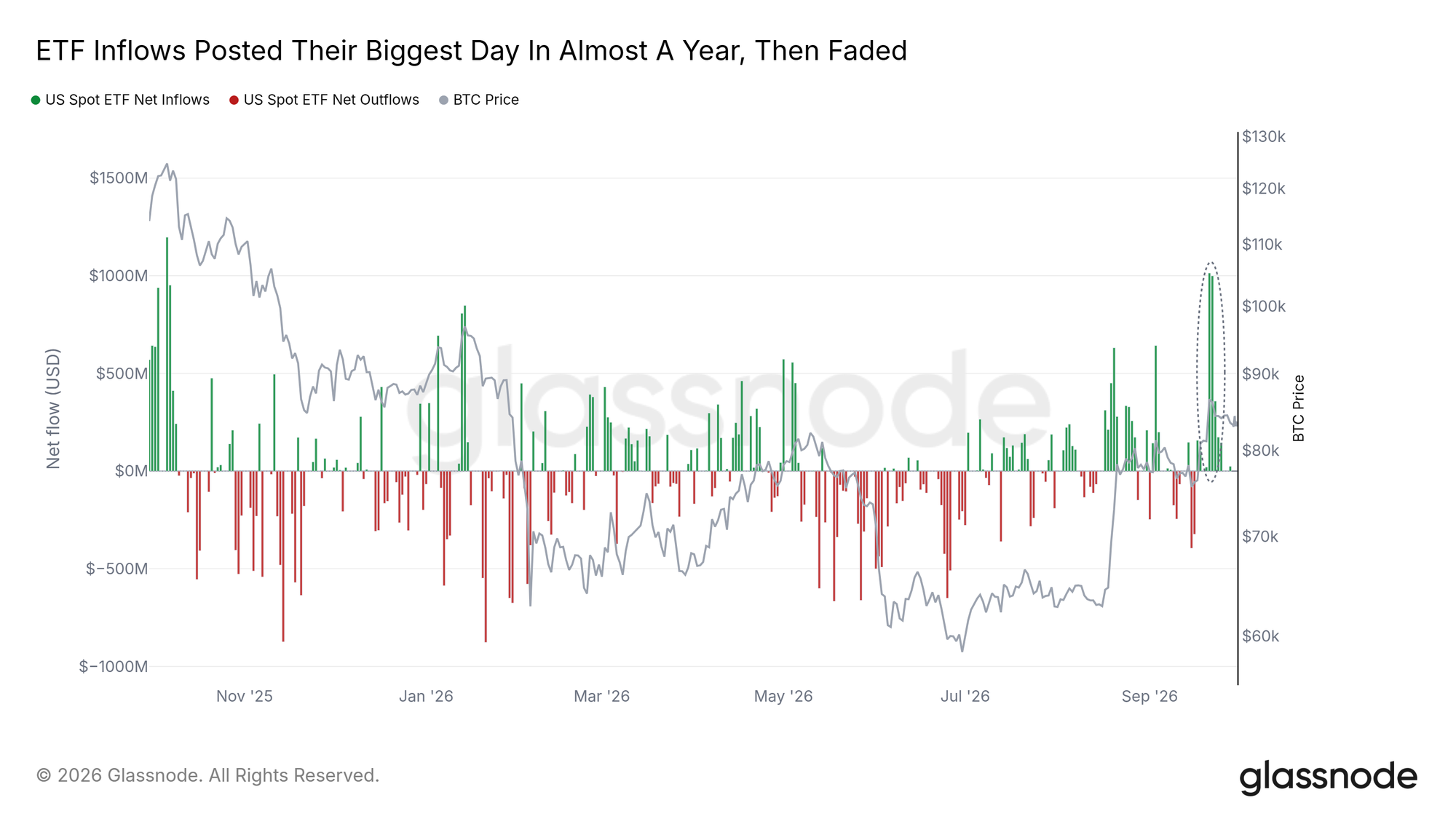
The recent trajectory of institutional demand underscores the shifting momentum. US spot Bitcoin ETF net flows experienced a dramatic peak on September 21 and 22, pulling in roughly $1 billion on each of those consecutive trading days. The first of those spikes marked the largest single-day influx observed in nearly a year, instilling renewed confidence across the broader digital asset ecosystem.
However, that aggressive accumulation has since tapered off significantly. In the trading sessions following the September peak, daily inflows steadily dwindled, dropping to just $24 million by September 28 as spot prices transitioned into a sideways consolidation range.

While institutional investment funds continue to accumulate Bitcoin, the pace has slowed to a fraction of the heavy volume seen during those two standout days. Market observers note that a meaningful resurgence in spot ETF demand, approaching the velocity of the late-September surge, remains one of the clearest indicators to watch for renewed upward price momentum.
Light Profit-Taking and the Shift in Seller Dynamics
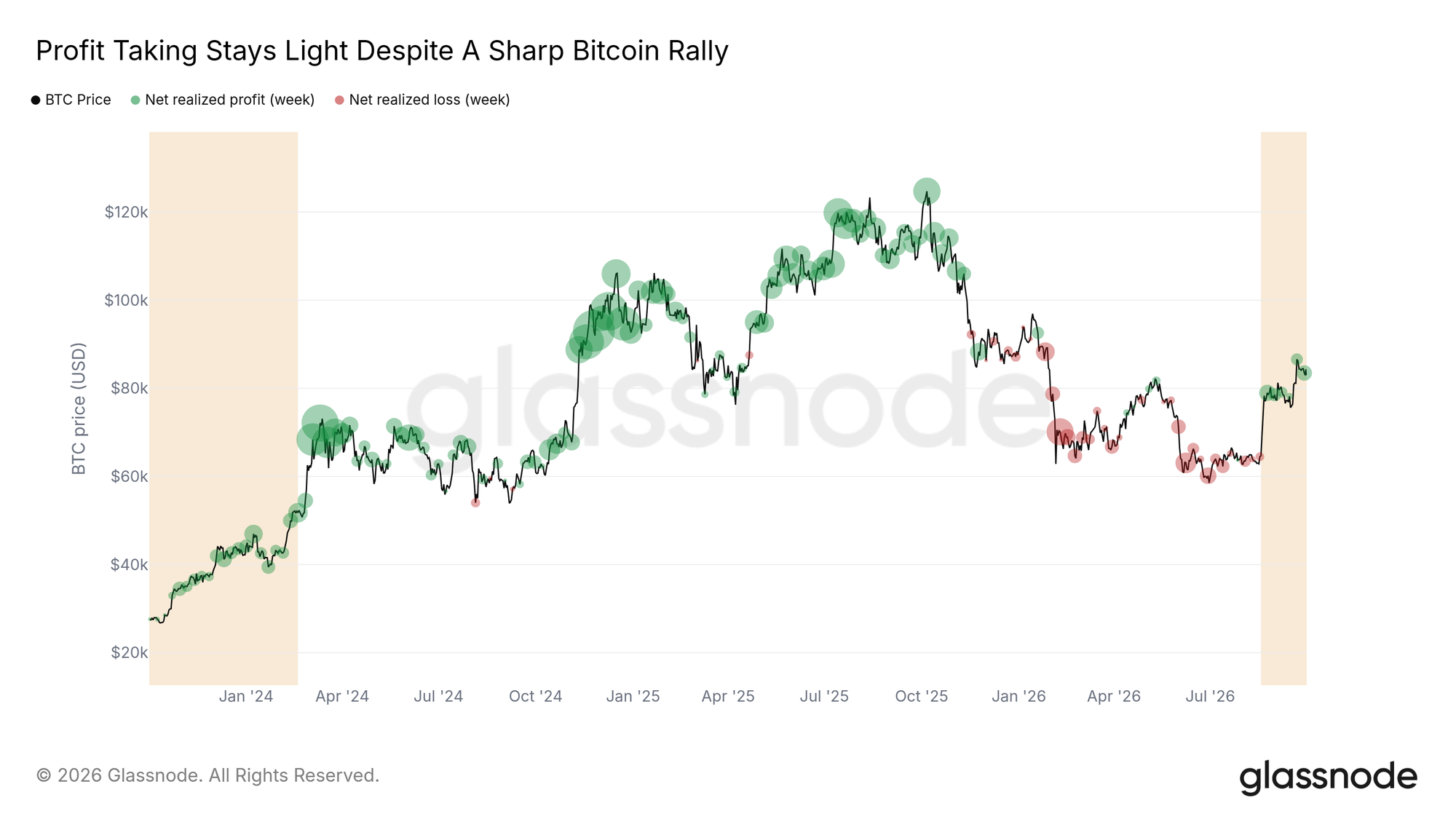
Despite the ongoing price appreciation, profit-taking behavior remains exceptionally light when compared against the historical peaks observed during the 2024 and 2025 market cycles. Weekly Net Realized Profit and Loss—which measures the net dollar gains locked in as coins change hands—continues to run well below historical averages for market tops. The pace of profit-taking in the current rally closely mirrors the cautious activity seen at the onset of the previous uptrend in late 2023.
Yet, a closer examination of on-chain data reveals a notable evolution in who is choosing to sell. Long-term holders, defined as entities that have retained their coins for more than 155 days, nearly doubled their realized profits during the final week of September compared to the week of the initial market breakout. Furthermore, their share of total realized profit expanded substantially, climbing from 34% to 55%. Analysts point out that if weekly profit-taking accelerates toward levels seen in past cycle tops, it would signal that long-term investors are actively distributing their holdings into market strength.
A Short-Term Edge Over Traditional Equities
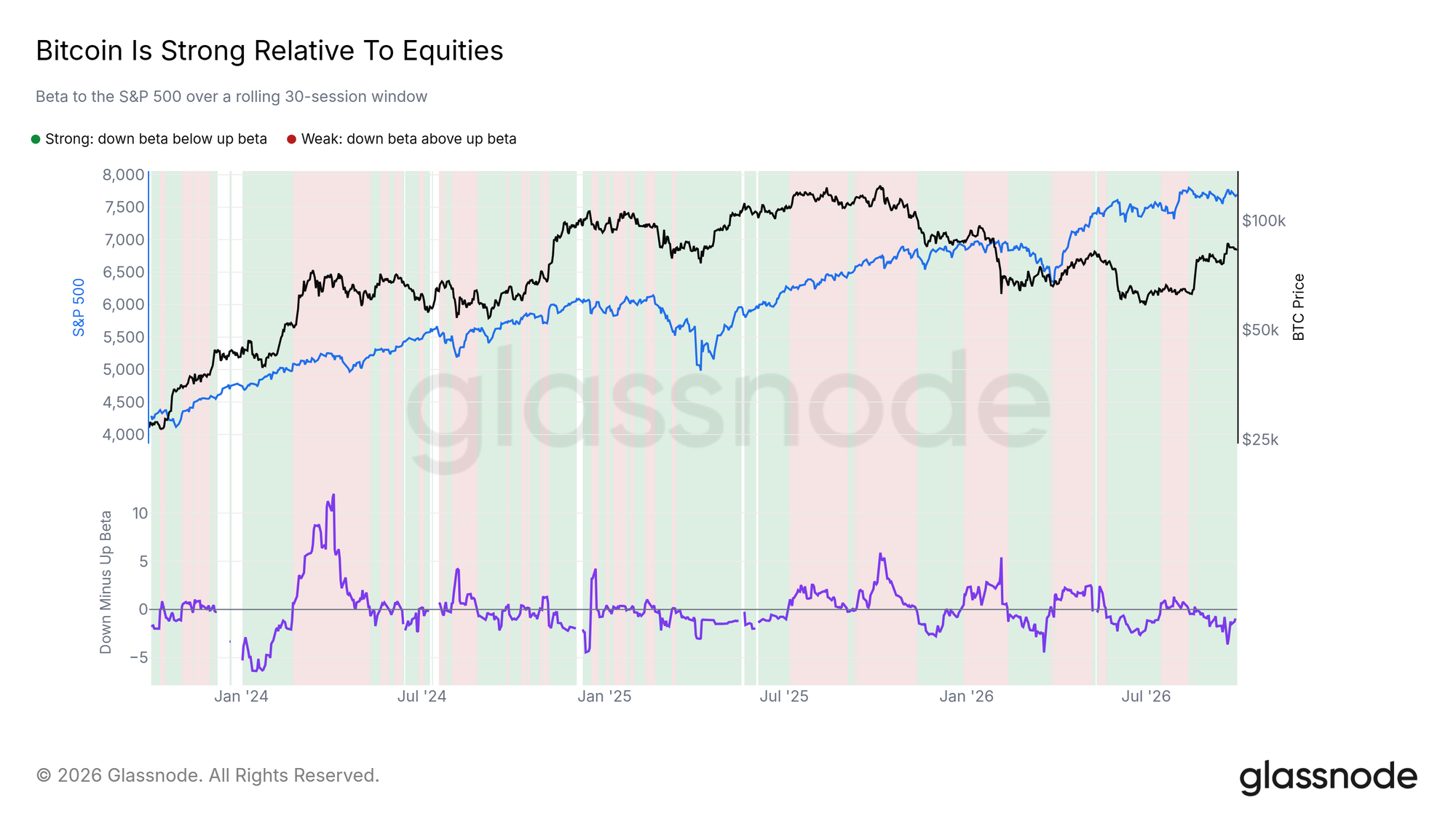
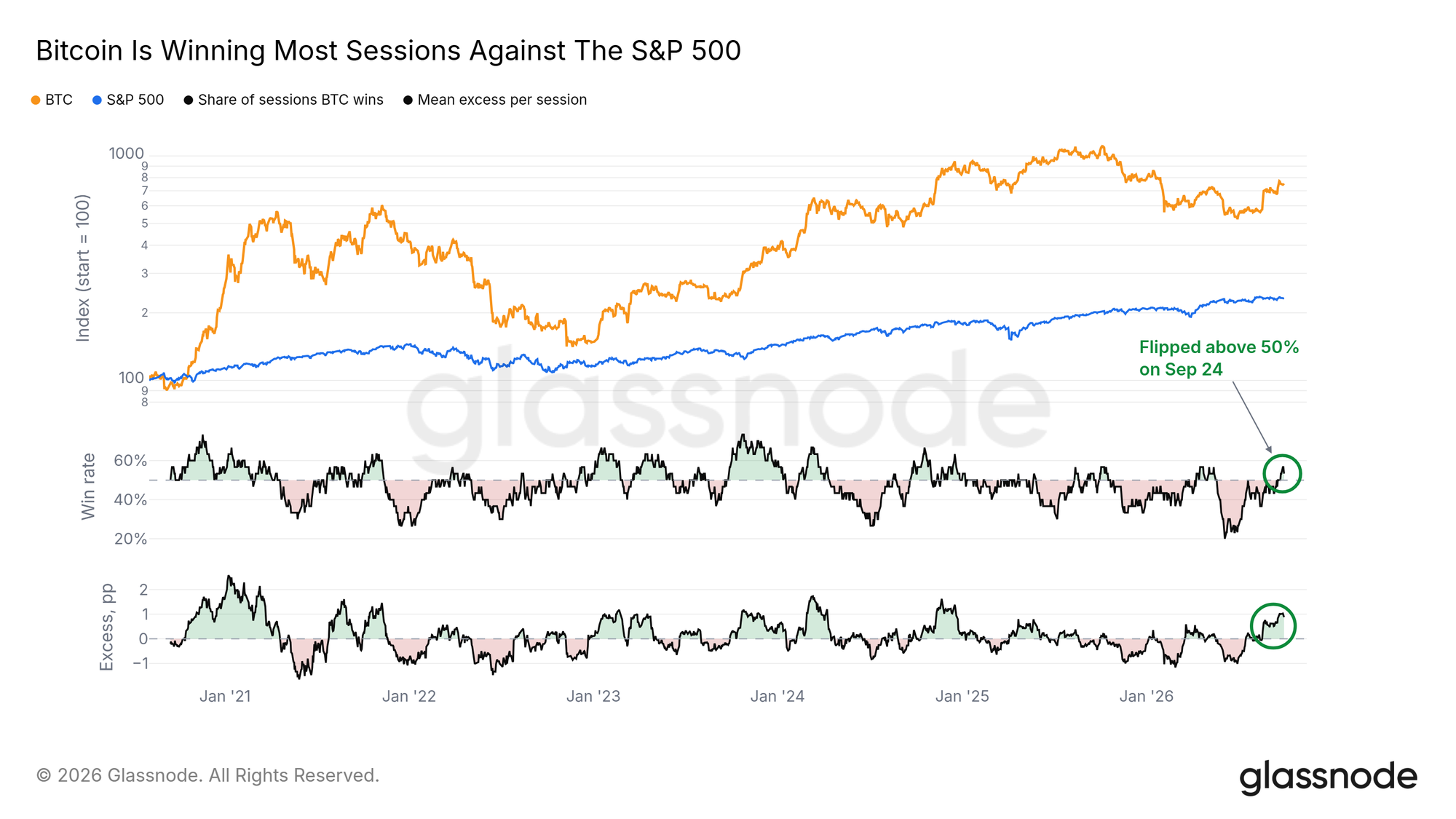
In the broader macroeconomic context, Bitcoin has demonstrated an intriguing relative strength against traditional equities over a rolling 30-session window. Since late August, Bitcoin has exhibited a tendency to react more mildly to down days in the S&P 500 than to its up days, carving out a pattern of resilience that supported the late-summer market recovery.
That relative edge showed signs of strain toward the end of September. Between September 22 and September 29, Bitcoin experienced a 2.9% decline compared to a 1.2% dip for the S&P 500, during which time the digital asset fell more aggressively than the equity index on negative sessions. If this green performance window eventually closes as the stronger August sessions roll off the 30-day calculation, Bitcoin’s short-term outperformance relative to stocks could fade.
Concurrently, Bitcoin managed to outpace the S&P 500 in more than half of its trading sessions over the 30-day period, a milestone that crossed above the 50% threshold on September 24 for the first time since mid-May. Maintaining this winning share into October will be crucial for determining whether the divergence from traditional markets represents a sustained structural shift or a transient trading streak.
Overhead Resistance and Order Book Pressures
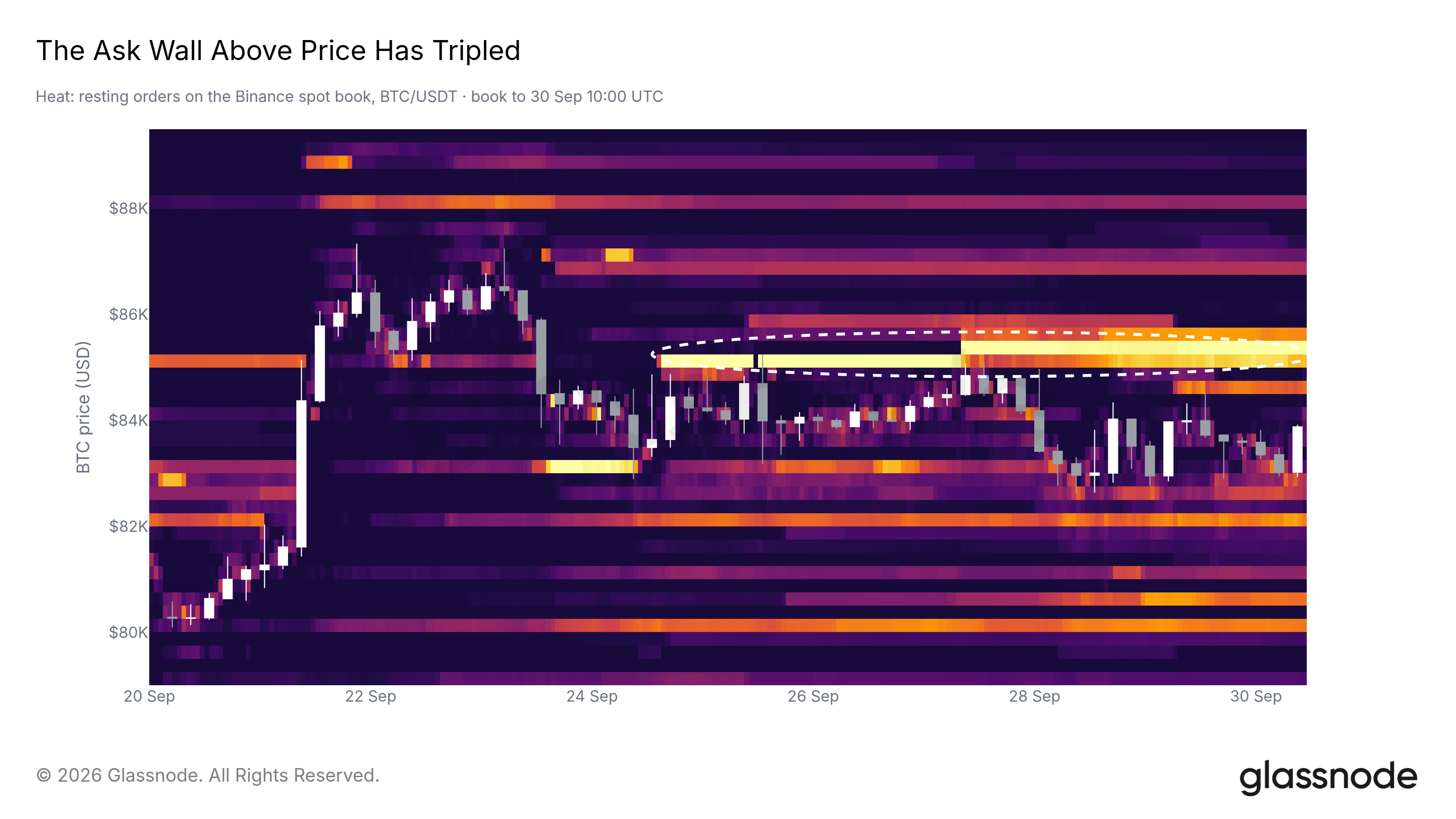
Price action is currently hemmed in by significant structural barriers. Following a period where market participants closely monitored the $84,000 threshold, Bitcoin slipped just below that level as a substantial wall of sell orders accumulated on the Binance spot order book.
This resistance wall, concentrated between $85,000 and $85,500, first materialized on September 24 and has since tripled in size. While price action has repeatedly tested the lower boundary of this zone, it has yet to secure a decisive breakthrough. Market technicians emphasize that as long as these resting asks remain entrenched, clearing the $85,500 level will serve as the primary hurdle required to unlock higher resistance-free territory.
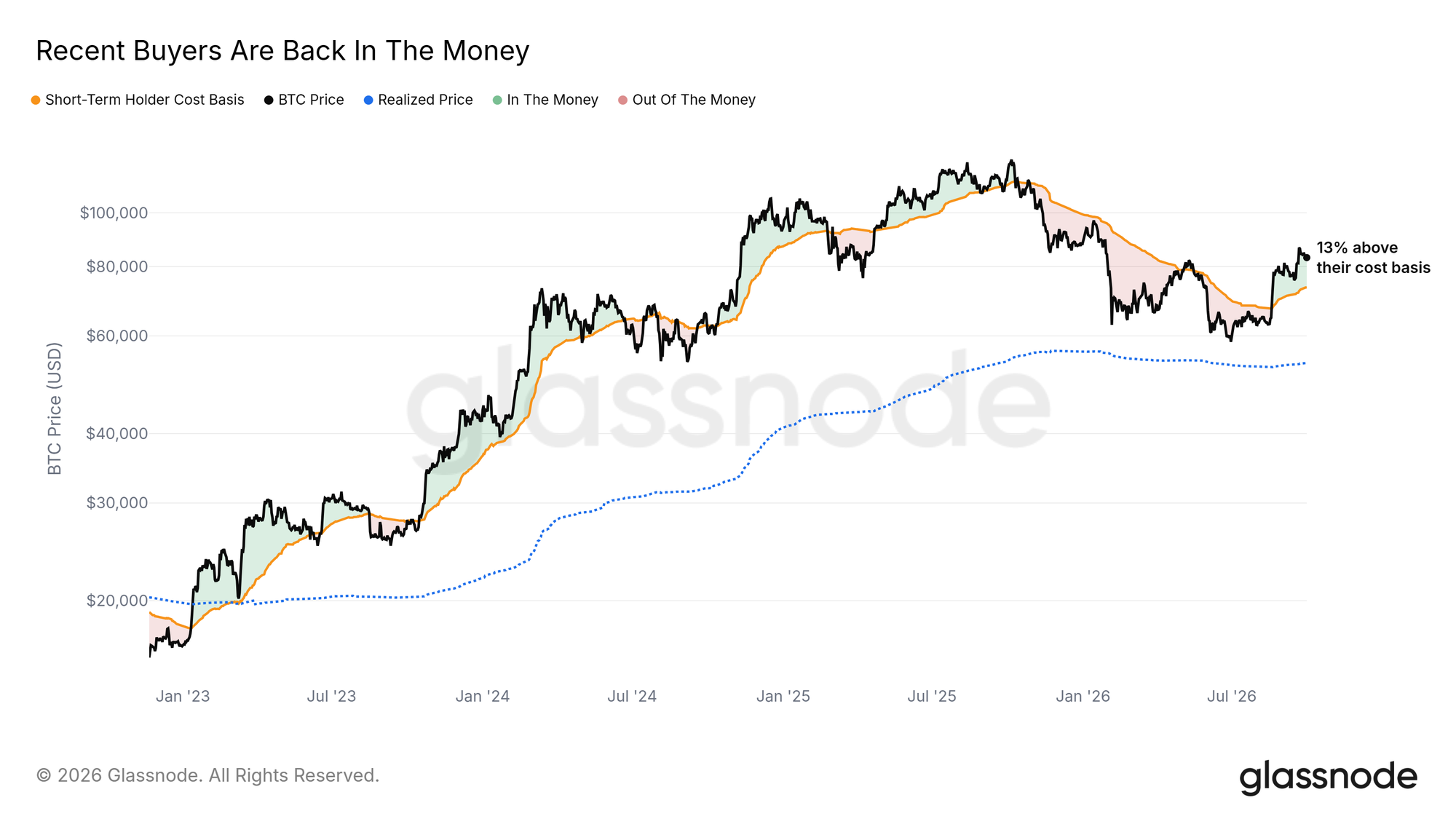
Beneath current spot prices, foundational support remains intact. The Short-Term Holder Cost Basis—representing the aggregate average acquisition price for coins held for less than 155 days—sits at approximately $73,300. With spot prices trading roughly 13% above this metric, recent buyers remain in a profitable position.
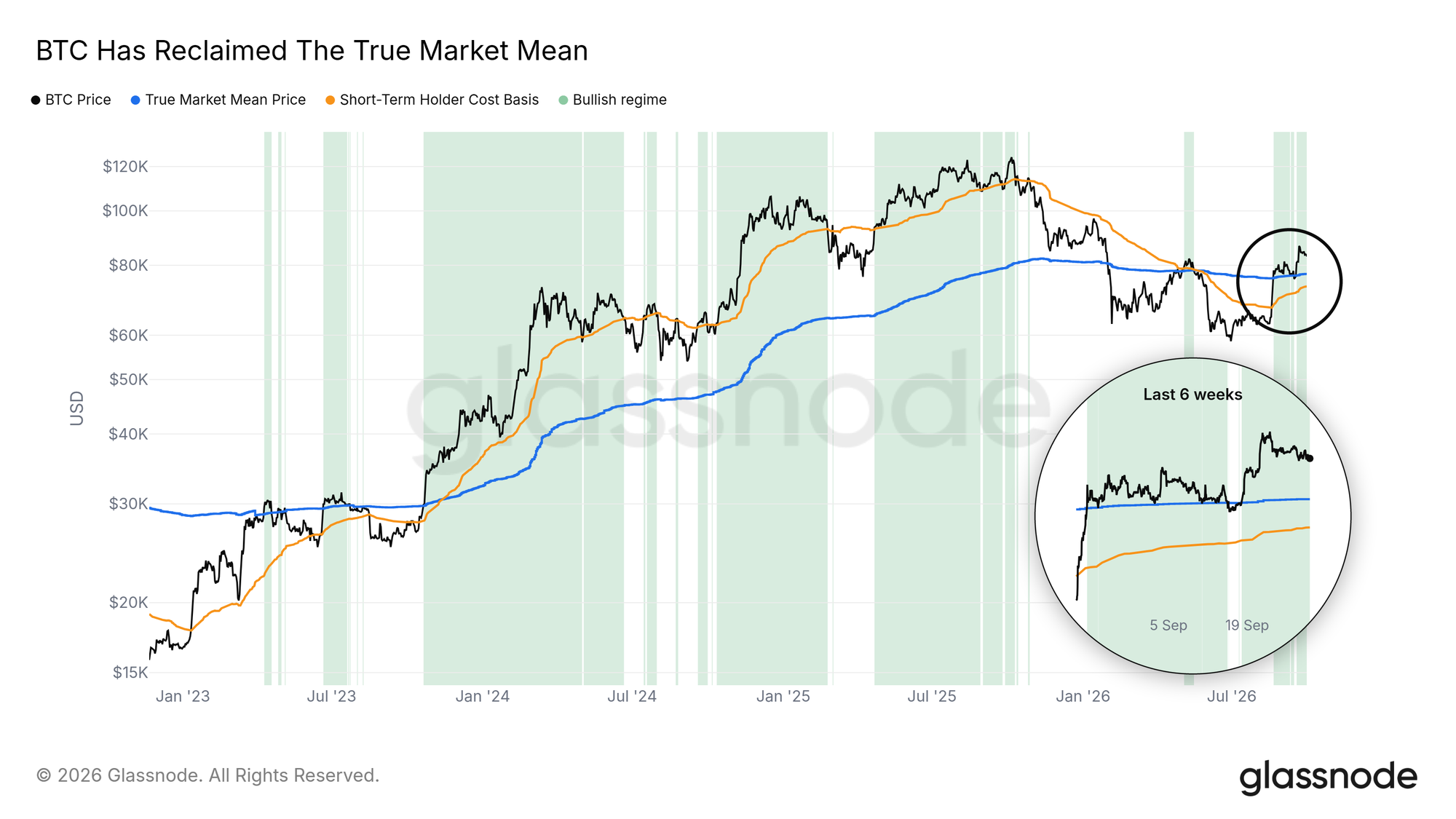
Similarly, Bitcoin has maintained its position above the True Market Mean since September 18. Hovering around $77,200, this metric estimates the average acquisition price paid by active investors and sits about 8% below current spot levels. Sustaining prices above both the Short-Term Holder Cost Basis and the True Market Mean historically characterizes the healthier phases of an uptrend, making a daily close below the $77,200 mean a critical level to monitor for potential trend exhaustion.
Volume Lags Behind Price Recovery
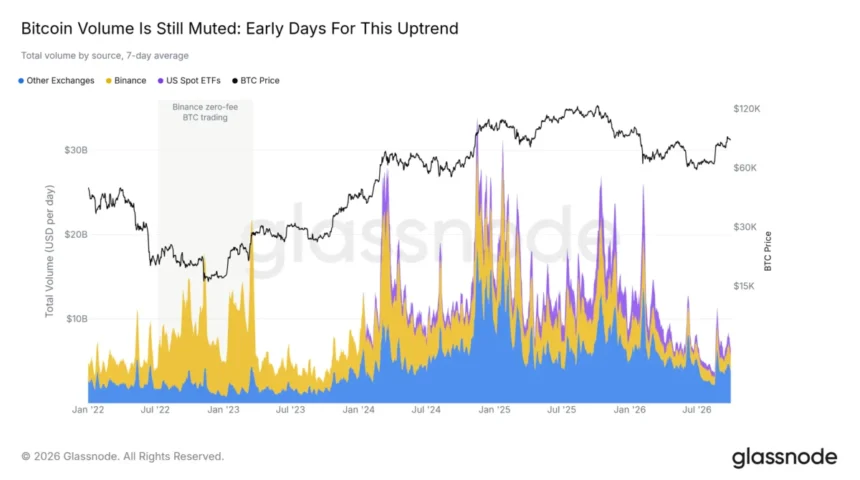
Despite the price recovery, overall market participation continues to suffer from a lack of robust trading volume. Total daily Bitcoin volume across combined spot exchanges and US spot ETFs averages roughly $6.4 billion, hovering near the lower bounds of its historical range since the introduction of spot ETFs.
Because the rally has unfolded on relatively muted volume, market strategists characterize the current advance as early and speculative. Broad-based market participation has yet to materialize in full force, meaning that a sustained expansion in daily trading volume—paired with prices holding firm above the True Market Mean—will be necessary to confirm that the broader uptrend is gaining genuine institutional and retail backing.
Altcoin Markets Pause as Leverage Remains Modest
Altcoins experienced a notable outperformance phase over the prior month, with the majority of the top 500 tokens outpacing Bitcoin across a 30-day window. However, that upward momentum cooled sharply as the proportion of altcoins hitting 30-day highs dropped from 49% on September 22 to just 6% by the end of the month.
Despite the broader price recovery, derivatives markets have avoided excessive speculation. Perpetual futures funding rates indicate that only a modest share of altcoins are trading above the neutral rate of 0.01%, signaling a distinct lack of crowded long positioning compared to historical market tops. Furthermore, open interest metrics show that while the aggregate dollar value of open perpetual positions has risen, the actual count of coins held in open positions has declined, suggesting that the valuation increase is primarily driven by spot price appreciation rather than aggressive new leverage accumulation. This measured approach to leverage significantly reduces the immediate risk of a cascading, forced liquidation event across the altcoin ecosystem.
The current market environment presents a delicate balancing act for digital assets. On-chain support levels continue to hold firm, and altcoins have managed to navigate their recent recovery without accumulating dangerous levels of speculative leverage. Nevertheless, cooling ETF inflows, light overall trading volumes, and a formidable wall of resting sell orders overhead indicate that market participants must clear immediate technical hurdles before a broader, high-conviction expansion can be established.

Related News