Elon Musk’s Business Empire Deepens Federal Ties Amid Record Midterm Spending
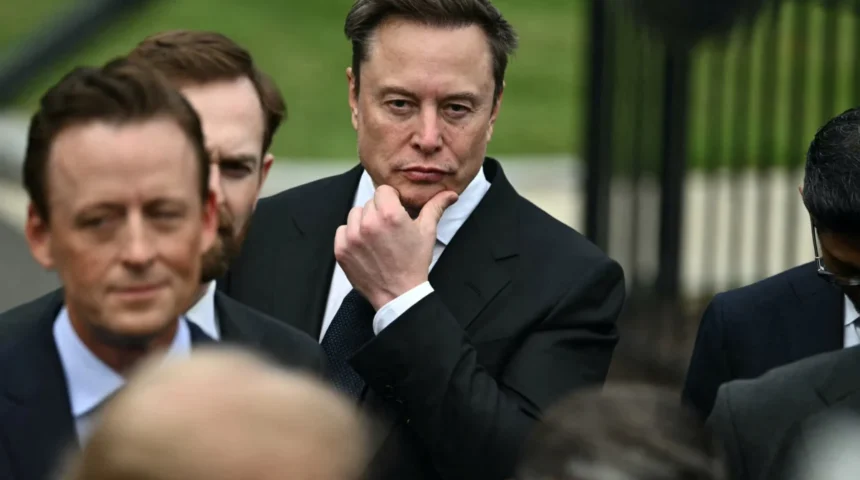
Elon Musk’s sprawling business empire is tying itself ever closer to the federal government just as the world’s richest person spends record sums to help decide who controls it in the 2026 midterm elections.
SpaceX has racked up at least $6.78 billion in federal work so far through Oct. 1 this year, according to FedScout, a research firm that tracks government spending and contracts. That figure is nearly twice the company’s total federal work for all of 2024. At the same time, Tesla, SpaceX, and Musk’s artificial intelligence businesses face high-stakes government decisions regarding defense spending, launch licenses, spectrum allocation, autonomous vehicle regulations, electricity grids, and massive data center developments.
Concurrently, Musk has committed roughly $366 million to the 2026 election cycle across at least 40 races, making him by far the biggest individual donor of the midterms. Federal Election Commission filings analyzed by CNBC show that at least $276 million of that money has flowed directly to Republican groups and Musk’s own political operation, America PAC, since July. This influx of cash comes as Republican candidates find themselves battling tough political headwinds centered around the cost of living and the ongoing conflict in Iran.
For Musk, securing Republican victories could help preserve his profound political influence and maintain a favorable regulatory environment for his companies. Conversely, Democratic control of either chamber of Congress could bring intense congressional scrutiny, including subpoenas and investigations into his businesses, federal contracts, and his work leading President Donald Trump’s Department of Government Efficiency, known as DOGE. Current political forecasts favor Democrats to win control of the House of Representatives, while the battle for the Senate remains a tight toss-up.
"With all that spending, [Musk] wants favors in Congress and from the administration and influence on regulatory contracts as well as being shielded from oversight," said Bruce Freed, president and co-founder of the Center for Political Accountability and a former chief investigator for the Senate banking committee.
Musk did not respond to requests for comment on this story. However, he lashed out at the possibility of Democrat-led investigations in a post on X, the social media platform he owns, writing, "Live by the sword, die by the sword." He added, "Those who pick fights with me should understand that I will find out who is really pulling the strings and come for them, not just their puppets."
Musk’s Texas Empire
Nowhere is the clear overlap between Musk’s commercial interests and his heavy political spending more visible than in his home state of Texas. Tesla is headquartered in Austin, where it operates its largest U.S. vehicle factory. SpaceX operates an advanced launch facility at its company-owned town, Starbase, situated in South Texas. Meanwhile, Musk’s tunneling venture, The Boring Co., is based in the Texan city of Pflugerville.
This heavy concentration of operations gives Texas state and local officials substantial sway over taxes, electricity availability, permitting, infrastructure, and economic development incentives that carry enormous financial consequences for Musk’s corporate entities.
At least $189.6 million of Musk’s political money has been targeted to help elect Republican Ken Paxton through various avenues. This massive financial backing prompted Paxton’s Democratic opponent, James Talarico, to publicly accuse Musk of trying to "buy this Senate seat in Texas."
Musk targeted Talarico on social media, posting on X that "There is something deeply wrong" with the Democrat. Talarico fired back online, writing, "There is something deeply wrong with a political system that allows one trillionaire to buy his own personal U.S. Senator."
Musk’s political engagement extends deep into Texas state-level politics as well. He and his revocable trust have funneled at least $6 million this cycle to state-level candidates and political organizations, including Gov. Greg Abbott, Lt. Gov. Dan Patrick, and House Speaker Dustin Burrows. The connection between Musk and Governor Abbott also extends into administrative personnel; Tesla policy chief Karen Steakley previously served as Abbott’s deputy director for legislative affairs.
Furthermore, Tesla and SpaceX are planning to construct a sprawling AI chip factory in partnership with Intel just outside of Austin in Grimes County, Texas. Coincidentally, longtime Musk lawyer and America PAC attorney Chris Gober is running for Congress in that region.
A $30 Billion Government Business
For SpaceX, the federal government stands as one of its most vital and lucrative customers. Since 2008, the aerospace company has received more than $30.7 billion in federal work, according to FedScout data. This tally excludes classified contracts and various state-funded expenditures for services like Starlink terminals and satellite internet connectivity, which numerous state governments have utilized during disaster recovery operations.
Federal business for SpaceX has accelerated significantly during President Trump’s second administration. FedScout found that SpaceX has accumulated $6.78 billion in contracts so far in 2026, compared to $3.97 billion in 2025 and $3.8 billion across all of 2024.
In late May alone, the U.S. Space Force awarded SpaceX a $2.29 billion contract for a military communications network tied to the proposed Golden Dome initiative. Just three days later, the agency awarded the company another $4.16 billion contract for threat-detection satellites. While Congress does not directly award these high-value contracts, it funds and oversees the agencies that do, specifically the Department of Defense and NASA, both of which are major customers of SpaceX.
"Keeping allies in committee powers in Washington helps [Musk] wield power in the halls of Congress better," said Hilary Braseth, executive director of OpenSecrets, a nonpartisan research group that tracks money in politics.
Reflecting this strategy, Musk’s America PAC is actively backing incumbent Sen. Susan Collins, R-Maine. Collins serves as the chair of the Senate Appropriations Committee, a powerful panel that helps draft funding bills for both NASA and the Pentagon. Collins’ Democratic challenger, Troy Jackson, has similarly accused Musk of trying to "buy a government that serves his interests."
Musk has previously learned how quickly political influence can shift in the capital. After spending nearly $300 million to help elect Trump and congressional Republicans in 2024, Musk gained extraordinary access to the administration, leading DOGE’s aggressive push to slash the federal workforce while pressing heavily for deregulation.
That relationship experienced a severe rupture in June 2025 during a political feud over Trump’s tax-and-spending bill, which escalated into public threats from the president to cut government support and lucrative contracts for Musk’s companies.
However, Musk has since reestablished himself firmly within Trump’s inner circle. In recent weeks, he attended a state dinner with Chinese President Xi Jinping, sat beside the president at a major artificial intelligence summit, and was awarded the National Medal of Science. Moreover, the Department of Defense appointed Musk to co-lead Project Meridian, a newly formed initiative advising the Pentagon on the future of warfare.
Expanding Reach
Musk’s political spending extends far beyond the states where his primary business infrastructure is located. Across six crucial battleground states, America PAC had spent roughly $22.7 million on general election expenditures through Oct. 20, according to CNBC’s analysis of Federal Election Commission filings. This spending includes approximately $8.9 million in Ohio, $7.2 million in Michigan, and $2 million in Maine.
In Michigan, America PAC is bankrolling digital advertising, mailers, printing, postage, and extensive text and phone outreach campaigns supporting Republican Senate candidate Mike Rogers while actively attacking Democrat Abdul El-Sayed. Rogers has publicly backed a one-year moratorium on the construction of new data centers, whereas El-Sayed has called for a formal pause on advanced AI development and new data centers until much tougher federal safety safeguards are implemented.
In Ohio, America PAC is funding similar advertising, text messaging, and phone banks to assist Republican Jon Husted in his race against Democrat Sherrod Brown. Husted has advocated for large data centers to shoulder a much larger share of electrical grid infrastructure costs, while Brown has sharply criticized industry tax breaks and pledged to force data centers to pay their full electricity expenses.
These policy debates carry immense weight as Musk pushes deeper into the artificial intelligence sector. SpaceX’s AI division, formerly known as xAI, was awarded a Pentagon contract last July featuring a $200 million ceiling. Additionally, a General Services Administration agreement makes the company’s Grok chatbot available across various federal civilian agencies through March 2027.
Beyond contracts, Musk’s various enterprises depend heavily on a complex web of federal regulators whose day-to-day decisions can directly shape their capacity for expansion. The Federal Aviation Administration licenses SpaceX rocket launches, while the Federal Communications Commission controls satellite operational licenses and spectrum frequencies utilized by Starlink. Congress retains funding and oversight authority over both agencies, and the Senate holds confirmation power over FCC commissioners.
Tesla faces its own distinct stakes in Washington, where lawmakers and federal agencies retain the power to reshape electric vehicle tax credits, battery manufacturing subsidies, autonomous vehicle operating rules, and broader trade policies affecting foreign competitors, particularly from China.
Musk’s corporate entities are spending directly on these legislative battles as well. Since January 2025, SpaceX has spent roughly $5.3 million lobbying lawmakers on issues including NASA funding, defense spending, military rocket launches, missile defense, and procurement procedures. Tesla has similarly spent about $3.6 million on federal lobbying disclosure reports.
"Elon’s spending is virtually unprecedented in recent elections for its scale in such a short period for one individual donor," Freed told CNBC. "He seems to be spending with basically no budget, and he got the money to do so."

Related News