U.S. Embassy Officials on High Alert as Intelligence Indicates Iran in Advanced Stages of Planning Attacks
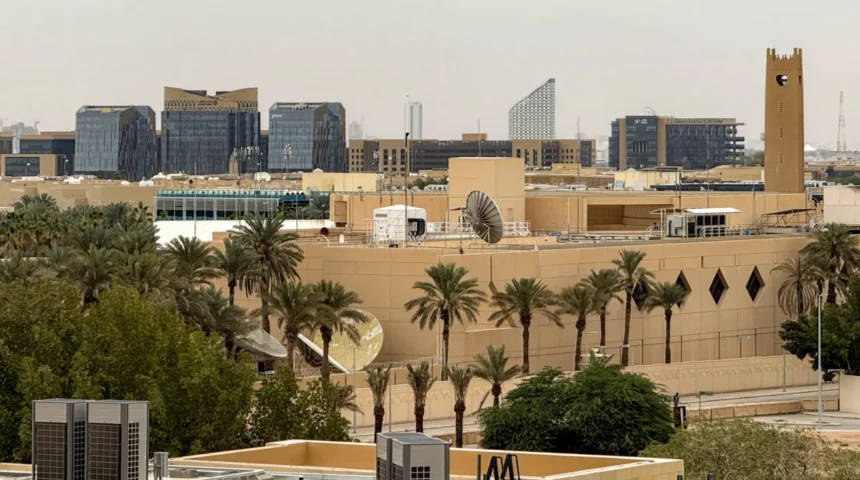
U.S. embassy officials and diplomatic outposts across the Middle East were placed on a state of heightened security alert following alarming intelligence reports indicating that Iran is in the advanced stages of planning imminent attacks against American personnel.
The security warnings were detailed in a formal memo issued by Director of National Intelligence Jay Clayton. According to the intelligence assessment, federal agencies recently intercepted and verified information showing that Tehran has "substantially increased efforts to target U.S. personnel" stationed throughout the region. Furthermore, the memo explicitly noted that these mounting threats extend beyond traditional hotspots, applying to "certain other countries" as well, prompting a sweeping re-evaluation of diplomatic and military security postures abroad.
This latest intelligence directive underscores a rapidly deteriorating security environment and arrives directly on the heels of an aggressive operational shift by the State Department. Earlier in the week, the U.S. government ordered all non-emergency government employees to immediately evacuate Saudi Arabia. This drastic measure was taken as persistent attacks from Iran-backed Houthi militants severely escalated, compounding an already volatile situation as the broader, protracted conflict between the United States and Tehran rapidly approaches its grim eighth month.
The reality of the Houthi threat was starkly demonstrated when the Saudi-led military coalition operating in the region reported that it successfully intercepted and destroyed two incoming ballistic missiles launched by the militant group. According to coalition statements, the projectile threats were specifically aimed toward the strategic Saudi cities of Taif and Yanbu, highlighting the expansive range and persistent nature of the attacks targeting critical infrastructure and regional stability.

Despite the spiraling tensions, soaring rhetoric, and tangible threats on the ground, diplomatic channels have not entirely frozen. In a surprising diplomatic overture, an Iranian official revealed to The Associated Press that Tehran remains fundamentally open to engaging in renewed talks with the United States. According to the official, any future diplomatic engagement would ideally be structured under the framework of the former Pakistan-brokered agreement that was initially hammered out and agreed upon back in June.
Reza Amiri Moghadam, Iran’s ambassador to Islamabad, elaborated on this potential diplomatic pathway, stating that Iranian officials are fully prepared to reopen the vital Strait of Hormuz to international shipping if the Trump administration takes the step of lifting its crippling naval blockade. However, Amiri Moghadam noted with frustration that Washington has thus far rebuffed the proposal, maintaining its hardline stance. Adding to the diplomatic confusion and the complex information landscape surrounding Tehran’s official positions, Iranian state media later in the day moved to officially deny the ambassador’s reported comments regarding the blockade and the Strait of Hormuz.
Domestically within the United States, the escalating confrontation with Iran has cast a long, heavy shadow over the political landscape, particularly with the critical midterm elections looming on November 3. The Trump administration has reportedly vowed to intentionally hold off on launching major military strikes against Iran until after the voters head to the polls. This political calculation comes as the extensive fallout from the ongoing conflict with Iran begins to inflict severe, compounding disruptions on the broader U.S. economy.
Economic anxieties have quickly bubbled to the surface, transforming economic stability into the paramount issue for American voters who will ultimately decide the balance of power in Congress early next month. Across the country, voters have expressed deep concerns regarding persistent inflation and the overall cost of living, both of which have been heavily exacerbated by global supply chain disruptions and spiking energy costs tied directly to the Middle East conflict.
The palpable economic anxiety was visibly reflected in global energy markets, where the rising tensions in the Middle East sent oil prices soaring dramatically during the trading week. Benchmark Brent crude futures experienced a sharp upward trajectory, topping $116 a barrel to reach a notable six-month high. Concurrently, U.S. West Texas Intermediate crude rose by 3.8%, ultimately settling comfortably over the $103-a-barrel threshold. As diplomatic efforts stall, intelligence agencies warn of impending threats, and economic pressures mount both at home and abroad, the administration faces a complex web of compounding crises with significant domestic and international ramifications.

Related News