Global Coalition Urges President Hichilema to Guarantee Uninterrupted Internet Access During Zambia’s 2026 Elections
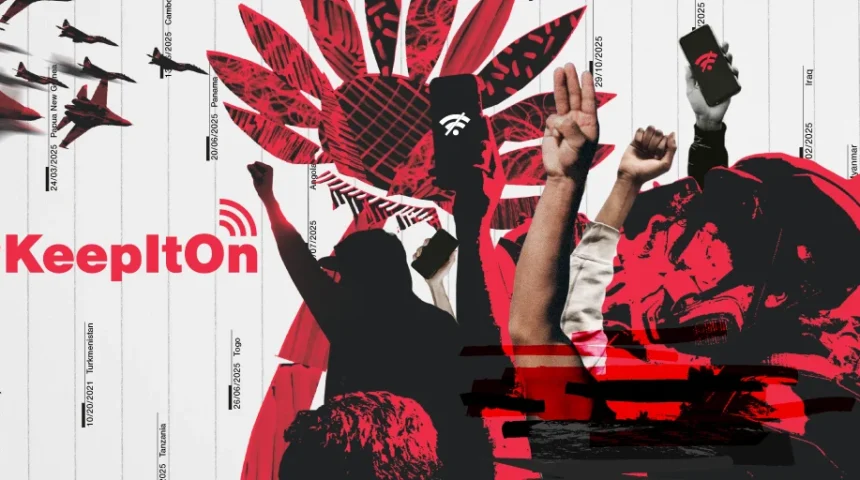
As Zambia prepares for its high-stakes general elections on August 13, 2026, a powerful international network of digital rights organizations is intensifying pressure on the government to ensure digital freedom. The #KeepItOn coalition—comprising over 370 organizations across 106 countries—has formally appealed to President Hakainde Hichilema to guarantee unfettered access to the internet, social media platforms, and all communication channels throughout the electoral cycle and beyond.
The global coalition’s open letter, directed to the Zambian head of state and copied to key regulatory bodies, security chiefs, and major telecommunications executives, warns that internet shutdowns are dangerous tools used globally to interfere with election outcomes, silence opposition, and undermine democratic participation. The advocacy group stresses that restricting digital access harms fundamental human rights and must never be allowed to become normalized in Zambia or anywhere else.
The coalition’s appeal comes in the wake of welcoming statements from Zambia’s Ministry of Technology and Science, which previously acknowledged the government’s inability to establish the cause of the disruptive internet blackout during the 2021 general elections and committed to preventing a recurrence. Building on this positive stance, the #KeepItOn coalition is urging President Hichilema’s administration to issue explicit directives to relevant institutions—including the Zambia Information and Communications Technology Authority (ZICTA), the Ministry of Technology and Science, and all internet service providers operating within the country—to refrain from any form of network interference. Furthermore, the organizations have called upon the authorities to maintain a transparent, ongoing investigation into the unexplained communication disruptions of 2021.
Digital rights advocates emphasize that access to information, freedom of expression, and freedom of assembly are the bedrock of inclusive, free, fair, and credible elections. During an electoral period, the free flow of information serves as an essential lifeline, enabling citizens to scrutinize the entire process, engage meaningfully with candidates, and express their political views. Journalists, human rights defenders, and domestic and international election observers rely heavily on stable digital infrastructure to monitor, document, and report on polling activities without fear of censorship or obstruction.
Zambia’s Shrinking Civic Space and Legislative Concerns
While recognizing positive developments, the coalition has expressed deep concern regarding Zambia’s broader civic environment, pointing specifically to the recent enactment of the Cybersecurity Act and the Cybercrimes Act. Civil society groups warn that these legislative measures carry provisions that could severely restrict freedom of expression. These concerns are compounded by an environment where journalists and members of the opposition have faced arrests and legal challenges over publications and public statements perceived as critical of the government.
On a more encouraging note, the coalition commended President Hichilema for his recent decision not to assent to the Public Gathering Bill of 2026 after it was passed by Parliament. The bill had drawn sharp criticism for potentially restricting freedom of association and assembly through vague and overbroad clauses. The organizations reiterated the call made by the United Nations Special Rapporteur on the Rights to Freedom of Peaceful Assembly and of Association, urging the government to guarantee the full protection of these essential rights throughout the election season.
A Troubling History of Network Disruption
Zambia’s digital rights record features multiple instances of government-imposed restrictions during politically sensitive periods. During the tightly contested general elections on August 12, 2021, authorities blocked access to critical social media platforms and messaging applications, including WhatsApp, Facebook, Twitter, and Instagram. The blackout was only lifted after civil society organizations mounted a successful legal challenge, arguing that the shutdown order violated the national constitution.
Following that legal victory, ZICTA entered into a landmark consent judgment in March 2022, legally binding the regulatory authority not to act outside its statutory mandate to interrupt internet access and committing it to publicly explain the reasons for any future service interruption within 36 hours. Similar election-related network disruptions were also documented by watchdogs during the 2016 polls.
In 2020, Freedom House documented another two-day internet shutdown. While government officials blamed the disruption on adverse weather conditions, members of the ruling United Party for National Development (UPND), then in opposition, publicly alleged that the restriction was politically motivated. Independent internet monitoring organizations have also recorded targeted blockings of independent media websites operating inside the country.
The Devastating Impacts of Internet Blackouts
Experts and human rights advocates point out that internet shutdowns violate an array of fundamental human rights, including the right to freedom of opinion and expression, the right to information, freedom of assembly, and the right to participate in democratic governance. By severing digital connectivity, governments create information vacuums that silence dissenting voices, shield electoral processes from public scrutiny, and paradoxically exacerbate the spread of misinformation, disinformation, and hate speech.
The absence of internet connectivity places severe operational hurdles in the path of journalists attempting to verify facts and report live from the field. It similarly impairs the vital oversight work conducted by election observation missions, political parties, and civil society watchdogs. Regional reports, such as the preliminary findings of the African Union Election Observation Mission regarding recent electoral blackouts in neighboring countries like Tanzania, underscore how nationwide internet outages blind observers to critical voting procedures, polling station closures, and vote-counting processes, thereby casting long shadows over the ultimate integrity of election results.
Beyond the democratic deficit, internet blackouts inflict immediate damage on local economies and daily livelihoods. The 2021 shutdown in Zambia brought numerous digital-dependent businesses to a standstill, severed families from vital updates, and prevented citizens from accessing essential online public services.
National and International Legal Frameworks
The deployment of internet shutdowns runs directly counter to both domestic and international human rights law. Zambia is a state party to key human rights instruments, including the International Covenant on Civil and Political Rights (ICCPR) and the African Charter on Human and Peoples’ Rights, both of which explicitly protect freedom of expression, assembly, and access to information across both online and offline spaces.
Furthermore, the Declaration of Principles on Freedom of Expression and Access to Information in Africa explicitly instructs state governments to refrain from engaging in or condoning any disruption of internet access for segments of the public or the entire population. The African Commission on Human and Peoples’ Rights reinforced this stance through Resolution 580, calling upon member states to maintain open and secure internet connections before, during, and after elections.
International tribunals and bodies have repeatedly affirmed these legal standards. The ECOWAS Community Court of Justice has issued multiple landmark judgments ruling that internet shutdowns violate human rights in West African nations, while high courts in countries like Sudan and Zimbabwe have similarly declared network blocks unconstitutional. The United Nations Secretary-General and various international experts maintain that blanket internet shutdowns and generic filtering constitute clear violations of international human rights obligations.
The Responsibilities of Telecommunications Companies
The #KeepItOn coalition’s appeal also extends directly to the corporate sector. Under the United Nations Guiding Principles on Business and Human Rights and the OECD Guidelines for Multinational Enterprises, telecommunications operators carry a corporate responsibility to prevent, mitigate, and remedy human rights harms associated with their operations.
Major telecom companies and Internet Service Providers operating within Zambia—including MTN Zambia, Airtel Zambia, Zamtel, Liquid Intelligent Technologies, and Paratus—are urged to stand firm against any unlawful government directives to restrict network access, and instead prioritize providing secure, open, and reliable communication services to the Zambian public throughout the election period and beyond.
As the August 2026 polls draw closer, the global digital rights community continues to call upon President Hichilema’s administration to honor its stated commitments to democratic governance, ensure full transparency, and firmly cement Zambia’s reputation as a nation that respects and protects the digital rights of its citizens.

Related News