Tesla Set to Sell Cybercab to Fleet Customers by Year’s End Despite Regulatory Hurdles
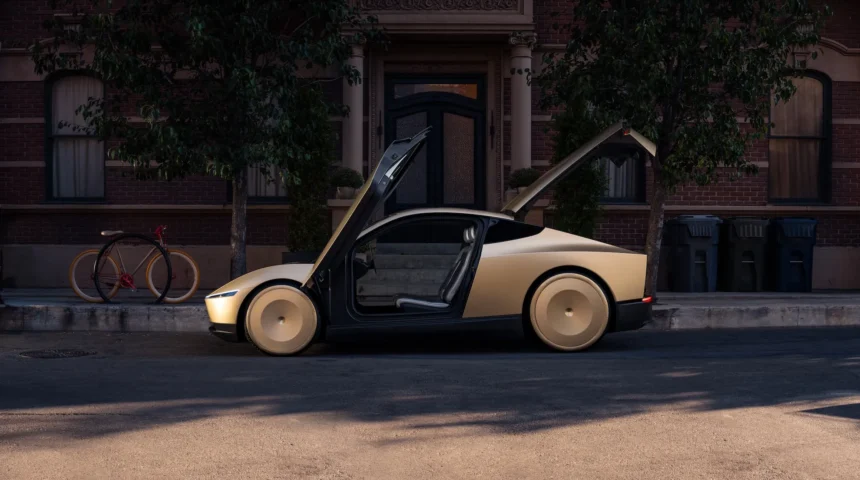
Tesla announced Wednesday that it will begin selling its futuristic, gold-hued Cybercab to customers by the end of the year, a move that comes even as federal safety regulators actively investigate whether the autonomous, steering-wheel-free vehicle complies with established federal motor vehicle standards.
During the electric vehicle manufacturer’s third-quarter earnings call, Lars Moravy, Tesla’s vice president of engineering, outlined the company’s near-term production trajectory. He stated that all Cybercabs currently rolling off production lines are officially destined for the company’s internal robotaxi fleet. However, as that operational footprint expands, Tesla plans to transition toward delivering fully designed autonomous vehicles directly to third-party customers, though the rollout will begin on a small scale.
According to Moravy, the company intends to scale up its delivery and operational support gradually as it gains deeper practical experience regarding the delivery, ownership, and overall fleet management of autonomous vehicles.
The prospect of selling the autonomous vehicle to third parties was first floated by Tesla last month around its high-profile Cybercab launch event in Austin, Texas. At the time, the company even posted an online expression-of-interest form for individuals and entities looking to buy and operate their own robotaxi fleets. Despite that initial public outreach, it remained unclear to industry watchers whether Tesla would genuinely follow through on the concept, or what structural framework it would use to make fleet sales a reality.
For years, Tesla CEO Elon Musk has spoken passionately about building a massive, decentralized fleet of low-cost robotaxis. Until recently, however, those grand ambitions centered primarily on converting millions of privately owned Tesla vehicles into fully self-driving taxis via a remote software update. That long-promised vision has yet to materialize in the real world, and Musk’s commentary during the earnings call highlighted a notable shift in his strategic perspective.
At present, everyday Tesla owners can subscribe to Full Self-Driving (Supervised), an advanced driver-assistance system designed to automate many complex driving tasks. Despite its name, the system still requires a human driver to remain fully engaged and prepared to take over manual control at a moment’s notice—a boundary that numerous viral videos show drivers testing and pushing to the limit on public roads. The company continues to deploy regular software updates to enhance the system’s capabilities, but legal and technical accountability firmly remains with the human behind the wheel.
During Wednesday’s call, Musk indicated that a truly unsupervised iteration of the FSD software—meaning a system that allows the car to drive itself entirely without human intervention—will be rolled out to customers sometime in the second quarter of next year. This represents yet another delay for devoted Tesla owners, many of whom purchased or subscribed to the autonomous software package years ago in anticipation of an earlier release.
If both corporate timelines hold true, a curious scenario will emerge: third-party fleet customers will be able to purchase the specialized autonomous Cybercab and potentially operate it as a commercial robotaxi service before individual Tesla owners gain access to the exact same autonomous driving capability in their own personal passenger cars.
Musk clarified during the call that the Cybercab is intentionally designed from the ground up to serve exclusively as a dedicated ride-hailing vehicle rather than a traditional car meant for consumer ownership.
Cybercab is primarily going to be something that is offered like transport as a service, whereas our other cars would be more, you know, the cars that you’d want to own, like the Model 3 and the Model Y and whatnot, and the Roadster, obviously, Musk explained during the earnings call. But, you know, the vast majority of the Cybercab stuff will be essentially Tesla-owned and transported as a service.
Despite the bold timelines and production commitments, at least one major obstacle threatens to disrupt Tesla’s strategic roadmap for its Cybercab deployment. The National Highway Traffic Safety Administration, the premier federal auto safety regulator in the United States, announced last month that it had officially opened an investigation into the Cybercab. The regulatory scrutiny kicked off just hours after the unorthodox vehicles first began operating on public streets in Austin.
Federal Motor Vehicle Safety Standards strictly require physical, manual driving controls such as a mechanical brake pedal, alongside traditional visibility features including rearview and side mirrors. Under the prevailing regulatory framework, automakers traditionally self-certify whether their newly manufactured vehicles comply with these safety rules, a path that Tesla followed for the Cybercab.
Current federal regulations do not inherently accommodate vehicles built entirely without manual driving controls, though the Department of Transportation recently proposed removing those traditional brake pedal requirements for vehicles explicitly designed to be autonomously operated—a regulatory shift widely viewed as a major policy boost for Tesla. In the interim, NHTSA officials stated that the agency’s investigation is designed to examine the specific processes and technical data upon which Tesla relied when certifying the Cybercab, alongside related safety and compliance issues.
The ultimate outcome of this ongoing federal investigation could carry profound implications, potentially dictating whether Tesla, or any prospective third-party fleet operator, can legally place the Cybercab into active commercial service.

Related News