Federal Judge Orders President Trump to Sit for Deposition by December 11 in $10 Billion BBC Defamation Lawsuit
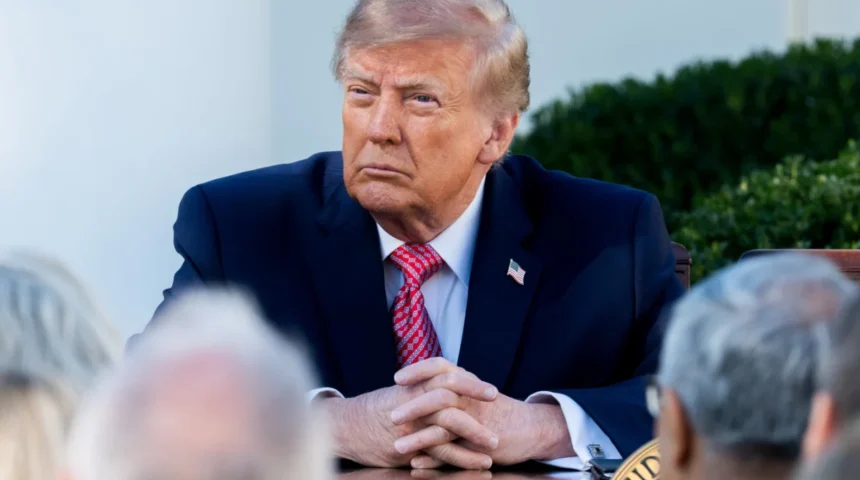
A federal judge in Miami has ordered President Donald Trump to sit for a deposition by December 11 in connection with his massive $10 billion defamation lawsuit against the British Broadcasting Corporation (BBC). The ruling, handed down during a court hearing, introduces heightened stakes for the high-profile legal battle as both sides grapple with mounting disagreements over scheduling, discovery obligations, and the handling of sensitive court-ordered records.
U.S. Magistrate Judge Enjoliqué Lett issued the strict deadline during Thursday’s proceedings. Alongside the deposition order, the magistrate judge delivered a clear warning to Trump’s legal counsel, cautioning that if the president fails to comply with ongoing court directives to provide the British media outlet with relevant records and documents, his entire complaint could face dismissal. The stern warning underscores the judiciary’s increasing frustration with delays in the discovery process, which allows parties in a lawsuit to gather evidence before trial.
Trump’s legal team had previously requested that the president’s deposition be scheduled between January 11 and January 22, pushing the timeline well past the magistrate’s newly mandated cutoff. However, the court’s decision to compel an earlier appearance reflects a tightening schedule as the case moves forward through the federal court system in Florida.
The contentious hearing brought to light sharp disputes regarding previous scheduling commitments and accusations of intentional delays. Charles Tobin, the attorney representing the BBC, addressed Judge Lett during the hearing to outline what he described as a pattern of avoidance and broken agreements by the plaintiff’s legal team.
According to The Associated Press, Tobin informed the court that Trump had originally agreed to sit for a deposition on October 16. However, the president ultimately canceled the appointment at the eleventh hour, citing what his team referred to as a "matter of national importance."
Tobin countered this explanation by pointing out that rather than tending to pressing government affairs, Trump was actively campaigning in Georgia on that specific day. The BBC attorney emphasized to the judge that the president was participating in partisan party politics and chose to prioritize those political engagements over fulfilling his legal obligations to sit for the court-ordered deposition.
When contacted by CNBC for comment regarding the judge’s latest ruling and the ongoing proceedings, representatives for the BBC stated simply that they had nothing to add beyond their official court filings and public statements.
The scheduling dispute is only one facet of a broader legal friction between the two parties. In a recent court filing submitted ahead of Thursday’s hearing, lawyers for the BBC launched sharp accusations against Trump’s legal representatives, alleging severe foot-dragging and a failure to act in good faith regarding discovery requests. The process of discovery requires both sides to share relevant documentation and evidence pertinent to the claims made in the lawsuit.
The BBC’s filing contended that with only two months of discovery remaining at the time, the plaintiff had not even made a genuine attempt to comply with his discovery obligations. The broadcaster’s legal team argued that the document productions submitted by Trump’s side failed to include items that were even plausibly within the plaintiff’s personal or professional possession.
Furthermore, the filing alleged that instead of gathering and submitting novel discovery materials, Trump’s legal team had repeatedly sent back documents that the BBC had already produced and handed over to him during the discovery process. The BBC’s lawyers claimed that counsel for the president had resorted to trawling the internet in the days leading up to production deadlines merely to find publicly available webpages rather than conducting a proper, substantive search for relevant records.
The underlying legal battle stems from a multi-billion-dollar complaint filed by Trump on December 15, roughly a month and a half after a controversial broadcast by the British public service broadcaster. In his initial complaint, Trump alleged that the network produced a false, defamatory, deceptive, disparaging, inflammatory, and malicious depiction of him in an episode of its flagship investigative journalism program, Panorama.
The disputed documentary aired just one week before the November 2024 presidential election. The lawsuit asserts that the production was created and broadcast as part of a brazen attempt by the media organization to interfere with and improperly influence the outcome of the presidential election to President Trump’s distinct detriment.
At the core of the complaint is the allegation that the documentary, titled "Trump: A Second Chance," was deceptively edited. The lawsuit claims the editing was intentionally manipulated to make it falsely appear that during his January 6, 2021, speech outside the White House, Trump explicitly urged his supporters to launch an attack on the U.S. Capitol.
The controversy surrounding the program prompted a public response from the highest levels of the British broadcaster. Shortly before Trump officially filed his defamation lawsuit, the chair of the BBC issued an apology for the manner in which the video clip had been edited. In addition to the apology, the network made a formal promise not to air the documentary again in the future or show it on any of its digital, television, or streaming platforms.
Despite the apology and the decision to pull the program from circulation, the BBC has continued to mount a vigorous legal defense against the underlying defamation claims. In a formal statement released on November 13, 2025, the broadcaster clarified its position, stating that while it sincerely regrets the manner in which the video clip was edited, it strongly disagrees that there is any valid legal basis for a defamation claim under the law.
As the December 11 deposition deadline approaches, both legal teams face mounting pressure to resolve ongoing discovery disputes and prepare for the next critical phases of the high-stakes litigation in federal court.

Related News