Grupo Campestre Breaks Ground on $12.3 Million Vado Marín Farm in San Miguel, Launching Ambitious $77.8 Million Expansion
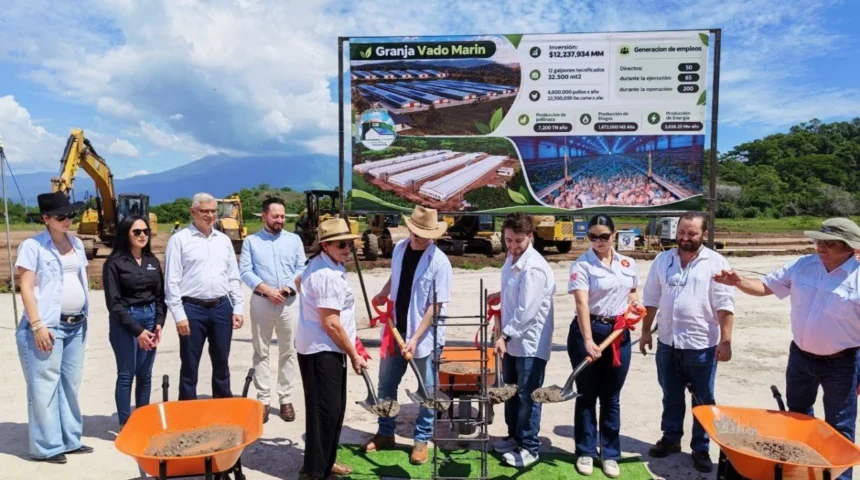
Avícola Campestre, a core division of El Salvador’s prominent Grupo Campestre, officially broke ground on Friday for its new $12.3 million Vado Marín farm located in San Miguel. Featuring 12 state-of-the-art technified barns, the high-capacity facility is engineered to yield 4.6 million broiler chickens annually, delivering 22.5 million pounds of top-tier poultry to meet rising regional demand while strengthening local food security across El Salvador and the broader Central American market.
The groundbreaking ceremony marked a significant milestone for the agricultural and commercial sectors in the eastern region of the country, drawing attention from industry leaders, local stakeholders, and agricultural experts. By establishing a modern hub equipped with advanced environmental controls, feeding mechanisms, and biosecurity protocols, Avícola Campestre aims to set a new standard for efficient protein production. The facility’s 12 technified barns are designed to optimize the growth cycle of broiler chickens while ensuring optimal animal welfare conditions, translating into higher yields and consistent product quality for consumers who rely on the well-known Pollo Campestre brand.
This modern facility marks the first milestone in a broader $77.8 million strategic roadmap running through 2030, pre-qualified for tax incentives by El Salvador’s Investment and Export Promotion Agency (Invest). The backing of Invest highlights the strategic alignment between private enterprise and national economic development objectives, particularly in fostering decentralized growth outside the metropolitan capital. By channeling significant capital into the eastern department of San Miguel, Grupo Campestre is helping to decentralize industrial activity and bring high-tech agricultural infrastructure to rural and semi-urban communities.
This ambitious seven-part blueprint encompasses a series of interconnected upgrades designed to modernize the company’s entire supply chain. Among these future projects are a heavily upgraded hatchery capable of handling larger volumes with higher precision, a modernized processing plant equipped with cutting-edge sanitation and packaging technology, and a specialized breeding farm dedicated to producing fertile eggs locally. By controlling every stage of the production cycle—from breeding and incubation to grow-out and final processing—Grupo Campestre ensures stringent quality control and operational resilience against global supply chain fluctuations.

Beyond boosting productive capacity and operational efficiency, the multi-project investment will generate 860 direct and indirect jobs, offering technical and specialized opportunities for agronomists, veterinarians, commercial teams, and administrative personnel. This wave of employment is expected to stimulate the local economy of San Miguel and surrounding municipalities, creating pathways for professional growth and specialized training in modern agro-industrial techniques. Educational institutions and vocational programs in the region are anticipated to collaborate with the company to supply a skilled workforce capable of operating and maintaining advanced agricultural machinery and biosecurity systems.
In addition to driving economic development, the project establishes a new benchmark for sustainable agribusiness in Central America by integrating circular economy principles directly into its daily operations. The Vado Marín farm will harness 7,300 tons of organic waste through an advanced biodigester system to produce 3,600 megawatt-hours of biogas energy. This innovative waste-to-energy conversion not only mitigates the environmental impact typically associated with large-scale poultry operations by eliminating waste accumulation and odor, but it also transforms a byproduct into a valuable, renewable energy source.
Combined with the company’s existing 2.5 MW solar setup, Grupo Campestre will achieve a clean energy capacity of 4 megawatts for its self-consumption needs. This substantial shift toward renewable generation significantly reduces the carbon footprint of the poultry division and insulates the enterprise from fluctuating fossil fuel and electricity prices. By blending solar photovoltaic power with biogas generation, the company demonstrates how heavy agro-industrial operations can successfully transition toward energy independence while actively contributing to national environmental sustainability goals.
Tracing its roots back to 1982—when founders Mario and Gloria de Romero launched a modest bakery with just $17.50—Grupo Campestre has transformed into an agro-industrial powerhouse behind the popular Pollo Campestre brand. Over four decades of continuous operation, the enterprise has expanded from a small family business into a multi-faceted food production leader that touches the lives of thousands of Salvadorans daily, operating numerous restaurants, processing facilities, and agricultural sites across the country.

Reflecting on the company’s trajectory and its ambitious future, Sergio Romero, Director of Poultry and Energy at Grupo Campestre, emphasized the philosophy guiding the current expansion phase during Friday’s groundbreaking event.
"Our vision is to become a benchmark for agro-industrial innovation in Central America," noted Sergio Romero, Director of Poultry and Energy. "It is not just about producing more, but producing better—with technology, energy efficiency, and responsible processes."
As construction on the Vado Marín farm progresses toward completion, Avícola Campestre and Grupo Campestre continue to chart a course that marries commercial growth with environmental stewardship and social responsibility. The ongoing execution of the $77.8 million roadmap through 2030 reinforces the company’s long-term commitment to El Salvador’s economic vitality, ensuring a stable, sustainable, and high-quality supply of poultry products for generations to come.

Related News