Microsoft Posts Record $92.3B Quarterly Revenue as Cloud and AI Momentum Power Growth
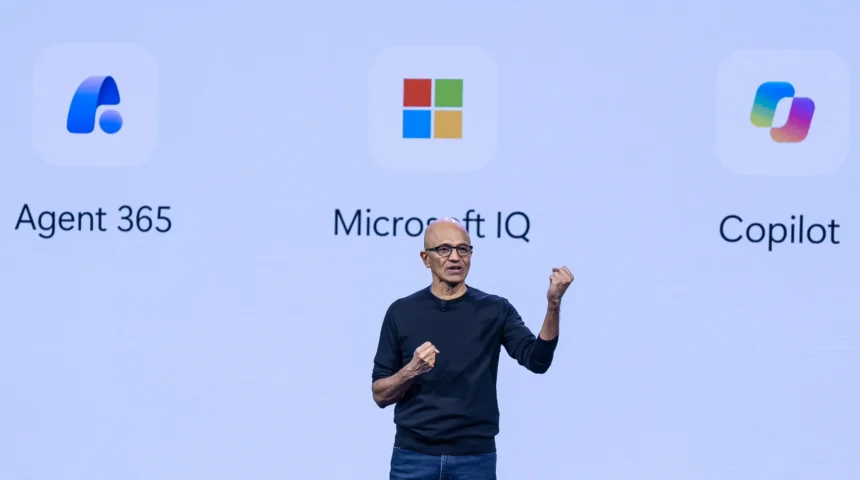
Regardless of how the broader artificial intelligence landscape evolves in the coming years, the present financial reality for Microsoft remains exceptionally strong. The tech giant reported yet another blockbuster quarterly revenue record on Wednesday, posting $92.3 billion for its fiscal first quarter, representing a robust 19% increase compared to the same period a year ago.
With this latest financial milestone, Microsoft has now achieved record-breaking quarterly revenue for 10 consecutive quarters, underscoring the enduring resilience and massive scale of its diversified enterprise and consumer operations.
The record-breaking performance extended straight to the bottom line, delivering substantial profitability for shareholders. Microsoft reported that its net income reached $36.6 billion, marking an impressive 32% increase on a GAAP basis over the year-ago quarter.
This sustained profitability was largely driven by the extraordinary strength of the Microsoft Cloud division, which generated $63.9 billion in revenue during the quarter. That figure represents a 30% jump compared to the corresponding period last year, demonstrating that enterprise migration to cloud infrastructure and software-as-a-service solutions shows no signs of slowing down.
To better reflect its evolving business priorities, Microsoft has reorganized its primary financial reporting into two main operating segments: Agents and Infra, and Devices and Consumer. While the cloud and enterprise segments continue to scale unprecedented heights, traditional hardware and consumer markets faced some headwinds during the quarter.
Revenue within the Devices and Consumer segment settled at $15.5 billion, representing a 3% decline year-over-year. Within that category, Windows OEM and legacy device revenues experienced a more pronounced downturn, falling 22% from the figures reported in the year-ago quarter as the personal computer market continues to navigate cyclical adjustments.
A closer look at the cloud division reveals that while artificial intelligence captures much of the current market attention, Microsoft’s foundational enterprise offerings continue to generate massive, reliable streams of cash. Not all of the company’s healthy cloud revenue can be attributed directly to generative AI applications.

Microsoft 365, the company’s flagship productivity suite, accounted for nearly $28 billion of the total revenue pool. Meanwhile, Azure and other cloud services brought in the single largest chunk at $33.2 billion. Company executives note that not all Azure revenue is strictly AI-related; enterprises around the globe continue to rely heavily on Microsoft’s cloud infrastructure to run traditional software workloads, relational databases, and mission-critical SaaS applications.
Even so, a significant and rapidly growing proportion of that cloud momentum is directly tied to the artificial intelligence boom. Microsoft reported a notable $10 billion in revenue derived directly from its partnership with OpenAI. Despite strategically branching out to work with alternative cloud infrastructure providers such as Amazon Web Services and Oracle, OpenAI still anchors a substantial portion of its heavy computational workloads on Microsoft’s cloud platform.
Furthermore, other high-profile generative AI pioneers, such as Anthropic, also utilize Azure to power their foundational model training and inference demands. The deep integration between major AI labs and Microsoft’s cloud ecosystem highlights how vital enterprise partnerships have become for modern tech giants.
Further illustrating the staggering long-term demand for these next-generation technologies, Microsoft reported that its commercial remaining performance obligation surged by 73% to reach a staggering $677 billion. This metric represents future revenue that has been formally committed under existing, long-term contracts signed with major enterprise customers and artificial intelligence laboratories. It serves as a clear financial indicator that clients are locking in multi-year agreements to secure computing power and software services well into the future.
However, capturing and servicing that immense future demand requires monumental upfront investments. Like all the major hyperscale cloud providers operating in the current market, Microsoft is spending heavily to build out the physical data centers, specialized silicon, and energy infrastructure required to deliver on its contractual commitments.
Capital expenditures for the quarter topped $45.2 billion, marking another all-time quarterly record for the company as it races to expand its global AI and cloud footprint. As these multi-billion-dollar investments continue to scale, Microsoft’s ability to turn its ambitious infrastructure buildout into profitable enterprise growth will remain a central focal point for Wall Street and the broader technology sector.

Related News