Apple’s Latest MacBook Pro Closes the Weight Gap, Tempting Power Users Back from the Air
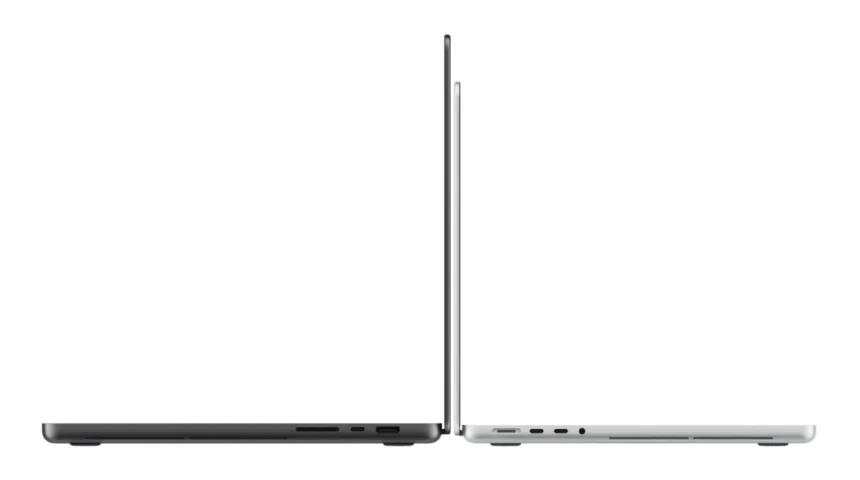
For years, a silent compromise has faced power users within the technology and IT sectors: choose between the formidable performance of Apple’s MacBook Pro line or the featherlight portability of the MacBook Air. For many, the choice increasingly leaned toward the Air. Apple’s proprietary silicon chips have grown so astonishingly powerful over recent generations that even professionals who demand rigorous multitasking found that the Air could handle most daily workflows with ease, all without breaking one’s back during a long day of commuting or navigating bustling conference floors.
This exact dilemma led to an unusual decision earlier this year for many longtime MacBook Pro loyalists, who opted to "downgrade" when the time came to replace older hardware. Moving away from a beefy 16-inch MacBook Pro powered by an M1 Max chip, the logical alternative for many was the 15-inch MacBook Air equipped with the M4 chip. Realistically, everyday workloads did not require the specialized horsepower of a Pro-tier machine inside a laptop chassis. Instead, the primary motivation was simple physics: the bulky older Pro models felt increasingly heavy after hours of being hauled around convention centers, meeting rooms, and travel hubs.
This sentiment was hardly isolated. Across the IT industry, professionals who traditionally gravitated toward the high-end Pro series began questioning the necessity of carrying extra weight when the lighter, sleeker Air models could breeze through everyday tasks effortlessly. The performance-per-pound equation had shifted, making the traditional Pro form factor a harder sell for mobile professionals who valued mobility nearly as much as processing capability.

However, Apple has fundamentally altered that calculation with the introduction of its latest MacBook Pro lineup. Powered by the new M5 Pro and M5 Max chips and featuring a cutting-edge PROLED touchscreen display, the refreshed MacBook Pro represents a massive leap forward in both raw computational power and hardware versatility. Adding a touch of nostalgic flair for long-time Apple enthusiasts, the iconic glowing Apple logo has also returned to the back of the device, bridging the aesthetic gap between older classics and modern engineering.
Yet, beyond the upgraded internals, the hallmark achievement of this new generation lies in a much simpler, highly requested metric: weight and dimensions. The newly redesigned 16-inch MacBook Pro weighs precisely four pounds, marking a notable reduction of 0.7 pounds compared to its immediate predecessor. Alongside the weight savings, the chassis has been trimmed down, measuring slightly thinner at 0.63 inches compared to the previous 0.66 inches, while also boasting a marginally narrower and shorter footprint overall.
These dramatic reductions in weight and physical bulk are made possible largely due to the implementation of advanced display technology, specifically the integration of the new OLED panel. Historically, packing massive performance into a larger laptop chassis meant accepting a heavy, dense device that demanded compromises in portability. Apple has managed to defy that trend by shrinking the exterior dimensions while simultaneously expanding the screen real estate slightly, moving the display size from 16.2 inches up to 16.3 inches.
Crucially, this aggressive slimming down has not come at the expense of traditional Pro-level strengths. Despite the lighter and thinner enclosure, the new 16-inch MacBook Pro preserves the robust 24-hour battery life that users have come to rely on for all-day mobile productivity. Internal specifications remain just as uncompromising, with memory configurations scaling up to 64GB and massive storage options reaching up to 4TB.

When factoring in the generational performance gains delivered by the M5 Pro and M5 Max processors, the introduction of a more versatile touchscreen display, and a completely overhauled speaker system, the updated Pro lineup presents a vastly different value proposition than its predecessors. The 14-inch model shares parallel, albeit proportionally scaled, benefits in terms of reduced weight and streamlined physical dimensions, offering similar ergonomic improvements for users who prefer a smaller form factor.
While the 15-inch MacBook Air maintains its status as the lighter option on paper—tipping the scales at a mere 3.3 pounds—the actual physical gap between the Air and the Pro has narrowed considerably. For mobile professionals who previously abandoned the Pro line strictly in search of relief for their shoulders, the calculus has completely inverted. Given the wealth of added hardware benefits, performance enhancements, and ergonomic relief found in the new 16-inch Pro, many who previously migrated to the Air would likely reconsider their choice if purchasing a new machine today.
That renewed temptation, however, comes with a substantial financial caveat. Cutting-edge engineering and premium portability command a steep price in Apple’s ecosystem. The base configuration for the newly redesigned 16-inch MacBook Pro starts at a formidable $3,399, and fully customized, maxed-out specifications can escalate the final investment to well over $14,000 for enterprise-level configurations.

Related News