Xreal Aura: Preorders Open for Smart Glasses Powered by Google Android XR
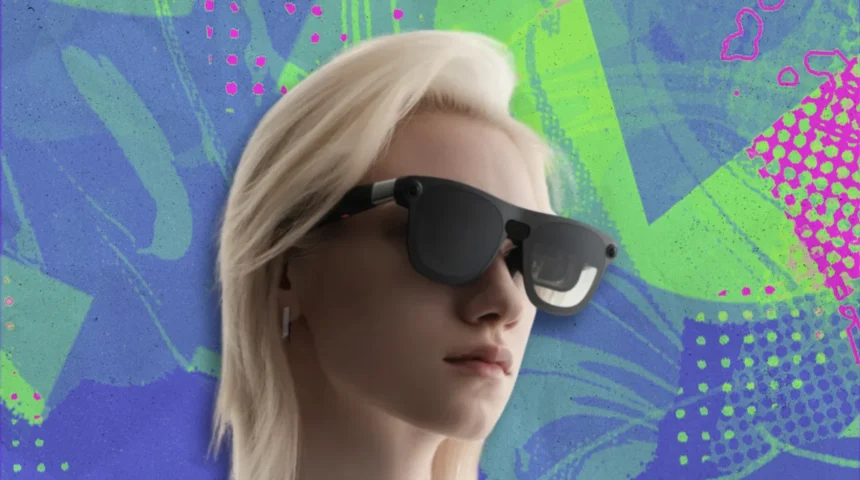
The landscape of spatial computing is shifting once again, bringing augmented and virtual reality closer together in a wearable, lightweight form factor. The Xreal Aura, a pair of groundbreaking smart glasses developed in close partnership with Google and Qualcomm, are now officially available for preorder. First unveiled earlier this year at the Google I/O 2026 keynote, the futuristic device promises to bridge the gap between immersive digital experiences and the physical world, offering early adopters a chance to experience the next wave of wearable technology in a matter of weeks.

As the first wired smart glasses to run on Google’s dedicated Android XR operating system, the Xreal Aura represent a significant milestone for both companies. The glasses and their accompanying accessories officially went up for preorder on the Xreal website, with shipments scheduled to reach customers by mid-November. Eager consumers looking to jump on the bandwagon early can take advantage of a limited-time preorder incentive, which knocks $180 off the device’s standard retail price of $1,279, bringing the initial cost down to $1,099.
Chi Xu, co-founder and CEO of XREAL, expressed immense enthusiasm about the launch, noting that the company has spent years refining the technology to ensure it meets the practical demands of everyday users. In a press release shared with media outlets, Xu emphasized that the Xreal Aura is designed to unlock entirely new ways for people to work, watch, play, and build, without cutting them off from their immediate surroundings.

At the core of the Xreal Aura’s hardware are dual Sony Micro-OLED displays. These cutting-edge panels work in tandem to project a vibrant virtual display that boasts a 70-degree field of view, up to 1,050 nits of brightness for clear visibility in various lighting conditions, and a fluid 120Hz refresh rate. Xreal, already a dominant player in the augmented reality market known for tethered glasses that project large virtual screens into a user’s field of view, is aiming higher with the Aura. The device manages to pack spatial computing and virtual reality capabilities—typically confined to bulky, enclosed headsets—into a sleek smart glass design.
The arrival of the Xreal Aura places it firmly at the forefront of a new generation of spatial computing hardware. This emerging product category also includes devices like the Specs AR glasses from Snap and the recently announced Meta VR glasses. However, the market dynamics vary wildly across these competitors. Snap’s Specs offer a fully wireless experience, but they come with a chunky aesthetic and a steep price tag of $2,195. Meanwhile, Meta’s newly announced VR glasses carry a price point of $1,299 but will not hit the market until the spring of 2027, leaving a clear window of opportunity for Xreal and Google to capture early consumer interest this holiday season.

What Do the Xreal Aura Glasses Do?
According to Xreal, the Aura glasses are engineered to support a wide array of activities, ranging from heavy productivity and immersive entertainment to cutting-edge mixed-reality experiences. While they share foundational augmented reality traits with other smart glasses on the market, they elevate the user experience by leveraging the full power of the Android XR operating system alongside Qualcomm’s Snapdragon Reality Elite Platform.
Unlike traditional AR glasses that merely mirror a smartphone screen or act as an external monitor for a laptop or gaming console, the Xreal Aura operate with a higher degree of independence. The glasses themselves connect to a dedicated "puck"—a companion computing device that houses the battery and powers the vast majority of the heavy processing required for spatial computing applications.

This architectural choice allows the glasses to remain remarkably lightweight and transparent, avoiding the isolation associated with traditional headsets like the Apple Vision Pro. While the Apple Vision Pro famously introduced mainstream consumers to spatial computing by turning their surroundings into a 360-degree digital canvas, headsets often limit movement and obstruct peripheral vision. The Xreal Aura, by contrast, are built for people who want access to digital tools, applications, and artificial intelligence without losing touch with the physical world around them.
Navigation and control on the Xreal Aura extend far beyond physical buttons. Thanks to a sophisticated array of onboard sensors and cameras, users can control the interface using intuitive hand gestures and voice commands. Furthermore, the integration of Gemini brings powerful conversational artificial intelligence directly into the user’s field of view. Gemini can assist users by answering questions about their immediate physical environment, helping them navigate complex tasks, or streamlining workflows across multiple Android applications simultaneously.

Spatial Photos, Virtual Reality, and More
The deep integration with Android XR and Google services transforms how users interact with media and their own personal memories. Through Google Photos, Aura users can view their photo and video libraries in entirely new, immersive dimensions. Standard 2D photos and videos can be converted into 3D formats on the fly, while panoramic images expand into full 360-degree environments that envelop the user. Additionally, Google Maps integration allows wearers to explore global destinations in detailed 3D, toggling between bird’s-eye aerial views and ground-level Street View perspectives.
Entertainment consumption also receives a major upgrade. Users can stream and enjoy 360-degree and VR180 video content directly through platforms like YouTube, utilizing the expansive virtual display to feel as though they are physically present in the recorded space.

At launch, Xreal is rolling out support for a growing library of more than 150 dedicated XR experiences, with additional titles, productivity apps, and entertainment options scheduled to roll out over the coming months as developers build specifically for the Android XR ecosystem.
Where to Preorder the Xreal Aura
The Xreal Aura are currently available for preorder exclusively through the official Xreal online store. While the permanent retail price is set at $1,279, early adopters who place their orders during the preorder window can secure the smart glasses for the promotional price of $1,099, saving $180 ahead of the mid-November shipping date.

Related News