Historic Extradition: U.S. Sends American Citizen to El Salvador to Face Femicide and Child Murder Attempt Charges
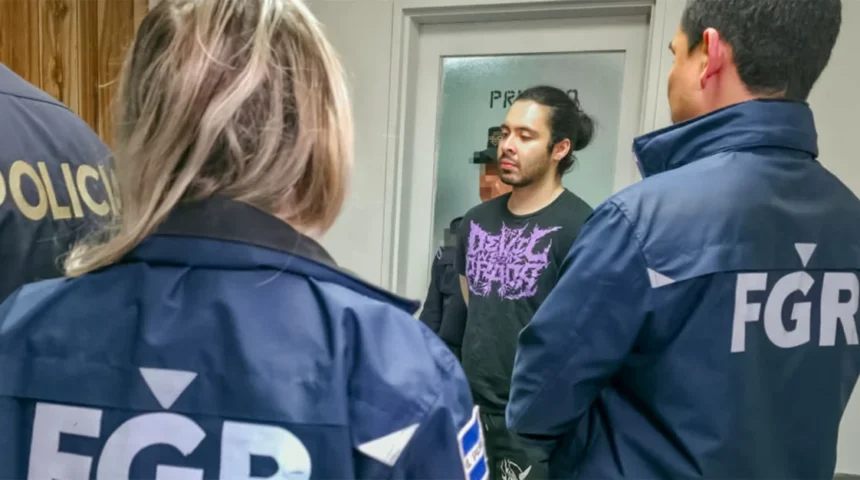
In what marks a historic and unprecedented milestone for international justice, the Attorney General’s Office of El Salvador, known as the Fiscalía General de la República (FGR), has successfully coordinated the extradition of Michael Alejandro Castillo Murga from the United States. The high-profile transfer signifies the very first time an American citizen has been extradited from the United States to El Salvador to stand criminal trial, concluding a complex, multi-year international manhunt that required intense cooperation between Salvadoran authorities and U.S. law enforcement agencies.
The landmark legal development brings closure to a long chapter of diplomatic and judicial perseverance, demonstrating that international borders and citizenship status will no longer serve as a shield for individuals accused of committing violent crimes abroad. Castillo Murga’s return to Salvadoran soil underscores a growing commitment among cross-border legal frameworks to ensure accountability in cases involving severe violence against women and children.
A Brutal Crime and a Miraculous Survival
The origins of this historic legal battle trace back to a horrific January 2019 attack that devastated a family and sent shockwaves throughout El Salvador. The brutal incident claimed the life of Fernanda Nájera, whose tragic death became a focal point in the country’s ongoing struggle against gender-based violence and impunity.

According to the details established by investigators, the violence did not end with Nájera’s murder. In the immediate aftermath of the fatal stabbing, her defenseless one-year-old son was taken from the scene and heartlessly abandoned in a nearby, sprawling coffee plantation. In what local authorities and rescue workers later described as nothing short of a miracle, the infant was discovered alive days later. The toddler had survived against staggering odds, enduring severe dehydration and the harsh elements of the outdoor environment before search and rescue operations finally located him.
While the surviving child was rushed to medical facilities to receive urgent care and begin a long path to recovery, the primary suspect behind the bloodshed managed to slip through the immediate net of local law enforcement. Castillo Murga fled El Salvador shortly after the attack, successfully evading capture and remaining an international fugitive for five agonizing years as investigators worked tirelessly to track his movements across international boundaries.
The Multi-Year International Manhunt and Legal Breakthrough
For years, the case remained an open wound for Fernanda Nájera’s grieving family and a persistent priority for Salvadoran prosecutors determined to see justice served. The critical breakthrough in the stagnant fugitive case finally arrived in 2024, when concerted international intelligence efforts paid off.
Utilizing global law enforcement networks, Salvadoran authorities secured an INTERPOL Red Notice for Castillo Murga. The cooperative alert proved pivotal, ultimately leading to the fugitive’s location and subsequent arrest on United States soil. Rather than concluding with his apprehension abroad, however, the arrest initiated a complex, multi-stage legal and diplomatic struggle.

Salvadoran prosecutors and diplomatic officials had to navigate intricate extradition protocols between the United States and El Salvador to secure the suspect’s return. Throughout the arduous diplomatic process, representatives of the FGR maintained an unwavering stance, emphasizing a core principle that resonated throughout the proceedings: that the pursuit of justice does not stop at international borders.
Facing Justice in San Salvador
Following the successful exhaustion of extradition proceedings and the finalization of his transfer, Castillo Murga was flown back to El Salvador under tight security. Upon his arrival, he was immediately processed and transferred into the custody of the Specialized Court for a Life Free of Violence and Discrimination against Women in San Salvador.
The specialized judicial venue is specifically designed to handle severe cases of gender-based violence, reflecting the gravity of the legal accusations brought against the defendant. Castillo Murga now faces formidable and severe criminal charges, including aggravated femicide and imperfect homicide, which corresponds to attempted murder under Salvadoran law.
As the case transitions from the international extradition phase into active judicial proceedings within the Salvadoran court system, it stands as a watershed moment in bilateral law enforcement cooperation. The historic delivery of an American citizen to face trial in San Salvador not only marks a crucial turning point in the pursuit of justice for Fernanda Nájera and her surviving son, but it also establishes a powerful legal precedent for international accountability in violent crime cases spanning the Americas.

Related News