Foundation Launches Beta of "Legacy Mode" for Passport Prime to Bridge Ledger Users to Open Source Hardware
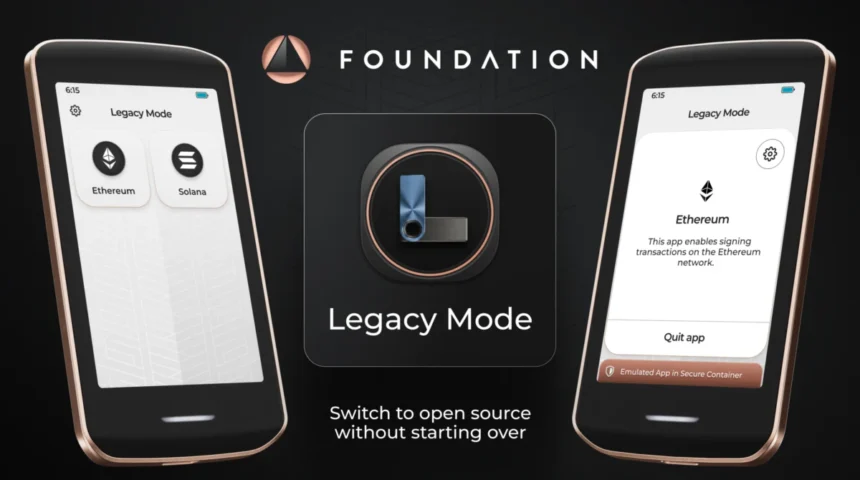
Foundation has officially announced the beta release of Legacy Mode for its Passport Prime hardware wallet, providing Ledger users with a pathway to transition to fully open-source hardware and software without needing to abandon their existing accounts or transfer supported crypto assets. The launch arrives alongside a broader company initiative dubbed the "Switch campaign," designed to tackle one of the most prominent friction points in the cryptocurrency hardware market: the high cost and complexity of migrating established wallet configurations to new ecosystems.
The rollout of Legacy Mode comes at a notable time for hardware wallet users, particularly as Ledger begins phasing out support for its original Nano S device. For years, cryptocurrency holders have built intricate wallet setups, accumulating addresses, transaction histories, and balances across various accounts. Asking these users to wipe their configurations, create entirely new seed phrases, or manually migrate every asset has historically served as a formidable barrier to switching hardware providers. Foundation’s new compatibility feature seeks to eliminate this barrier by allowing Ledger users to keep what they have already built, transferring their existing operational history onto a trusted, open-source foundation.
Alongside the product announcement, Foundation issued an immediate security alert warning users about an active phishing campaign. Attackers have been distributing fraudulent emails with the subject line "Your Passport funds are at risk," attempting to deceive users into clicking malicious links or compromising their recovery phrases. Foundation has confirmed it is actively investigating the scam and reminded the crypto community never to input seed phrases into unverified websites or communications.
Understanding How Legacy Mode Operates
The technical architecture behind Legacy Mode relies on a sophisticated compatibility layer designed to bridge the gap between third-party open-source applications and Foundation’s proprietary operating system environment. Ledger and its active developer community have historically cultivated an extensive library of open-source cryptocurrency applications. However, these applications were natively engineered to operate on Ledger’s operating system, which includes closed-source, proprietary code.
To bypass this limitation without compromising its commitment to transparency, Foundation developed a specialized compatibility framework. This system effectively reimplements the specific interfaces that Ledger’s open-source applications use to communicate with BOLOS, Ledger’s operating system. These interfaces govern critical device functions, including cryptographic calculations, screen rendering, and USB communication protocols.
By restructuring this communication pipeline, Foundation can successfully compile existing application code designed originally for Ledger devices and execute it seamlessly on KeyOS, the fully open-source operating system that powers the Passport hardware wallet. Crucially, this execution takes place without running any of Ledger’s proprietary operating system code.
KeyOS itself is built as a microkernel operating system written in Rust, featuring isolated processes and heavily sandboxed applications designed to maximize security. In alignment with Foundation’s decentralized philosophy, the company publicly publishes its operating system source code and hardware design specifications, allowing independent security researchers, developers, and privacy advocates to thoroughly inspect how the Passport device functions under the hood.

Supported Ecosystems and Initial Compatibility
For its initial beta release, Legacy Mode focuses heavily on two of the most widely adopted blockchain ecosystems in the broader cryptocurrency market: Ethereum and Solana. These specific network families were selected due to their massive user bases and intensive demand for reliable hardware-backed security.
During early testing phases, beta users successfully verified compatibility with prominent software wallets over USB connections. Specifically, users tested Ethereum and other EVM-compatible networks using Rabby, alongside Phantom for the Solana ecosystem. Foundation has indicated that it intends to expand this list, adding support for further open-source Ledger-compatible apps as user demand and developer contributions dictate.
Legacy Mode is debuting as an optional, manual installation feature built into the Passport Prime device for the beta phase. To utilize the mode, users input their existing Ledger recovery phrase directly onto the Passport hardware and establish a connection with a compatible software wallet via a standard USB link. Foundation has stated that it is actively soliciting feedback from early beta participants to refine compatibility parameters and streamline the installation process ahead of a planned full public release slated for later this fall.
Furthermore, Foundation views Legacy Mode primarily as a temporary bridge rather than a permanent destination. The system is designed to facilitate a smooth migration path toward native KeyOS applications. As third-party developers and Foundation engineers release native applications built specifically for the Passport architecture, users will retain the flexibility to install those native tools on the exact same hardware device, giving them complete control over when and how they transition away from Legacy Mode entirely.
Expanding the Open Source Horizon
The release of Legacy Mode directly supports Foundation’s foundational mission, which posits that a truly open and decentralized internet must be underpinned entirely by transparent, open-source hardware and software. By providing an accommodating entry point for users tethered to legacy hardware ecosystems, the company hopes to accelerate broader adoption of auditable security devices.
Looking ahead, Foundation is already preparing the next developmental milestones for its device ecosystem. The Foundation Software Development Kit is currently available to the public, and the recent deployment of KeyOS version 1.4.0 introduced app sideloading capabilities to the hardware.
Looking forward to the fall, the company plans to introduce a subsequent KeyOS release that will debut Foundation’s comprehensive app catalog. This upcoming feature will grant users the ability to seamlessly access a growing repository of native KeyOS applications developed both internally by Foundation and by external third-party developers, allowing for straightforward installation with a single tap on the device interface.
Detailed information regarding the Switch campaign, a full ledger of supported applications, and comprehensive installation documentation are hosted directly on the Foundation Switch portal. Foundation has emphasized that references to Ledger and BOLOS are included strictly for identification and hardware compatibility purposes, noting that Ledger SAS holds the respective trademarks and that Legacy Mode is entirely independent, receiving no sponsorship or official endorsement from Ledger.

Related News