Foundation Devices Releases KeyOS 1.4.1 for Passport Prime Alongside Urgent Phishing Alert for Users
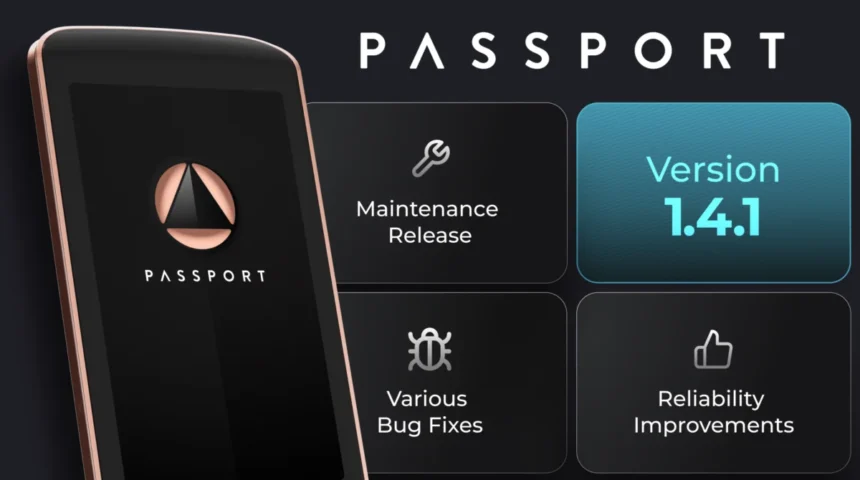
Foundation Devices has officially announced the rollout of KeyOS version 1.4.1 for the Passport Prime hardware wallet, bringing a series of targeted updates aimed at enhancing device reliability, optimizing power management, and accelerating the firmware update process. Alongside the software release, the company has issued an urgent security warning to its user base regarding an active and deceptive phishing campaign targeting asset holders.
The latest firmware update, KeyOS 1.4.1, is now live and available for deployment on all Passport Prime devices. Users wishing to install the new software can do so by initiating the update process directly through the Envoy application, which guides device owners through each phase of the installation. This release follows a rigorous security evaluation phase, which included automated code reviews conducted by advanced AI security models, namely Claude Opus 5.5 Max on Ultracode and GPT 6.1 Sol on Ultra. According to the development team, these comprehensive audits successfully completed without identifying any critical security vulnerabilities within the new firmware build.
While the primary focus of the engineering team has been directed toward refining the user experience and device stability, Foundation Devices concurrently addressed a pressing security matter outside of the software update itself. In a prominent security notice issued alongside the firmware release, the company alerted the cryptocurrency community to a widespread phishing scam currently circulating via email. The fraudulent messages falsely claim that recipients’ Passport funds are at risk, attempting to instill panic and urgency.
Foundation Devices strongly urged all users to exercise extreme caution, emphasizing that these emails are entirely illegitimate. Asset holders have been explicitly advised never to click on any links embedded within these suspicious messages and under no circumstances to share their secret recovery phrases. The organization confirmed that its security teams are actively investigating the origin and scope of the phishing campaign in an effort to protect users from potential malicious actors attempting to compromise self-custody assets.
Turning to the technical improvements embedded within KeyOS 1.4.1, the development update centers heavily on core operational refinements rather than a sprawling list of entirely new user-facing functionalities. The engineering focus for this iteration was squarely placed on overall reliability, battery care protocols, and the speed at which firmware updates are delivered and executed on the hardware.
Among the specific technical corrections included in the package is a vital fix for a known issue that previously caused the Bitcoin application to crash during the review process for multisignature signers. Multisignature setups are a cornerstone of advanced security for many hardware wallet users, making stability during signer reviews an essential component of day-to-day operations. By resolving this instability, Foundation Devices has ensured a smoother and more reliable experience for users managing collaborative or highly secured vault structures.
In addition to resolving the multisignature signer review bug, KeyOS 1.4.1 addresses a distinct set of operational issues associated with the device’s Airlock and USB connectivity. These fixes are designed to streamline interactions between the hardware wallet and external environments, ensuring consistent communication and data transfer without unexpected interruptions.
Power management and hardware longevity also received significant attention in this maintenance cycle. The new firmware improves the manner in which the Passport Prime manages its charging routines and overall battery protection systems. As hardware wallets rely heavily on internal power cells that must maintain health over years of service, optimizing the charging behavior and safeguards helps preserve battery integrity over the long term. Furthermore, the underlying mechanics of the firmware update process itself have been overhauled to execute much faster than in previous versions, reducing the time required for users to keep their devices tethered or engaged during maintenance windows.
The release of KeyOS 1.4.1 continues a steady cadence of software development and ecosystem maintenance for Foundation Devices, arriving closely on the heels of previous iterations such as Envoy versions 2.3.5 and 2.3.7. As hardware wallet manufacturers continue to navigate an increasingly complex threat landscape characterized by both sophisticated firmware requirements and external social engineering attacks, the combination of proactive software optimization and transparent user advisories remains a critical pillar of operational security for self-custody advocates worldwide.

Related News