Why Most Cryptocurrencies Fail to Accrue Value: An Economic Analysis of Bitcoin, Altcoins, and Digital Infrastructure
As the broader digital asset ecosystem navigates shifting market cycles, macro analysts and institutional observers continue to draw a sharp dividing line between the pioneer cryptocurrency, Bitcoin, and the millions of alternative coins populating the market. While Bitcoin has maintained its dominance as a premier monetary asset and store of value, the vast majority of competing cryptocurrencies face severe structural hurdles that prevent them from accruing sustained, long-term value for their holders.
The distinction between monetary protocols and utility-driven technology rails remains one of the most critical frameworks for understanding valuation in the digital economy. Across successive market cycles—from the initial coin offering boom to decentralized finance summers, non-fungible token crazes, and the recent proliferation of speculative meme coins—the pattern has consistently shown that utility-focused blockchains struggle to capture value in a manner proportionate to their adoption.
The Divergence of Bitcoin and Altcoin Valuations
For years, market analysts have maintained a structurally bullish outlook on Bitcoin while remaining critical of virtually all other cryptocurrencies. Over multiple market cycles, this thesis has largely held true. While CoinMarketCap tracks millions of distinct crypto assets, Bitcoin consistently commands the lion’s share of the total market capitalization, representing roughly 60% of the entire space—and closer to 70% when dollar-collateralized stablecoins are excluded from the calculation.
Historical analyses of major alternative networks, such as Ethereum, illustrate this divergence. Despite commanding a massive market capitalization, Ethereum has faced performance metrics that show it struggling to make higher relative peaks against Bitcoin compared to past cycles. Similarly, high-profile collapses—such as the implosion of the Terra/Luna ecosystem—reinforced the underlying fragility of algorithmic and speculative assets that lack robust monetary foundations.
Broader industry critiques have long pointed to systemic issues within the wider altcoin sector, including hidden centralization, venture capital practices that prioritize early investor exits at the expense of retail participants, and a heavy reliance on transient speculative narratives. While Bitcoin has repeatedly bounced back to establish new structural highs, the broader altcoin and decentralized finance industry has frequently experienced underwhelming long-term returns, with numerous tokens failing to regain their prior cycle peaks.
Commoditized Tech Rails and the Law of Marginal Cost
The fundamental reason behind the stagnation of most altcoins lies in the economic nature of utility blockchains. As institutional researchers noted years ago in foundational evaluations of crypto-assets, utility blockchains are fundamentally ill-suited to accrue long-term value, even when they successfully provide useful services.
In contrast to a monetary asset like Bitcoin—which is held for its own sake due to strong network security and strict supply assurances—utility protocols operate as technical infrastructure. Because these protocols face intense, ongoing competition from rival blockchains, layer-two scaling solutions, and alternative architectures, their economic value naturally trends toward their marginal cost of operation. To the extent that these utility networks add genuine value, the primary beneficiaries are the end-users rather than the long-term holders of the underlying governance or utility tokens.

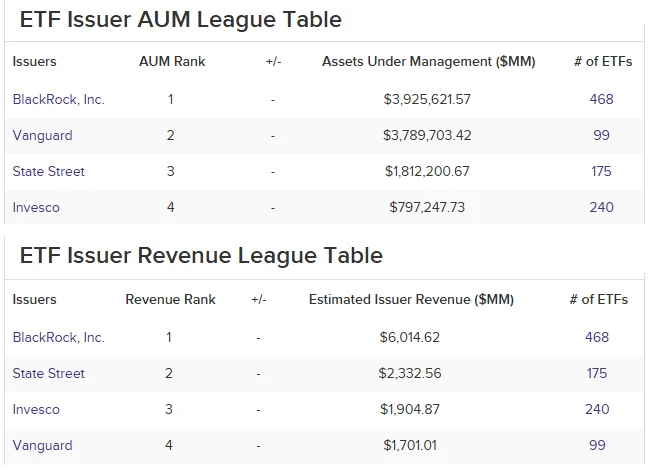
This dynamic is not unique to the blockchain industry; it mirrors traditional financial and technological infrastructure. Consider the exchange-traded fund industry. Over recent decades, ETFs have completely revolutionized asset management, siphoning trillions of dollars away from traditional mutual funds. In the United States alone, ETF assets under management have climbed to historical highs, representing trillions of dollars across thousands of distinct funds.
Despite managing immense pools of wealth, the companies that create and operate these ETFs do not necessarily command astronomical valuations derived purely from their fund management fees. Industry competition has driven fee rates down toward the marginal cost of operation, with the top four issuers managing the vast majority of assets while capturing relatively modest fee revenues. The aggregate market capitalization of the companies running the entire ETF industry represents only a tiny fraction of the total assets they manage.
A similar dynamic applies to traditional stock exchanges. The United States stock market boasts a valuation exceeding tens of trillions of dollars, with the New York Stock Exchange and Nasdaq facilitating hundreds of billions of dollars in daily trading volume. Yet, the parent holding companies of these exchanges carry market capitalizations that are surprisingly small relative to the sheer economic volume flowing through their rails. In comparison, several individual layer-one cryptocurrencies and smart contract platforms command market valuations that dwarf the parent companies of traditional global stock exchanges, despite hosting a tiny fraction of the actual economic relevance.
Exhausted Narratives and Speculative Cycles
Over successive crypto market cycles, the industry has cycled through a succession of dominant narratives, each attempting to justify the lofty valuations of utility tokens. However, many of these narratives have gradually exhausted themselves as underlying market realities caught up with promotional hype.
Privacy coins, which sacrificed a degree of auditability for enhanced anonymity, found only niche adoption. Scalability-focused platforms that compromised on decentralization faced similar limitations. Initial coin offerings, which dominated previous bull cycles, largely functioned as unregulated capital-raising vehicles without sustainable underlying products, effectively operating as high-risk speculative instruments.
Decentralized finance protocols and automated market makers provided alternative mechanisms for trading and lending, but they largely substituted custodial risk with technical risk, such as smart contract vulnerabilities and cross-chain bridge hacks. Furthermore, decentralized financial platforms face a structural ceiling, as they directly compete with centralized, highly efficient financial intermediaries.
Digital collectibles and non-fungible tokens experienced a massive speculative surge before running into the limits of organic demand. Because the vast majority of NFT projects relied on off-chain data pointing to centralized servers, and because an endless supply of competing collections continually saturated the market, long-term value retention proved difficult outside of a few historical artifacts.

As traditional utility narratives faded, the broader market frequently degraded into pure speculation through meme coins. These assets openly discarded any pretense of underlying utility, functioning transparently as international gambling instruments. Much like previous trends, the influx of speculative capital eventually plateaued, leaving late-stage market participants holding devalued assets once early speculators exited.
Where Genuine Value Resides
Despite the heavy skepticism surrounding the majority of altcoins, specific segments of the digital asset ecosystem continue to demonstrate genuine, sustained utility and adoption.
The Bitcoin network maintains a structurally sound position within institutional and retail portfolios. Because bitcoin is acquired primarily as a portable, secure, and decentralized store of value rather than as a utility tool for executing third-party applications, it benefits from powerful network effects and long-term monetary accumulation. With a multi-trillion-dollar market capitalization, Bitcoin shares characteristics with early-stage technological innovations that eventually expanded to dominate global liquid asset markets.
Outside of Bitcoin, the explosive growth of stablecoins represents one of the most successful use cases in the history of blockchain technology. Operating essentially as a modern-day digital eurodollar, stablecoin market capitalization has expanded exponentially, driven by raging international demand for dollar-denominated liquidity. Similarly, the tokenization of traditional assets, such as high-quality equities, provides vital financial access to individuals in regions who otherwise struggle to interact directly with core Western capital markets.
Ultimately, while the blockchain industry will continue to host tradeable assets and specialized technological tools during liquidity-fueled bull markets, the long-term economic reality remains clear. Most cryptocurrencies will fail to accrue sustained value as their underlying revenues trend toward operational costs. Investors navigating the digital asset landscape must continue to separate the enduring monetary characteristics of foundational networks from the commoditized tech rails of transient speculative utility.

Related News