Log Scale CEO Mike Flaum Breaks Down Strategy’s Stretch, Daily Dividends, and the Evolution of Bitcoin Treasury Mechanics
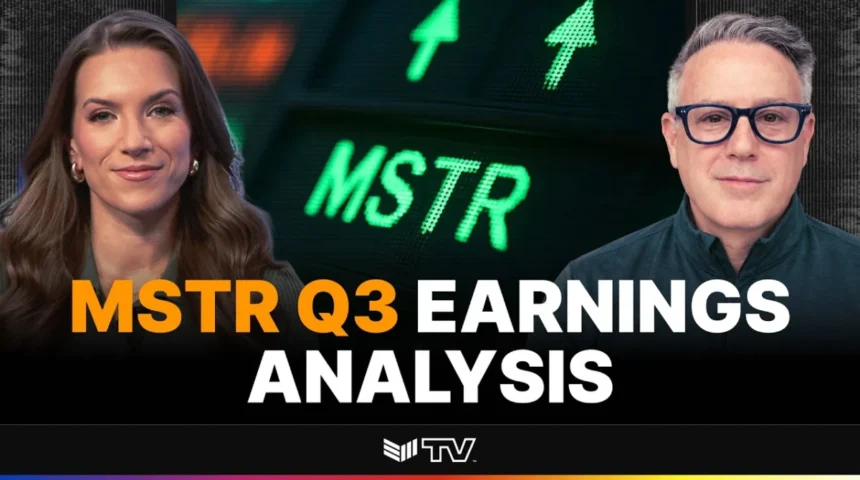
In a recent appearance on Bitcoin Magazine TV, Mike Flaum, Chief Executive Officer of Log Scale Investments, sat down with host Patrick Green to deliver an expansive and detailed analysis of the rapidly evolving corporate Bitcoin treasury landscape. Flaum’s insights cut through the noise of market sentiment, offering a sophisticated look at corporate financial engineering, yield generation, and the changing paradigms of risk versus volatility in modern digital asset investing.
The discussion covered a wide array of high-stakes topics currently shaping the financial industry, ranging from Strategy’s innovative financial instruments and daily dividend structures to Strive’s SATS product. Flaum also evaluated the viability of Bitcoin-backed preferred securities as a modern alternative to traditional U.S. Treasury bonds for retirees, unpacked the complexities of mNAV (Modified Net Asset Value) metrics, and challenged conventional wisdom regarding the four-year Bitcoin market cycle.
Navigating Strategy’s Stretch, Par Value, and Corporate Bitcoin Accumulation
The conversation opened with a deep dive into Strategy and the mechanics behind its financial products, focusing specifically on what the return of Stretch to par value means for the firm. Flaum detailed how the mechanics of issuing Stretch at $100 serve as a vital catalyst, effectively restarting and fueling the company’s aggressive, ongoing Bitcoin acquisition strategy.
As corporate treasuries increasingly adopt Bitcoin as a primary reserve asset, understanding the capital formation mechanisms that allow these firms to continually purchase more digital currency is critical. Flaum explained how these instruments function within a broader corporate framework, bridging traditional equity and debt markets with the asymmetric upside of Bitcoin.
A major focal point of the interview centered on corporate distributions, specifically the recent approval of daily dividends by Strategy shareholders. Flaum offered a unique perspective on how these daily payouts operate in practice, drawing structural parallels to Bitcoin perpetual futures markets. By examining how opportunistic short-term traders interact with these instruments differently than long-term preferred stock holders, Flaum highlighted the complex interplay of liquidity and capital preservation in modern yield-bearing digital asset structures.
The dialogue then shifted to broader market offerings, including a critical examination of Strive’s SATS product. Flaum addressed the fundamental question of whether the oversubscription of SATS represented genuine net-new capital entering the ecosystem or merely a reallocation of existing funds, providing a clear-eyed assessment of capital formation trends surrounding Bitcoin-linked financial products.
Bitcoin-Backed Preferreds Versus Traditional Treasuries for Retirees
One of the most compelling segments of the interview focused on generational wealth preservation and retirement planning. Flaum contrasted Bitcoin-backed preferred securities with traditional U.S. Treasury bonds, evaluating their respective risk profiles for retirees who require reliable income streams without sacrificing purchasing power in an inflationary environment.
This discussion naturally led into a core philosophical thesis of Flaum’s investment approach: the critical distinction between price volatility and true financial risk. In traditional finance, volatility is frequently mischaracterized as risk. Flaum argued that for long-term holders, the short-term price swings of Bitcoin represent market volatility rather than a permanent impairment of capital, contrasting this with the structural and purchasing-power risks inherent in holding long-duration fiat debt instruments like Treasury bonds.
The conversation also tackled a recurring curiosity among market observers: why Strategy’s stock price has at times failed to track in absolute lockstep with the underlying value of its massive Bitcoin treasury. To demystify this phenomenon, Flaum broke down the valuation mechanics of Gross, Enterprise Value (EV), and Net mNAV (Modified Net Asset Value). He explained how digital credit, financial amplification, and strategic share buybacks influence these metrics, giving viewers a sophisticated look at how the market prices corporate Bitcoin wrappers compared to holding the asset directly.
Rethinking the Four-Year Cycle and Long-Term Institutional Forecasts
As the interview progressed toward macro market trends, Flaum turned his attention to the structural behavior of the asset class itself, addressing the pressing question of whether the traditional four-year Bitcoin market cycle remains relevant. Challenging rigid cyclical models, Flaum analyzed the shifting market dynamics driven by institutional adoption, corporate treasuries, and broader liquidity cycles.
Further exploring this theme, Flaum discussed the phenomenon of Bitcoin reaching new all-time highs ahead of the traditional halving event, a deviation from historical patterns that signaled a maturing market influenced by spot exchange-traded funds and corporate balance-sheet allocations. The discussion concluded with an examination of long-term institutional forecasts, including perspectives from major financial institutions like JPMorgan, and what those projections imply for Bitcoin’s long-term risk-adjusted returns and future trajectory in global finance.
Disclaimer: The views and opinions expressed in this show are those of the participants and do not necessarily reflect the official policy or position of BTC Inc., Bitcoin Magazine, or any affiliated entities. This content is provided for informational and educational purposes only and should not be construed as investment, legal, tax, or accounting advice. Nothing contained in this show constitutes a solicitation, recommendation, endorsement, or offer to buy or sell any securities or financial instruments. Viewers should consult their own advisors before making financial or business decisions.

Related News