Federal Judge Denies xAI’s Bid to Dismiss NAACP Clean Air Act Lawsuit Over Colossus Data Center Turbines
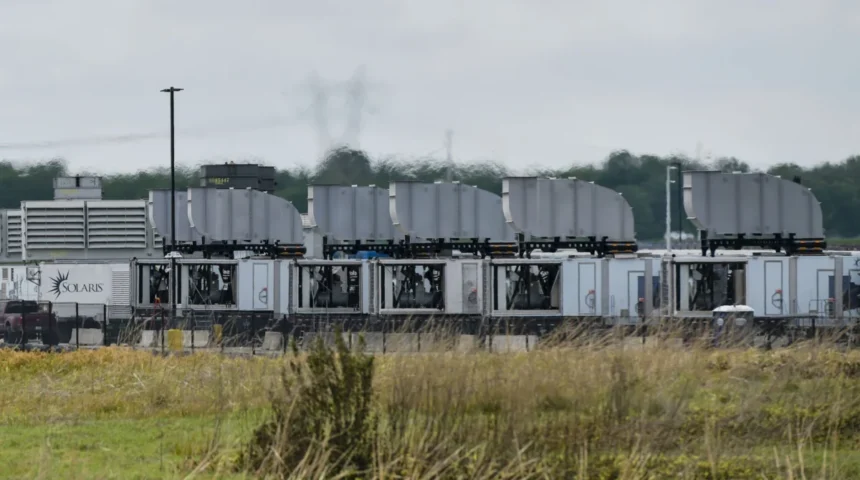
A federal judge has formally denied a motion by Elon Musk’s artificial intelligence company, xAI, seeking to dismiss a high-profile NAACP lawsuit that accuses the SpaceX-owned enterprise of operating a massive array of gas turbines without the necessary environmental permits. The legal battle centers around the Colossus data center located just outside Memphis, Tennessee, a facility that relies on a sprawling network of combustion turbines to meet its immense energy demands.
The lawsuit, brought forward by the Southern Environmental Law Center on behalf of the NAACP, claims that the AI company installed and operated at least 35 combustion turbines along with various other sources of air pollution at the Colossus site. According to the legal filing, xAI carried out these operations without ever obtaining the mandatory preconstruction or operating air permits required by environmental regulations, thereby violating the federal Clean Air Act.
In response to the legal action, xAI had sought to have the lawsuit thrown out of court. The company argued that the combustion turbines in question should be classified as mobile sources, making them exempt from standard stationary facility permitting requirements. Additionally, xAI challenged the standing of the plaintiffs, arguing that the organizations and individuals bringing the suit lacked the legal right to do so.
However, U.S. District Judge Debra M. Brown soundly rejected these arguments in a comprehensive ruling. Writing in her decision, Judge Brown noted that the plaintiffs indeed possess statutory standing under the Clean Air Act. She further dismissed the company’s technical defense regarding the classification of the machinery, stating clearly that the combustion turbines do not qualify as mobile sources under Mississippi’s State Implementation Plan, which governs regional air quality standards.
Judge Brown also addressed and dismissed xAI’s constitutional challenges regarding the framework of citizen suits. The company had argued that allowing citizens to bring such enforcement actions under the Clean Air Act violated Article II of the Constitution and the private nondelegation doctrine. Rejecting this assertion, Judge Brown emphasized that citizen suit plaintiffs act on their own behalf and in their own names to seek penalties that redress direct harm inflicted upon themselves. Consequently, she concluded that they are not improperly exercising the executive power reserved for the federal government. With these barriers cleared, the plaintiffs’ claims will now proceed toward further litigation.
The decision represents a major milestone for community advocates and environmental organizations monitoring the rapid, often resource-intensive expansion of artificial intelligence infrastructure. Abre’ Connor, the director of environmental and climate justice for the NAACP, hailed the ruling as a vital development in the ongoing effort to hold corporate entities accountable for their local environmental footprints.
In an official statement released following the court’s decision, Connor emphasized the significance of the ruling for affected communities. She noted that the courts have repeatedly rejected attempts by both xAI and the Department of Justice to dismiss the NAACP’s Clean Air Act case, thereby affirming the public’s right to pursue justice against industrial polluters. Connor reiterated that the core position of the plaintiffs has remained consistent and uncompromising from the beginning, stressing that xAI cannot legally operate heavy gas turbines without acquiring the mandatory environmental permits.
This ruling arrives on the heels of another procedural defeat for the defense. Earlier in the month, the same court denied a similar motion to dismiss that had been filed by the U.S. Department of Justice, effectively throwing out government attempts to deny local communities their day in court against Musk’s AI company.
The unfolding legal battle over the Colossus data center is playing out against a broader backdrop of intense public pushback against the explosive growth of energy-guzzling data hubs across the United States. As tech companies rush to secure the massive amounts of electricity required to train and run advanced artificial intelligence models, local residents and environmental groups have increasingly pushed back against the associated air pollution, strain on local power grids, and consumption of water resources.
Public opinion has noticeably turned against unregulated or rapidly deployed data centers in many parts of the country. This growing friction has translated into concrete policy actions at various levels of government. Notably, New York State recently enacted a comprehensive moratorium halting the construction of all new data centers, while other state and municipal governments across the nation are actively considering similar restrictive measures to curb unchecked industrial expansion.
The widespread backlash is also forcing major technology firms to alter their corporate practices and public relations strategies. In response to mounting public scrutiny over transparency and environmental impacts, tech giants Amazon and Microsoft recently pledged to stop using non-disclosure agreements in their dealings with local government agencies regarding data center developments. Furthermore, analysts suggest that the broader environmental and infrastructural debate surrounding the AI data center boom could emerge as a significant factor in upcoming U.S. elections, as voters increasingly demand greater oversight and accountability from both tech corporations and local policymakers.

Related News